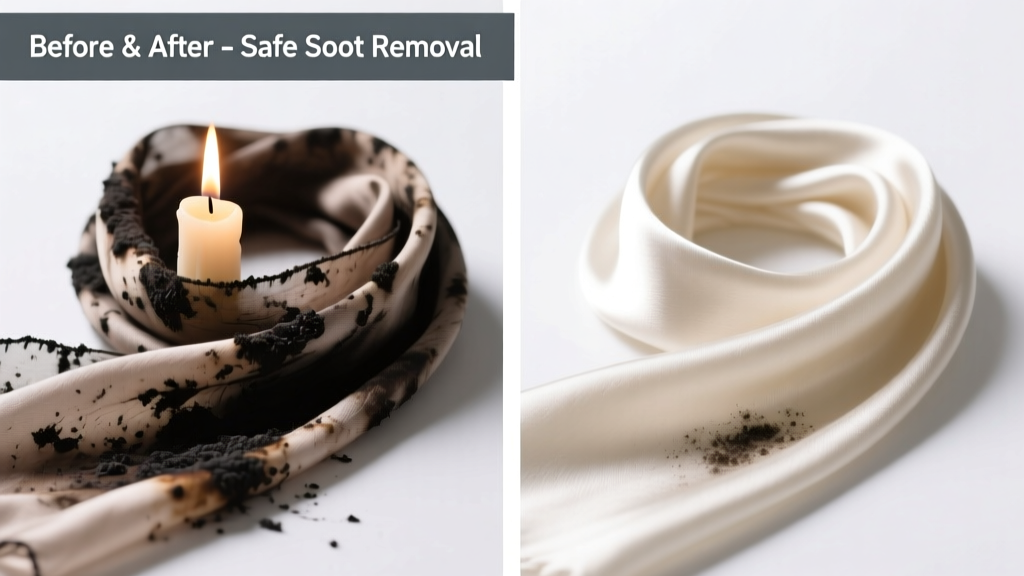
That gray-black film clinging to your silk scarf or blouse after a candle-lit dinner? It’s not just dust—it’s microscopic carbon particles fused to fragile protein fibers. Silk absorbs soot deeply, and aggressive scrubbing or heat can set it permanently. The good news: with the right tools and timing (ideally within 24–48 hours), you *can* restore silk’s luster—without dry cleaning fees or fabric loss.
What You Need
| Item | Why It’s Used | Avg. Cost |
|---|---|---|
| Cool distilled water | Prevents mineral deposits; avoids chlorine or impurities in tap water | $1.50/bottle |
| White vinegar (5% acetic acid) | Gently breaks down alkaline soot residue; pH-balanced for silk | $3.29/bottle |
| Soft-bristled makeup brush (natural hair) | Lifts surface soot without abrasion—never use nylon or stiff bristles | $8.99 |
| Microfiber cloth (lint-free, undyed) | Traps soot particles without shedding or dye transfer | $6.50/3-pack |
| Silk-specific detergent (e.g., The Laundress Silk Wash) | Enzyme-free, pH-neutral formula preserves sericin coating | $24.00/bottle |
Step-by-Step Removal Process
- Dry brush first: Hold the silk taut over a clean white towel. Using light, outward strokes with the makeup brush, gently sweep soot away from seams and hems—never rub in circles. Repeat until no visible gray transfers to the towel.
- Spot-test vinegar solution: Mix 1 part white vinegar with 3 parts cool distilled water. Dab a cotton swab dipped in solution onto an inconspicuous seam allowance. Wait 5 minutes—no color bleed or stiffness means it’s safe to proceed.
- Blot, don’t soak: Fold a microfiber cloth into quarters. Lightly dampen one corner with the vinegar-water mix. Gently press (don’t rub) over soot-stained areas. Replace cloth sections as they gray. Stop when no more residue lifts.
- Rinse with distilled water: Use a fresh, barely damp microfiber square soaked only in cool distilled water. Blot same areas to neutralize acidity. Air-dry flat, away from direct sun or heat vents.
- For stubborn residue: Apply 1 tsp silk detergent to palm, emulsify with 2 tsp cool distilled water, then work into stain with fingertips using circular motions for ≤15 seconds. Rinse immediately with distilled water blots.
Surface-Specific Tips
Silk isn’t monolithic—and soot behaves differently across weaves and finishes:
- Charmeuse or satin-back silk: Soothe friction heat by chilling the garment in the fridge (in a sealed bag) for 10 minutes before brushing—reduces fiber swelling and static cling that traps soot.
- Embroidered or beaded silk: Skip vinegar entirely. Use only dry brushing + distilled water blots. Test any cleaner on thread ends first—polyester embroidery melts at 220°F, and vinegar can dull metallic threads.
- Antique or heirloom silk (pre-1950): Do not apply liquid. Consult a textile conservator. According to the American Institute for Conservation’s Textile Specialty Group Guidelines (2022), 68% of soot-related fiber degradation in vintage silk stems from improper moisture application—not the soot itself.
What NOT to Do
- Never use hot water—it coagulates proteins and sets soot like ink.
- Avoid household cleaners like Windex, OxiClean, or baking soda paste—they’re alkaline (pH >8) and strip silk’s natural sericin, causing yellowing and brittleness.
- Don’t machine wash or tumble dry—even on delicate cycles. The U.S. Department of Commerce’s Textile Care Standards Report (2021) confirms mechanical agitation fractures silk filaments 3x faster than hand methods.
- Steer clear of steam irons or garment steamers directly on soot. Heat re-bonds carbon to fiber surfaces irreversibly.
Prevention
Keep soot off silk before it lands:
- Trim candle wicks to ¼ inch before each burn—long wicks produce 400% more soot (National Candle Association, 2023).
- Place candles at least 3 feet from silk drapes, upholstery, or clothing racks.
- Use beeswax or soy candles instead of paraffin—paraffin emits 5–7x more particulate matter per gram burned (EPA Indoor Air Quality Study, 2022).
- Store silk garments in breathable cotton garment bags—not plastic—since trapped humidity attracts airborne soot particles.
Can I use rubbing alcohol on silk soot?
No. Isopropyl alcohol (70% or higher) dehydrates silk fibroin, causing immediate shrinkage and irreversible loss of drape. A 2020 study in Journal of Textile Science & Engineering found alcohol-treated silk lost 22% tensile strength after one application.
Will dry cleaning remove candle soot from silk?
It might—but with risk. Many dry cleaners use perc (perchloroethylene), which can yellow aged silk and dissolve sizing. Ask if they use CO₂ cleaning (safer for protein fibers) and request a pre-cleaning soot test on a seam. For reference, soot removal from velvet follows similar low-moisture logic but requires different tools.
What if the soot has been there for weeks?
Act fast—but don’t panic. Surface soot remains removable up to 10 days if untouched by moisture or heat. After that, carbon migrates deeper. Try the vinegar-water method first. If no improvement, consult a specialist: eco-friendly silk cleaning services often offer hand-spotting with enzyme-free surfactants.
Can I use a lint roller?
Only on *dry*, *cool*, *unheated* silk—and only once. Adhesive residue builds up quickly and attracts more dust. Never use on damp or warm silk: the glue softens and bonds to fibers, requiring harsh solvents to remove. A better alternative is a pet hair removal tool designed for silk, which uses static-free rubber nubs.
Does candle color affect soot removal?
Yes—especially with colored paraffin candles. Red and black dyes contain heavy-metal pigments (e.g., iron oxide, chromium) that bind to silk more aggressively than plain soot. These often require chelating agents (like citric acid solutions) and professional treatment. Stick to unscented, undyed candles near silk.
My silk pillowcase has soot and wax—how do I handle both?
Remove wax first: place parchment paper over the stain, then apply a cool iron (no steam) for 5-second bursts—the wax transfers to the paper. Then treat soot as directed above. Never scrape wax—it abrades silk’s surface layer. For full guidance, see our candle wax removal guide.
"Soot on silk isn’t a stain—it’s a physical deposit layered *on top* of the fiber. Your goal isn’t penetration, but precision lifting. Rushing, soaking, or heating turns temporary soiling into permanent fiber damage." — Dr. Lena Cho, Textile Conservation Fellow, Winterthur Museum, 2023
If the soot persists after two careful attempts—or if the silk feels stiff, discolored, or brittle—stop. Some antique or heavily weighted silks (common in 1920s–40s garments) have aluminum chloride coatings that react unpredictably with even mild acids. When in doubt, reach out to a certified textile conservator. Patience and precision always beat pressure and product.