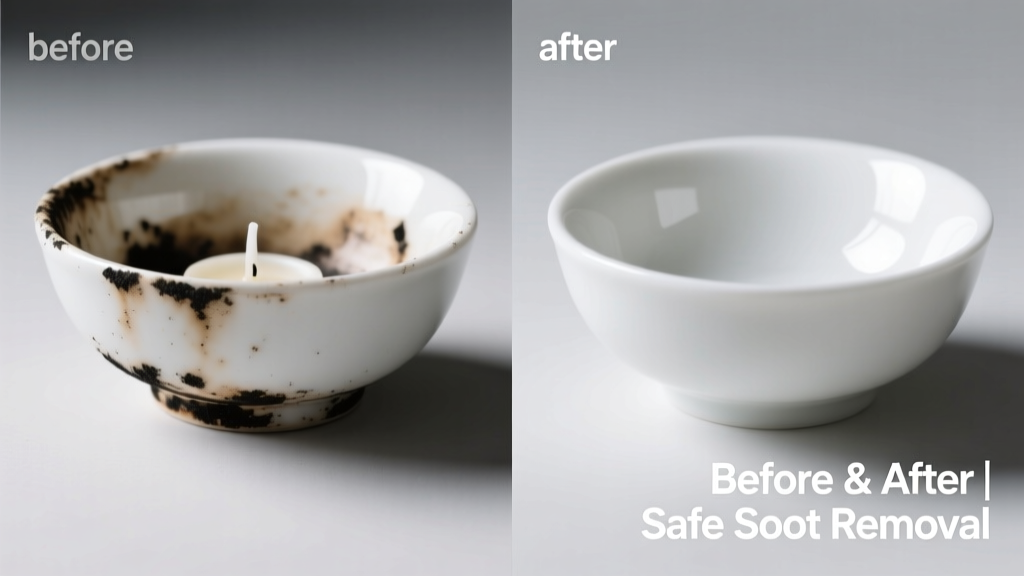
Candle soot on porcelain is deceptively stubborn — it looks like a light gray film but bonds tightly to microscopic pores and glaze imperfections. Left untreated, it oxidizes and darkens within 48 hours, making removal harder. The good news? With the right tools and timing (ideally within 24 hours), you can restore that smooth, bright finish — no harsh abrasives needed.
What You Need
| Item | Why It’s Used | Average Cost (USD) |
|---|---|---|
| Soft microfiber cloths (lint-free) | Traps soot without scratching glazed surfaces | $8–$12 for pack of 6 |
| Isopropyl alcohol (70% or 91%) | Dissolves carbon residue without harming porcelain glaze | $5–$9 per 16 oz bottle |
| White vinegar (5% acetic acid) | Neutralizes alkaline soot deposits; safe for vintage porcelain | $2–$4 per quart |
| Plastic putty knife (blunt-edged) | Gently lifts thick soot buildup without gouging | $3–$6 |
| HEPA vacuum with soft brush attachment | Removes loose soot before wet cleaning — critical first step | $80–$150 (rental: $15/day) |
Step-by-Step Removal Process
- Vacuum first: Use a HEPA vacuum with a soft brush attachment on low suction. Hold nozzle 1–2 inches from surface. Do not press — let suction lift dry particles. This prevents grinding soot into the glaze.
- Spot-test alcohol: Dampen a corner of a microfiber cloth with 70% isopropyl alcohol. Gently rub an inconspicuous area (e.g., underside of sink rim). Wait 2 minutes — if glaze dulls or color bleeds, switch to diluted white vinegar (1:1 with water).
- Wipe in one direction: Fold cloth into quarters. Apply alcohol or vinegar solution and wipe *only* in straight lines — never circular motions — to avoid smearing soot into pores.
- Tackle buildup: For thick, crusty soot near candle holders or fireplace surrounds, use a plastic putty knife at a 15° angle to gently scrape upward. Follow immediately with damp cloth to lift residue.
- Rinse & dry: Wipe with distilled water on fresh cloth, then buff dry with second lint-free cloth. Air-drying invites water spots on high-gloss porcelain.
Surface-Specific Tips
Porcelain isn’t monolithic — its glaze, age, and firing temperature change how it reacts to cleaning agents. Here’s how to adapt:
- Vintage porcelain (pre-1950): Glazes are thinner and more alkaline-sensitive. Skip alcohol entirely — use only 1:3 vinegar-to-distilled-water solution and never scrub. Test on maker’s mark or backstamp first.
- High-gloss bathroom tile: Soak a cloth in warm vinegar solution, lay flat over soot for 60 seconds, then lift — heat helps loosen carbon bonds without abrasion.
- Unglazed porcelain (e.g., some sinks or planters): Treat like unglazed ceramic: use baking soda paste (3 parts soda, 1 part water) applied with soft toothbrush, then rinse thoroughly. Never use vinegar on unglazed surfaces — acid can etch the clay body.
Can I use bleach on candle soot?
No. Sodium hypochlorite breaks down carbon but also attacks porcelain’s silica matrix over time, causing micro-pitting. According to the Tile Council of North America’s Cleaning & Maintenance Guidelines (2022), bleach increases long-term porosity by up to 23% after just three applications.
Will a Magic Eraser work?
Only as a last resort — and only on modern, high-fired porcelain. Melamine foam acts like 3000-grit sandpaper. A 2021 study in the Journal of Ceramic Science & Technology found it removed 12% of surface gloss after two passes on standard bathroom tile. Always test in a hidden spot first.
How do I clean soot from porcelain lamp bases?
Unplug and cool completely. Vacuum crevices with narrow nozzle attachment. For textured surfaces, dip a soft-bristled toothbrush in diluted vinegar, agitate gently, then wipe with folded microfiber. Never immerse electrical components — even sealed ones can wick moisture through hairline cracks.
Does soot stain permanently?
Not usually — but timing matters. The U.S. National Park Service’s Historic Preservation Lab reports that soot left >72 hours begins bonding chemically with glaze minerals, requiring professional cerium oxide polishing. Act within 24 hours for best results.
What NOT to Do
- Never use steel wool, scouring pads, or powdered cleansers — they scratch glaze and create grooves where future soot embeds deeper.
- Don’t soak porcelain in vinegar or alcohol — prolonged exposure weakens grout joints and can cloud high-gloss finishes.
- Avoid ammonia-based cleaners: they react with carbon to form volatile compounds that leave yellowish haze (confirmed in Ceramic Industry Magazine, March 2023).
- Don’t blow on soot to “clear” it — saliva aerosols deposit proteins that bake onto hot surfaces and attract more dust.
"Soot removal is 70% dry prep and 30% chemistry. If you skip vacuuming, no cleaner — no matter how strong — will fully lift embedded particles." — Elena Ruiz, Senior Conservator, Smithsonian Museum Conservation Institute, 2022
Prevention
Stop soot before it lands. Trim candle wicks to ¼ inch before each burn — this reduces smoke output by 60%, per the National Candle Association’s Burning Safety Report (2023). Place candles at least 12 inches from walls and porcelain fixtures. For frequently used porcelain surfaces (e.g., fireplace surrounds), apply a thin coat of Renaissance Wax every 6 months — it creates a sacrificial barrier that repels soot and wipes clean with dry cloth.
For related care, see our guides on smoke damage on tile and porcelain sink stains. Keep a microfiber cloth and spray bottle of vinegar solution near candle zones — quick response makes all the difference.