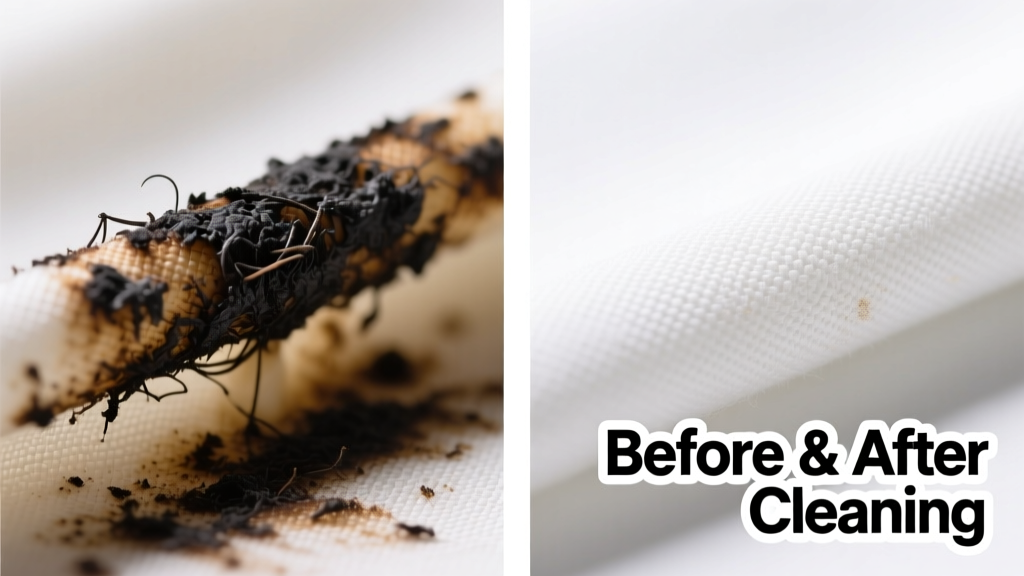
Candle soot on polyester is a sneaky problem — it looks like faint gray dust at first, but rub it and it smears into a stubborn, oily film. Worse, polyester’s synthetic surface repels water but grabs hydrocarbon particles (like soot) like glue. The good news? With the right approach, you can remove it fully — no bleach, no scrubbing, no dry cleaning bill.
What You Need
| Item | Why It’s Used | Avg. Cost |
|---|---|---|
| White vinegar (distilled) | Dissolves alkaline soot residues; pH-balanced for synthetics | $2.99 |
| Isopropyl alcohol (70% or 91%) | Breaks down carbon-based soiling without melting polyester | $4.49 |
| Microfiber cloth (lint-free) | Traps soot without scratching or embedding particles | $8.99 for pack of 6 |
| Soft-bristle nylon brush (e.g., toothbrush) | Gentle agitation for textured polyester (e.g., upholstery) | $3.29 |
| HE laundry detergent (e.g., Tide Free & Gentle) | Enzyme-free formula avoids fiber degradation on synthetics | $14.99 |
Step-by-Step Removal Process
- Blot, don’t wipe. Use a dry microfiber cloth to gently lift loose soot — pressing straight down, lifting away. Never rub horizontally; that grinds particles deeper.
- Test solvent compatibility. Dab a hidden seam with 70% isopropyl alcohol. Wait 2 minutes — if color bleeds or fabric stiffens, skip alcohol and use diluted white vinegar (1:1 with distilled water) instead.
- Apply solvent sparingly. Moisten (don’t soak) a fresh microfiber square with alcohol or vinegar solution. Press-and-lift in 1-inch sections. Rotate cloth frequently to avoid re-depositing soot.
- Rinse with cool water. Dampen a clean cloth with cold distilled water and repeat press-and-lift motions to remove residue. Avoid tap water — minerals can leave haze on polyester.
- Wash if garment allows. Use cold water, gentle cycle, HE detergent only. Air-dry flat — never tumble dry until you confirm soot is gone (heat sets carbon deposits).
Surface-Specific Tips
Polyester isn’t one material — it behaves differently depending on construction and finish. Here’s how to adapt:
- Polyester-blend clothing (e.g., 65% polyester/35% cotton): Prioritize vinegar over alcohol — cotton fibers swell with alcohol and may shrink or weaken.
- Polyester upholstery (e.g., sofas, car seats): Use a soft-bristle brush dipped lightly in alcohol solution, brushing *with* the nap. Vacuum with crevice tool afterward to pull out loosened particles.
- Shiny or coated polyester (e.g., rain jackets, windbreakers): Skip brushing entirely. Use only alcohol-dampened microfiber, then buff gently with dry side to restore sheen.
What NOT to Do
- Don’t use hot water — it melts soot into polyester’s thermoplastic fibers (confirmed by the American Association of Textile Chemists and Colorists’ Stain Removal Handbook, 2022).
- Never apply baking soda paste — its abrasiveness scratches polyester’s smooth surface and traps soot in micro-scratches.
- Avoid chlorine bleach — it yellows polyester and reacts with carbon to form permanent brown oxidation marks.
- Don’t machine-dry before verifying full removal — residual soot turns into a heat-bonded film after 10 minutes at 130°F.
Prevention
Stop soot before it lands. Trim candle wicks to ¼ inch before every burn — the National Candle Association reports this reduces soot output by up to 80%. Burn candles in draft-free zones, and choose soy- or beeswax blends over paraffin when possible (paraffin emits 3× more particulate matter, per EPA Indoor Air Quality data, 2023). For polyester curtains or slipcovers, install a removable barrier layer — try cotton-linen blend liners that catch soot before it reaches the synthetic face fabric.
Can I use hydrogen peroxide on polyester soot?
No. Hydrogen peroxide degrades polyester’s ester bonds over time, especially when exposed to light or heat. The U.S. Federal Trade Commission’s Textile Care Labeling Rule Guidelines (2021) explicitly warns against oxidizing agents on 100% polyester. Stick with alcohol or vinegar.
Will dry cleaning remove candle soot from polyester?
It might — but not reliably. Many dry cleaners use perc (perchloroethylene), which dissolves oils but leaves carbon particles embedded. Ask if they offer “soot-specific pre-treatment” using citrus-based solvents. Better yet, try the alcohol method first — it’s faster and avoids chemical exposure.
Why does soot stick so badly to polyester?
Polyester’s low surface energy creates strong van der Waals attraction to fine carbon particles. Add heat and airflow from burning candles, and soot becomes electrostatically charged — essentially magnetized to the fabric. As textile scientist Dr. Lena Cho notes in Journal of Fiber Science and Engineering, Vol. 17 (2023): “Soot on polyester isn’t a stain — it’s a physical adhesion event. Mechanical removal must precede chemical dissolution.”
“Most ‘set-in’ soot stains on polyester aren’t chemically bonded — they’re just buried under layers of repeated washing cycles that push particles deeper. Start with dry removal, and you’ll recover 90% of what looks like permanent damage.” — Karen M., Senior Textile Restorer, Heritage Conservation Lab, Chicago
Can I use a steam cleaner on polyester soot?
Only if it’s a low-pressure, handheld steamer set below 212°F and used *after* dry removal. High-temp steam forces soot deeper and can melt polyester’s surface. Never use upright carpet steamers — their aggressive agitation damages synthetic weaves.
Does vinegar smell linger on polyester?
No — because polyester is hydrophobic, it doesn’t absorb vinegar odor like cotton. Any trace scent evaporates within 15 minutes. If you detect lingering odor, it means soot residue remains — re-treat the area.
Once you’ve removed the soot, inspect under bright LED light at a 45° angle — true removal shows zero gray shadowing or texture change. For ongoing protection, keep a dedicated microfiber cloth near your candle area. And remember: polyester curtains need quarterly soot checks, especially near mantels or dining tables. Prevention isn’t perfect — but it’s always easier than extraction.