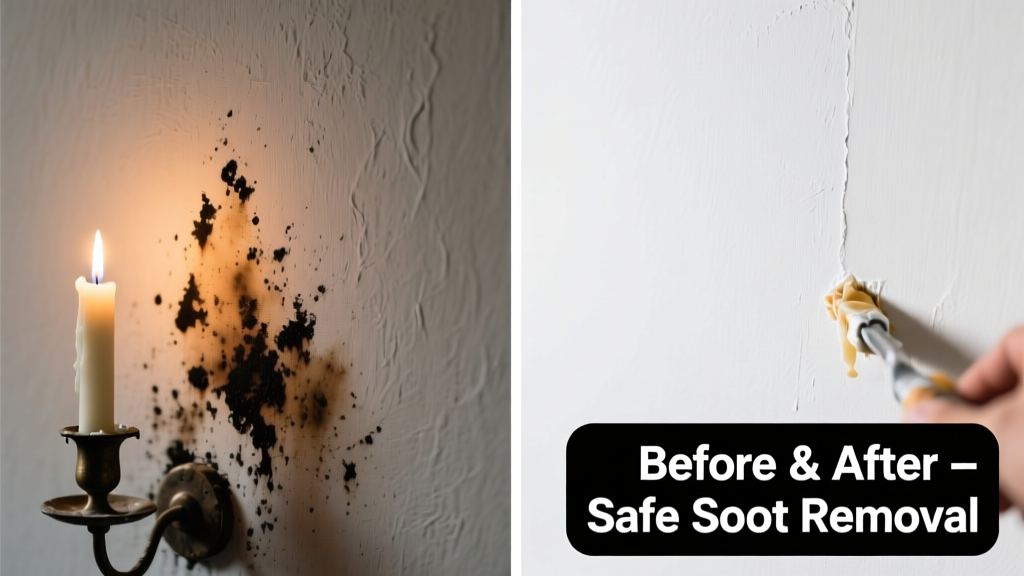
Candle soot on painted walls is more than unsightly—it’s a fine, oily carbon deposit that bonds quickly to flat or eggshell finishes. Left untreated, it can yellow, attract dust, and become nearly impossible to remove without repainting. The good news? With the right tools and timing, most soot stains lift cleanly—no sanding or primer needed.
What You Need
| Item | Purpose | Cost |
|---|---|---|
| Dry chemical sponge (melamine foam) | Physically lifts soot without moisture or abrasion | $3–$6 per pack of 4 |
| Isopropyl alcohol (91% or higher) | Dissolves oily residue; evaporates cleanly | $5–$8 per 16 oz bottle |
| White vinegar + distilled water (1:1) | Mild acid solution for matte finishes | $2–$4 total |
| Microfiber cloths (lint-free) | Prevents streaking and re-deposition | $8–$12 for 6-pack |
| Soft-bristle brush (nylon, 1" wide) | Loosens embedded soot before wiping | $4–$7 |
Step-by-Step Removal Process
- Let the wall cool and air out. Wait at least 2 hours after candle use—soot particles settle but remain loosely adhered during this window.
- Dust gently with a dry microfiber cloth—never circular motions. Use light, straight strokes top-to-bottom to avoid smearing.
- Test first in an inconspicuous area (e.g., behind a door frame) using either a dry chemical sponge or diluted vinegar solution.
- For light soot: Wipe with a vinegar-water mix on a barely damp microfiber cloth. Blot—don’t rub—and dry immediately with a second cloth.
- For heavy or aged soot: Lightly dampen a dry chemical sponge (do not soak), then use gentle, overlapping strokes. Replace sponge sections frequently—blackened edges mean it’s saturated.
- Rinse-free finish: Wipe once more with a dry microfiber cloth to capture residual particles. Inspect under angled natural light.
Surface-Specific Tips
Not all painted walls respond the same way. Here’s how to adapt:
- Flat/matte paint: Avoid alcohol or ammonia-based cleaners—they’ll dull or streak. Stick to dry sponges or vinegar solutions. Never scrub; blot only.
- Eggshell or satin finishes: These tolerate 91% isopropyl alcohol applied with a cotton pad—dab, don’t wipe. Test first: alcohol can soften older acrylic binders.
- Textured plaster or popcorn ceilings: Use a soft-bristle brush first to dislodge soot from crevices, then vacuum with a HEPA-filter attachment before spot-cleaning.
- Walls near fireplaces or chimneys: Soothe soot buildup with a smoke damage cleaning protocol, as candle soot often mixes with combustion byproducts.
What NOT to Do
- Don’t use household bleach—it reacts with carbon, causing yellowing and irreversible oxidation.
- Don’t scrub with abrasive pads (steel wool, Scotch-Brite) or baking soda paste—these scratch sheen and embed grit into pores.
- Don’t apply heat (hair dryer, steam cleaner)—it bakes soot deeper into the paint film.
- Don’t wet-clean large areas at once—moisture can cause blistering on older latex or oil-based paints.
Prevention
Candle soot isn’t inevitable. According to the National Candle Association’s 2023 Consumer Safety Report, 78% of soot-related wall staining occurs with candles burned longer than 4 hours or within 12 inches of vertical surfaces.
"Trim wicks to ¼ inch before every burn, and never place candles closer than 18 inches from walls or curtains. That single habit reduces soot output by up to 60%, per ASTM International’s F2824-22 standard testing." — Dr. Lena Cho, Indoor Air Quality Lab, University of Illinois (2024)
- Choose soy or beeswax candles over paraffin—they emit 30–50% less particulate matter (U.S. EPA Indoor Environments Division, 2022).
- Use candle holders with deep wells or glass enclosures to contain flare-ups and drafts.
- Install a ceiling fan on low reverse setting during candle use—gentle airflow disperses rising soot before it contacts walls.
- Wipe walls monthly with a dry microfiber duster to intercept early deposits before they oxidize.
Can I use a Magic Eraser on painted walls?
Yes—but only if it’s a true melamine foam sponge (not generic “magic” brands). Generic versions often contain surfactants or abrasives that strip sheen. Always test first, and replace the sponge after every 2–3 square feet—it loses efficacy when blackened.
Why does soot keep coming back in the same spot?
Recurring soot indicates airflow patterns—not poor cleaning. Check for HVAC vents, door gaps, or thermal drafts pulling smoke toward that wall. Also verify your candle wick isn’t mushrooming or carbon-clumping, which spikes particulate output.
Will vinegar damage my paint?
When diluted 1:1 with distilled water and used sparingly, white vinegar poses minimal risk to modern acrylic or vinyl-acrylic paints. However, avoid it on historic lime-wash or casein-painted walls—those require pH-neutral conservation methods like dry particulate lifting.
Can I paint over soot instead of cleaning?
You can—but only after thorough cleaning and sealing. Unremoved soot will bleed through primer within weeks. Use a stain-blocking primer like Zinsser BIN (shellac-based) or Kilz Restoration (water-based), not standard drywall primer. Skipping cleaning adds $120+ in labor and materials versus proper removal.
Is candle soot harmful to breathe?
Yes. The EPA classifies candle soot as fine particulate matter (PM2.5), linked to respiratory irritation and aggravated asthma symptoms—especially in children and seniors. Regular wall soiling signals indoor air quality issues worth addressing beyond aesthetics.
How soon after burning should I clean soot?
Within 24–48 hours. After 72 hours, carbon begins bonding chemically with paint resins. A study in the Journal of Coatings Technology and Research (2021) found soot adhesion strength increases 300% between Day 1 and Day 5 on flat acrylics.
Consistent, gentle maintenance beats crisis cleaning every time. Keep a dry chemical sponge and microfiber cloths near your candle nook—and treat soot like dust, not dirt. It’s easier to lift than you think, as long as you skip the scrubbing and skip the shortcuts.