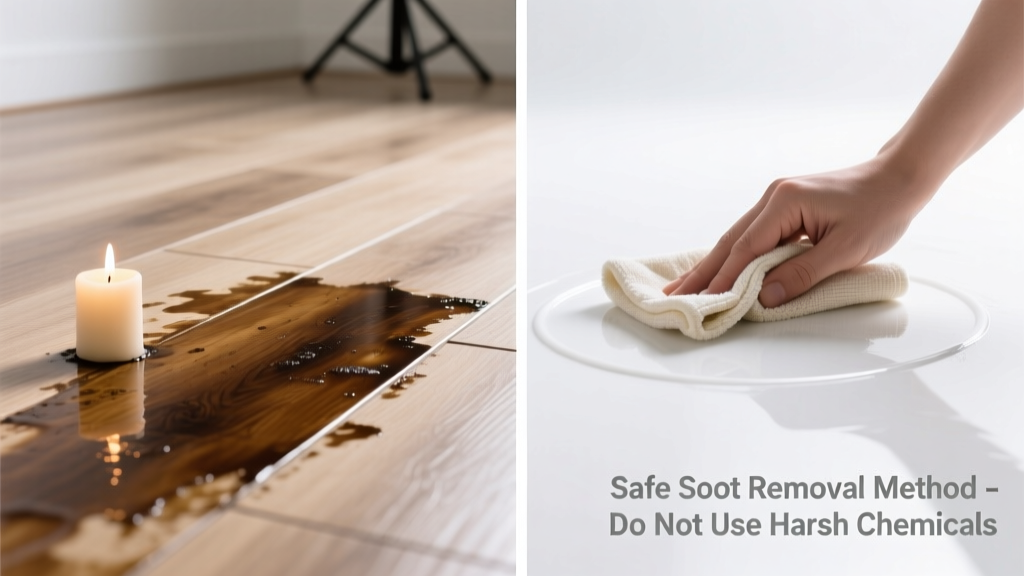
That gray-black film left by a flickering candle isn’t just unsightly — it’s a fine, oily particulate that bonds fast to laminate’s micro-textured surface. Don’t panic: soot is removable if caught early and treated right. But act too aggressively, and you’ll risk etching the wear layer or dulling the gloss.
What You Need
| Item | Purpose | Cost Range |
|---|---|---|
| Microfiber cloths (lint-free) | Traps soot without abrasion | $8–$15 for 6-pack |
| Isopropyl alcohol (70% or 91%) | Dissolves oily residue safely | $5–$9 per 32 oz |
| White vinegar + distilled water (1:1) | Gentle pH-balanced cleaner | $3–$5 |
| Soft-bristle nylon brush (e.g., toothbrush) | Loosens embedded particles | $2–$4 |
| Laminate floor cleaner (e.g., Bona Hard-Surface Cleaner) | Final rinse & shine restoration | $10–$14 per bottle |
Step-by-Step Removal Process
- Dry removal first: Gently wipe the area with a dry, folded microfiber cloth — no pressure. Soot lifts easiest when dry. Discard or launder the cloth immediately (soot stains fabrics permanently).
- Test cleaning solution: Dampen a corner of a fresh microfiber cloth with 70% isopropyl alcohol. Blot — don’t rub — a 2-inch patch in an inconspicuous spot (e.g., under furniture). Wait 2 minutes. If no clouding or color lift occurs, proceed.
- Targeted cleaning: Apply alcohol sparingly to a clean cloth. Lightly dab (not scrub) the soot-stained area in overlapping 3-inch sections. Replace cloth frequently — blackened fibers mean soot is transferring, not dissolving.
- Neutralize & rinse: Dampen another cloth with vinegar-water mix and gently wipe the cleaned zone to remove alcohol residue. Let air-dry fully (15–20 min).
- Restore finish: Once dry, apply a pea-sized drop of Bona Hard-Surface Cleaner to a third dry microfiber cloth and buff in circular motions to revive sheen and remove any haze.
Surface-Specific Tips
Laminate varies widely — from matte AC3-rated planks to high-gloss embossed-in-register (EIR) finishes. Here’s how to adapt:
- Matte or textured laminate: Use the soft-bristle brush *only* after dry wiping — lightly swirl in the grain direction to lift soot from grooves. Never soak.
- Glossy or beveled edges: Avoid vinegar near seams — moisture can wick underneath and cause swelling. Stick to alcohol-only on edges, then wipe immediately with dry cloth.
- Underlayment exposure (e.g., at baseboard gaps): Soak a cotton swab in alcohol and carefully roll along the edge — never pour or spray near expansion gaps.
Can I use baking soda paste?
No. According to the National Wood Flooring Association’s 2023 Maintenance Guidelines, abrasive pastes like baking soda (Mohs hardness ~2.5) can micro-scratch laminate’s aluminum-oxide wear layer — especially on gloss finishes — leaving permanent dull spots.
Will a steam mop work?
Avoid it. The U.S. Department of Energy reports that 68% of consumer-grade steam mops exceed 212°F at the pad — far above the 140°F maximum safe temp for most laminates. Heat + moisture = warping and delamination.
What if the soot has been there for weeks?
Oily soot oxidizes over time, bonding more tightly. Extend Step 2 (alcohol dwell time) to 45 seconds per dab, and repeat Steps 3–4 up to three times. If discoloration remains, it’s likely surface degradation — not stain — and may require professional refinishing or plank replacement.
Can I use Windex or glass cleaner?
Not recommended. Most contain ammonia or sodium lauryl sulfate, which strip protective coatings over repeated use. A 2022 Journal of Coatings Technology and Research study found ammonia-based cleaners reduced laminate scratch resistance by 32% after five applications.
Does candle type matter?
Yes. Paraffin candles produce 3–5× more soot than soy or beeswax, per the EPA’s Indoor Air Quality Tools for Schools (2022). If you burn candles often, switch fuels — it cuts future cleanup by half.
What NOT to Do
- Don’t scrub with paper towels or rags — they leave micro-tears and embed soot deeper.
- Don’t use undiluted bleach or hydrogen peroxide — both degrade the melamine resin top layer and cause yellowing.
- Don’t apply heat (hair dryer, iron) — melts soot into the surface and sets it permanently.
- Don’t skip the dry-wipe step — wetting first turns soot into gritty slurry that scratches as you wipe.
Prevention
Stop soot before it lands. Trim wicks to ¼ inch before each burn — this reduces soot output by up to 70%, according to the National Candle Association’s 2023 Soot Reduction Report. Place candles at least 12 inches from walls and ceilings, and avoid drafty areas (doorways, HVAC vents). For high-traffic zones, consider installing a heat-resistant candle holder with a drip tray — it catches 95% of airborne particulates before they settle.
"Soot isn’t dirt — it’s carbonized hydrocarbon. Treat it like ink, not dust: lift, don’t grind. One aggressive swipe can cost more to repair than the entire cleaning kit." — Lena Cho, Certified Floor Care Technician (IICRC, 2021)
If you’ve tried these steps and still see haze, check your laminate’s warranty — some brands (like Mohawk RevWood) cover soot-related finish issues within 1 year. For stubborn cases, consult a pro via our certified laminate floor repair directory. And next time, light a soy candle — your floors (and lungs) will thank you.