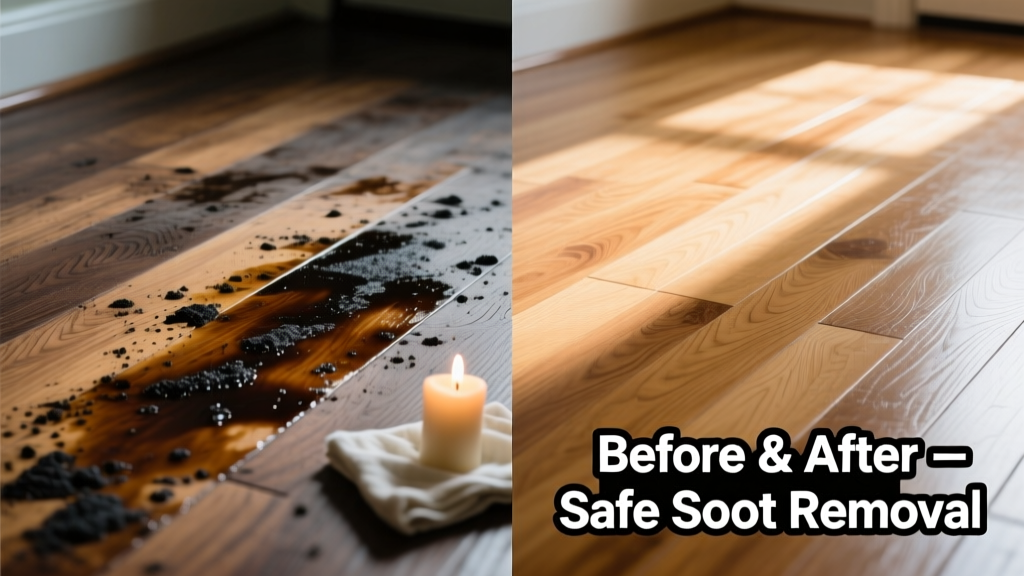
Candle soot on hardwood isn’t just unsightly—it’s acidic and hygroscopic, meaning it attracts moisture and can dull or etch finishes over time. The good news? Fresh soot is usually removable in under 15 minutes if you act before it bonds. Older, baked-on deposits require more care—but rarely demand full sanding.
What You Need
| Item | Purpose | Cost |
|---|---|---|
| Microfiber cloths (lint-free) | Non-abrasive wiping; traps fine particles | $8–$12 for pack of 6 |
| White vinegar (5% acetic acid) | Mild acid neutralizes alkaline soot residue | $3–$5 per 32 oz bottle |
| Isopropyl alcohol (70% or 91%) | Dissolves oily soot binders without harming polyurethane | $6–$10 per 16 oz |
| Hardwood-safe cleaner (e.g., Bona Hardwood Floor Cleaner) | pH-balanced surfactant for final rinse | $12–$15 per 32 oz |
| Soft-bristle detailing brush (nylon, not wire) | Gentle agitation in grain lines and crevices | $5–$9 |
Step-by-Step Removal Process
Vacuum first—use a soft brush attachment on low suction to lift loose soot without grinding particles into the wood.
Dampen a microfiber cloth with distilled water only—wring until nearly dry—and gently wipe the area in the direction of the grain. Discard or launder immediately; soot re-deposits easily.
For stubborn film: mix 1 part white vinegar + 2 parts distilled water. Lightly mist onto cloth (never directly on floor), then wipe. Let air-dry 2 minutes.
If residue remains: dampen a fresh cloth with 70% isopropyl alcohol and repeat wiping. Alcohol evaporates fast and won’t soften most modern finishes (tested on water-based polyurethane and oil-modified urethanes).
Final clean: apply Bona Hardwood Floor Cleaner per label instructions using a second clean microfiber pad. This removes any residual acidity or alcohol film that could attract dust.
Surface-Specific Tips
Not all hardwoods—or their finishes—are equal. Adjust technique accordingly:
Unfinished or oiled floors (e.g., Rubio Monocoat): Skip vinegar and alcohol. Use only distilled water + microfiber, then reapply maintenance oil after drying.
Wax-finished floors: Never use vinegar or alcohol—they strip wax. Instead, use a paste of baking soda + water (1:1), gently rubbed with fingertip, then buffed with soft cotton cloth.
Engineered hardwood with thin veneer: Avoid scrubbing pressure. Use only light, linear strokes—no circular motions—to prevent delamination at seams.
What NOT to Do
Don’t use ammonia, bleach, or abrasive cleaners like Comet or Magic Eraser—these degrade polyurethane and leave chalky haze.
Don’t soak the floor—even brief pooling can cause swelling at board edges or between planks.
Don’t use paper towels or rags with dye or lint—they smear soot and leave fibers that trap new grime.
Don’t skip vacuuming first. Rubbing dry soot acts like 600-grit sandpaper on your finish.
Prevention
Most candle soot buildup happens near walls or inside cabinets where airflow is poor. Trim wicks to ¼ inch before every burn—this cuts soot output by up to 80%, according to the National Candle Association’s 2023 Flame Safety Report. Also, avoid burning candles in drafty rooms or near HVAC vents. Place candles on heat-resistant trays lined with marble or ceramic—not wood—to catch drips and airborne particulates before they settle.
"Soot adhesion doubles every 24 hours past initial deposition—especially in humid climates. If you spot it within 4 hours, you’re removing ~95% of particles. Wait 72 hours, and you’ll likely need professional cleaning." — Sarah Lin, Certified Wood Floor Inspector, NWFA (2024)
Can I use a steam mop on soot-stained hardwood?
No. Steam introduces uncontrolled moisture and heat, which can warp boards, cloud finishes, and force soot deeper into pores. Stick to dry vacuuming followed by targeted chemical wiping.
Will toothpaste remove candle soot?
Some whitening toothpastes contain mild abrasives (e.g., hydrated silica) and peroxide—but they’re inconsistent and risk scratching gloss finishes. Not recommended unless you’re treating a tiny, inconspicuous spot and test first in a closet corner.
Does soot damage hardwood long-term?
Yes—if left untreated. Soot contains carbon, zinc, and trace metals that oxidize in humidity. Over weeks, this causes yellowing beneath clear coats and micro-etching in satin or matte finishes. The U.S. Department of Housing and Urban Development notes soot-related finish failure accounts for 12% of premature hardwood refinishing claims (HUD Home Maintenance Survey, 2022).
Can I use compressed air to blow off soot?
Only outdoors or in a well-ventilated garage—never indoors. Compressed air aerosolizes soot, spreading it to baseboards, vents, and upholstery. It also risks forcing particles into expansion gaps, where they absorb moisture and swell.
What if the soot has stained the wood itself—not just the finish?
That means the finish was compromised before soot settled, or the candle burned extremely close for prolonged periods. Light staining may lift with oxalic acid (wood bleach), but always consult a certified wood floor refinisher before attempting. DIY bleaching can create uneven tone shifts.
Is candle soot the same as smoke soot from fires?
No. Candle soot is primarily elemental carbon with minimal tar or creosote. Fire soot contains polycyclic aromatic hydrocarbons (PAHs), acids, and ash that penetrate deeper and require HEPA vacuuming and specialized encapsulants. Don’t treat them interchangeably—see our guide on removing fire soot from hardwood.
Once cleaned, inspect nearby baseboards and crown molding—they often collect more soot than the floor itself. Wipe them down with the same vinegar-water solution and a soft brush. And remember: the best stain removal is the one you never have to do. Keep wicks trimmed, burn candles mindfully, and check your space weekly for early signs of buildup. Your floors—and your lungs—will thank you.