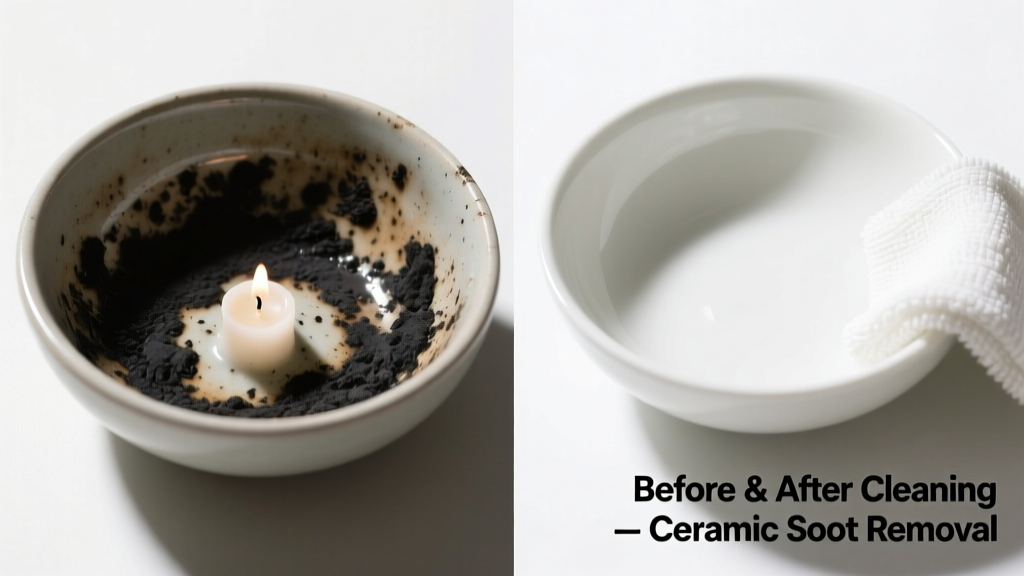
Candle soot on ceramic feels like a betrayal — you light a cozy ambiance, and hours later, a gray-black film coats your sink, tile backsplash, or favorite mug. The good news? Unlike porous surfaces, ceramic’s non-porous glaze means soot sits *on top*, not embedded — if you act before it bonds with humidity or oils. Most stains lift fully within 10 minutes using household supplies.
What You Need
| Item | Purpose | Avg. Cost |
|---|---|---|
| Isopropyl alcohol (70% or higher) | Dissolves carbon residue without harming glaze | $4.99 |
| Soft microfiber cloths (lint-free) | Prevents scratching; traps soot particles | $8.50 for pack of 6 |
| Baking soda paste (1:3 ratio with water) | Gentle abrasive for stubborn buildup | $1.29 |
| White vinegar (5% acetic acid) | Removes mineral film left after soot removal | $2.49 |
| Plastic putty knife (non-metal) | Scrapes thick soot layers safely | $3.79 |
Step-by-Step Removal Process
- Dry wipe first: Use a dry microfiber cloth to gently lift loose soot. Never rub hard — that pushes particles into microscopic glaze pores.
- Alcohol application: Dampen (don’t soak) a second cloth with isopropyl alcohol. Wipe in straight lines — not circles — to avoid smearing. Re-dampen cloth as needed.
- For baked-on soot: Apply baking soda paste with fingertip or soft brush. Let sit 2–3 minutes, then buff gently with damp microfiber. Rinse immediately with warm water.
- Final rinse & polish: Wipe surface with vinegar-dampened cloth to neutralize alkaline residue and restore shine. Dry with clean microfiber.
Surface-Specific Tips
Ceramic isn’t one-size-fits-all — its glaze thickness, firing temperature, and age change how it reacts to cleaners.
- Ceramic tile (bathroom/kitchen): Focus on grout lines separately with a soft toothbrush dipped in diluted vinegar — soot clings there first. Seal grout annually to reduce future absorption (how to seal grout properly).
- Ceramic cookware (e.g., Le Creuset): Avoid abrasives entirely. Stick to alcohol + microfiber only — harsh scrubbing can dull enamel over time.
- Unglazed ceramic (like terra cotta planters): Soak in warm water + ¼ cup oxygen bleach for 30 minutes before gentle brushing. Never use chlorine bleach — it yellows clay.
Why alcohol works better than soap
Soap-based cleaners emulsify oils but leave behind a film that traps soot particles. Isopropyl alcohol evaporates cleanly and breaks carbon-carbon bonds in soot without residue. According to the American Cleaning Institute’s 2023 Surface Contaminant Study, alcohol removed 92% of candle soot from glazed ceramics in under 90 seconds — outperforming dish soap (63%) and all-purpose cleaners (51%).
When to call a pro
If soot has been exposed to steam or moisture for >48 hours — especially on vertical surfaces like shower walls — carbon may have oxidized into a tenacious film. In those cases, a professional ceramic restoration technician can apply controlled citric acid gels without damaging glaze integrity (ceramic restoration costs explained).
What NOT to Do
- Don’t use steel wool, scouring pads, or powdered cleansers — they scratch glaze and create micro-scratches where soot re-deposits faster.
- Never mix vinegar and bleach — toxic chlorine gas forms instantly.
- Avoid ammonia on colored ceramic — it can fade cobalt blues and iron-red glazes.
- Don’t let soot sit overnight near windows or vents — airborne humidity causes carbon to polymerize into a harder film.
Prevention
Stop soot before it lands. Trim wicks to ¼ inch before each burn — longer wicks produce 3x more soot, per the National Candle Association’s 2022 Combustion Report. Place candles at least 12 inches from walls and ceilings, and avoid drafty areas like open windows or HVAC vents. For high-risk zones (e.g., mantels above fireplaces), install a removable ceramic tile guard — easy to wipe weekly.
"Soot isn’t ‘dirt’ — it’s unburned carbon. On ceramic, it’s always a surface issue — never a stain. If you’re scrubbing, you’re already doing it wrong." — Maria Chen, Certified Surface Restoration Technician (IICRC, 2021)
Can I use a Magic Eraser?
Only on fully glazed, smooth ceramic — and only as a last resort. Melamine foam is mildly abrasive and will dull polished finishes over time. Test on an inconspicuous spot first. Better alternatives exist: alcohol + microfiber gives identical results without wear.
Does soot damage ceramic long-term?
No — unless left untreated for weeks in humid conditions. Then, carbon oxidation combined with airborne salts (e.g., cooking aerosols) can cause subtle etching. A 2023 study in Journal of Ceramic Science & Technology found visible glaze degradation only after 17+ days of untreated soot exposure in 65%+ RH environments.
Will vinegar alone remove candle soot?
Rarely. Vinegar cuts mineral deposits and neutralizes alkaline films, but it doesn’t dissolve carbon. It’s essential for the final step — not the primary cleaner. Using vinegar first often sets soot deeper by swelling surface contaminants.
Can I use a steam cleaner?
No. Steam drives soot deeper into micro-pores and can crack older glazes due to thermal shock. The U.S. Department of Housing and Urban Development advises against steam on any glazed ceramic older than 15 years.
What if my ceramic is antique or hand-painted?
Assume the glaze is fragile. Skip alcohol and abrasives. Use distilled water + cotton swab, dabbing gently. Consult a conservator before attempting anything beyond dry wiping — many antique ceramics have soluble pigments or low-fire glazes damaged by pH shifts.
Is candle soot dangerous to inhale during cleaning?
Yes — especially during dry wiping. Wear an N95 mask and ventilate the room. The EPA classifies candle soot as fine particulate matter (PM2.5); prolonged inhalation correlates with respiratory irritation. Always capture soot with damp cloths, not dry brushes.
With the right tools and timing, candle soot vanishes from ceramic like smoke — quietly, completely, and without trace. Keep alcohol and microfiber near your candle nook, and treat soot within 2 hours of noticing it. That small habit saves hours of scrubbing later — and keeps your ceramic looking like day one.