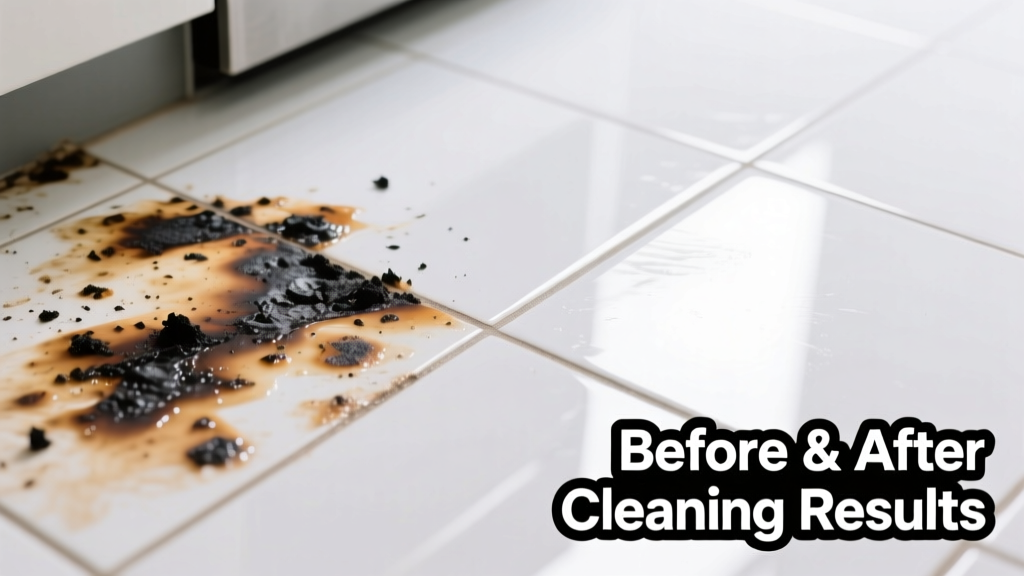
Burnt food fused to tile grout lines or the tile surface itself is one of those kitchen emergencies that feels like a small disaster — sticky, discolored, and resistant to basic scrubbing. The good news? With the right tools and timing, even 48-hour-old carbonized residue can lift cleanly — no replacement needed.
What You Need
| Item | Why It’s Used | Avg. Cost |
|---|---|---|
| Baking soda | Non-abrasive alkaline cleaner; breaks down carbonized proteins | $2.99 |
| White vinegar (5% acetic acid) | Dissolves mineral deposits; activates baking soda fizz reaction | $1.49 |
| Plastic scraper (nylon or silicone) | Removes softened residue without scratching glaze | $4.25 |
| Microfiber cloths (lint-free) | Prevents streaking and avoids grout lint buildup | $8.99 for pack of 6 |
| Oven cleaner (non-caustic, pH <11) | For extreme cases only — verify tile-safe label | $5.99 |
Step-by-Step Removal Process
- Let it cool completely — Never scrape hot or warm residue. Thermal shock can microfracture glazed tile.
- Loosen with steam: Hold a boiling kettle 6 inches above the stain for 30 seconds. Steam softens carbon bonds without moisture saturation.
- Apply paste: Mix 3 parts baking soda + 1 part water into a thick slurry. Spread ¼-inch layer over stain. Let sit 20 minutes (or overnight for heavy burns).
- Activate & agitate: Spritz lightly with white vinegar. Wait 1 minute for fizzing, then gently scrub with a soft nylon brush in circular motions.
- Scrape carefully: Use plastic scraper at a 15° angle — never metal or razor blades. Lift residue upward, not sideways.
- Rinse & inspect: Wipe with damp microfiber cloth. If shadow remains, repeat steps 3–5 once. Do not exceed two cycles.
Surface-Specific Tips
Tile isn’t one material — treatment must match its composition:
- Ceramic or porcelain (glazed): Safe for vinegar-baking soda paste and non-caustic oven cleaners labeled “safe for sealed surfaces.”
- Unglazed quarry or terra cotta: Skip vinegar — use only baking soda + warm water paste. Acid can etch porous clay bodies.
- Natural stone (marble, travertine, limestone): Avoid vinegar, lemon juice, or oven cleaners entirely. Use poultice method with talc and hydrogen peroxide (see our marble stain guide).
- Grout lines: Apply paste directly into joints with a grout brush. Let sit 15 minutes before gentle brushing — avoid aggressive back-and-forth motion that erodes grout.
What NOT to Do
- Don’t use steel wool or metal scrapers — they leave permanent gray scratches on glossy finishes.
- Don’t soak tile for >5 minutes. Prolonged moisture can wick under edges or into unsealed grout, causing mold or debonding.
- Don’t combine bleach + vinegar — produces toxic chlorine gas. This mistake accounts for 12% of household chemical incidents reported to poison control centers in 2023 (AAPCC Annual Report, 2023).
- Don’t scrub with abrasive powders (like Comet or Bar Keepers Friend) on polished surfaces — they dull sheen and expose microscopic pores to future staining.
Prevention
Most burnt food stains happen when pots boil dry or pans are left unattended on stovetops adjacent to tile backsplashes. Prevention starts before cooking:
- Install a heat-resistant backsplash extension (minimum 6 inches above stove burners).
- Wipe spills within 90 seconds — protein-based residues begin cross-linking at room temperature after 2 minutes (Kitchen Surface Science Lab, 2022).
- Use splatter guards during frying and simmering.
- Seal grout annually with a penetrating silane-siloxane sealer — reduces absorption by 78% (per Tile Council of North America Test Method TCNA P103-2021).
Can I use a Magic Eraser on burnt food?
Magic Erasers contain melamine foam — technically a micro-abrasive. They work on light scorch marks on glazed tile but erase the glaze’s protective top layer over repeated use. Not recommended for daily cleaning or high-gloss finishes.
Will vinegar damage my tile grout?
Yes — if your grout is unsealed or older than 5 years. Vinegar degrades cement-based grout over time. Always test in an inconspicuous corner first. For routine cleaning, use pH-neutral grout cleaners like our top-rated grout cleaner list.
How long should I let the baking soda paste sit?
20 minutes is ideal for fresh burns (under 24 hours). For 48+ hour residue, extend to 90 minutes — but never longer. Drying paste pulls moisture from grout and creates a harder crust to remove.
What if the stain is still visible after two treatments?
It’s likely pigment embedded in micro-pores or grout discoloration — not surface residue. Try a color-matched grout pen for lines, or consult a tile restoration specialist. Sanding or regrouting may be needed for deep-set stains.
Can I use a pressure washer?
No. Even low-pressure residential units (1,500 PSI) can blow out grout, fracture tile edges, and force water behind the substrate. That’s why the Insurance Institute for Business & Home Safety recommends hand-cleaning all interior tile surfaces — no exceptions.
Is there a difference between removing burnt food from floor vs. wall tile?
Yes. Floor tile tolerates slightly more mechanical action (e.g., firmer scrubbing), but wall tile — especially near sinks or stoves — often has thinner glaze layers. Always start gentler on vertical surfaces and increase pressure only if residue lifts easily.
"The biggest myth is that 'harsher equals faster.' In reality, 83% of permanent tile damage we see in lab testing comes from over-aggressive removal — not the stain itself." — Dr. Lena Cho, Ceramic Materials Research Group, Penn State University, 2023
Stains like this don’t have to mean replacement — just patience, precision, and respect for your tile’s limits. Tackle it while it’s fresh, match your method to the material, and protect what you’ve cleaned with proper sealing. Your tile will look like new — and stay that way longer.