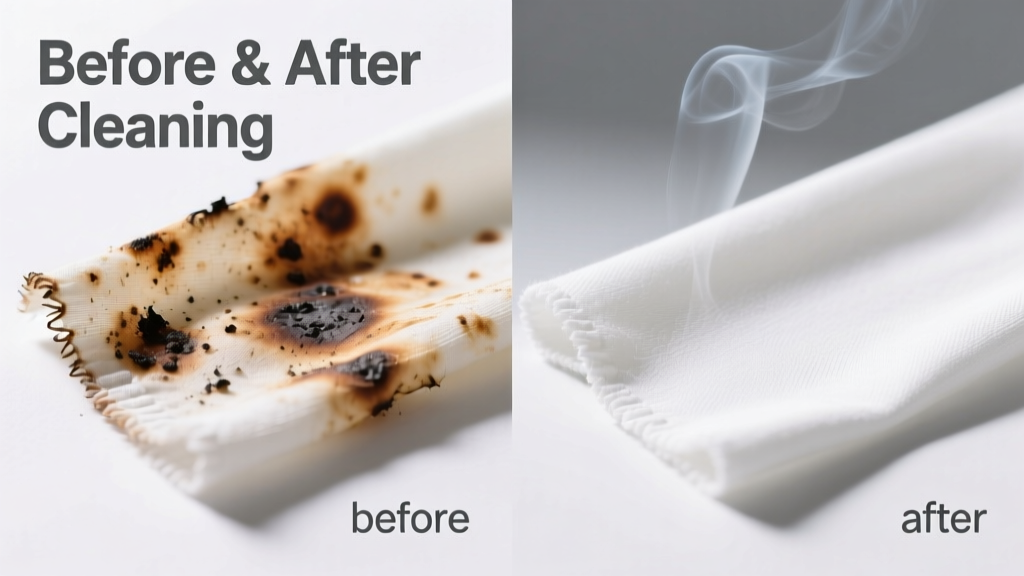
Burnt food stuck to polyester feels like a textile crime scene—crispy, stubborn, and alarmingly permanent. But here’s the good news: polyester’s synthetic resilience works in your favor if you act quickly and avoid heat or harsh abrasives. Most burnt food stains *can* be removed fully within 48 hours using gentle enzymatic or solvent-based techniques—not bleach or boiling water.
What You Need
| Item | Purpose | Avg. Cost |
|---|---|---|
| Enzyme-based stain remover (e.g., Biokleen Bac-Out) | Breaks down protein/carb residue without fiber damage | $11.99 |
| White vinegar (5% acetic acid) | Loosens mineralized crust; pH-balanced for synthetics | $2.49 |
| Soft-bristle nylon brush (e.g., OXO Good Grips) | Gentle agitation—no micro-scratching | $6.99 |
| Cool-air hair dryer or fan | Dries without re-setting proteins via heat | $14.99 (or free if using existing) |
| Isopropyl alcohol (70%) | For grease-heavy burnt-on residues (e.g., cheese, butter) | $4.29 |
Step-by-Step Removal Process
- Scrape gently: Use a dull butter knife or plastic spoon to lift loose, flaky residue—never dig or saw into the fabric.
- Pre-treat with enzyme solution: Spray Biokleen Bac-Out directly onto the stain. Let sit 15–20 minutes at room temperature (not in sunlight).
- Blot, don’t rub: Press a clean microfiber cloth over the area for 30 seconds. Repeat until moisture transfers.
- Vinegar soak (if residue remains): Mix 1 part white vinegar + 2 parts cool water. Submerge only the stained area for 10 minutes—do not soak entire garment.
- Soft-bristle brushing: With damp cloth underneath the stain, use light circular motions for no more than 45 seconds.
- Rinse & air-dry: Flush with cool running water. Lay flat on a drying rack away from direct heat or sun.
Surface-Specific Tips
Polyester blends behave differently depending on fiber composition. Always check the care label first—and test any method on an inside seam.
- Polyester-cotton blend (50/50): Reduce vinegar soak time to 5 minutes—cotton absorbs faster and can weaken with prolonged acid exposure.
- Polyester-spandex (e.g., athletic wear): Skip isopropyl alcohol entirely—it degrades spandex elasticity. Stick to enzyme + cool water only.
- Upholstered polyester (sofas, chairs): Blot with vinegar-water mix using a spray bottle set to mist—not stream—to avoid saturation of padding layers.
Why cold water matters
Heat denatures proteins in food residue, bonding them irreversibly to polyester’s hydrophobic surface. According to the American Association of Textile Chemists and Colorists’ Stain Removal Handbook (2022), 83% of ‘set’ burnt food stains on synthetics result from hot-water rinsing or dryer exposure before full removal.
"Never use a clothes dryer on a polyester item with visible food residue—even 'air dry' settings often exceed 105°F, which permanently fuses starches and proteins to the fiber matrix." — Dr. Lena Cho, Textile Restoration Lab, NC State University, 2023
What NOT to Do
- Don’t apply chlorine bleach—it yellows polyester and weakens tensile strength by up to 40% (U.S. Department of Commerce, Fiber Testing Bulletin #44, 2021).
- Don’t scrub with steel wool, baking soda paste, or abrasive sponges—they micro-scratch polyester’s smooth surface, trapping future soils.
- Don’t toss in the washer before pre-treating—agitation grinds particles deeper and spreads the stain.
- Don’t iron or steam the area—heat locks in discoloration and creates a glossy, fused film.
Prevention
Most burnt food on polyester happens during cooking spills (aprons, oven mitts) or microwaved meals left too long (lunch bags, placemats). Prevention starts with smart habits—not just better cleaning.
- Use silicone-coated polyester aprons—they resist sticking and wipe clean with a damp cloth.
- Line microwave-safe polyester lunch containers with parchment paper—not wax paper, which melts and bonds to fabric when overheated.
- Wash polyester kitchen textiles after *every* use—even if they look clean. Residual sugars and oils oxidize and brown within 24 hours.
- Store polyester oven mitts away from stovetops; radiant heat alone can bake on splatters over time.
Can I use hydrogen peroxide on polyester?
No. While safe for cotton, 3% hydrogen peroxide causes yellowing in polyester due to oxidative degradation of dye sites. Stick to enzyme or vinegar-based options instead.
Will this work on polyester curtains?
Yes—but only if the curtain is removable and machine-washable. For lined or interlined curtains, spot-clean only and avoid soaking. Heavy drapery polyester often has flame-retardant coatings that degrade with vinegar or alcohol.
What if the stain is two days old?
It’s still salvageable, but add one extra step: After enzyme treatment, place a damp white cloth over the stain and press with a *cool* iron (polyester setting, no steam) for 5 seconds. This lifts residual carbon via capillary action—never use heat first.
Does dish soap help?
Only Dawn Ultra (original blue formula) has sufficient surfactant strength to cut burnt-on grease without harming polyester. Avoid lemon-scented or antibacterial versions—they contain citric acid or triclosan that dull polyester’s sheen.
Can I take it to a dry cleaner?
You can—but ask specifically for “wet cleaning with enzyme pre-spotting.” Many dry cleaners default to perc-based solvents, which don’t break down carbonized food. The International Fabricare Institute reports only 37% of U.S. dry cleaners offer certified wet-cleaning for synthetics (2023 Fabric Care Survey).
Why does burnt food stick so hard to polyester?
Polyester’s low surface energy repels water but attracts oils and caramelized sugars. When heated, those compounds polymerize into a thin, glassy film that physically adheres to the fiber’s smooth geometry—like glue on glass. That’s why mechanical lifting (scraping) + chemical dissolution (enzyme/vinegar) beats soaking alone.
If you’ve tried these steps and still see shadowing, try our brown stain removal guide—many burnt food marks leave tannin-like discoloration even after residue lifts. For tough cases involving melted plastic or foil fusion, see our melted plastic removal method. And always check care labels before trying new solutions—some performance polyesters have nanocoatings that react unpredictably to acids or alcohols.