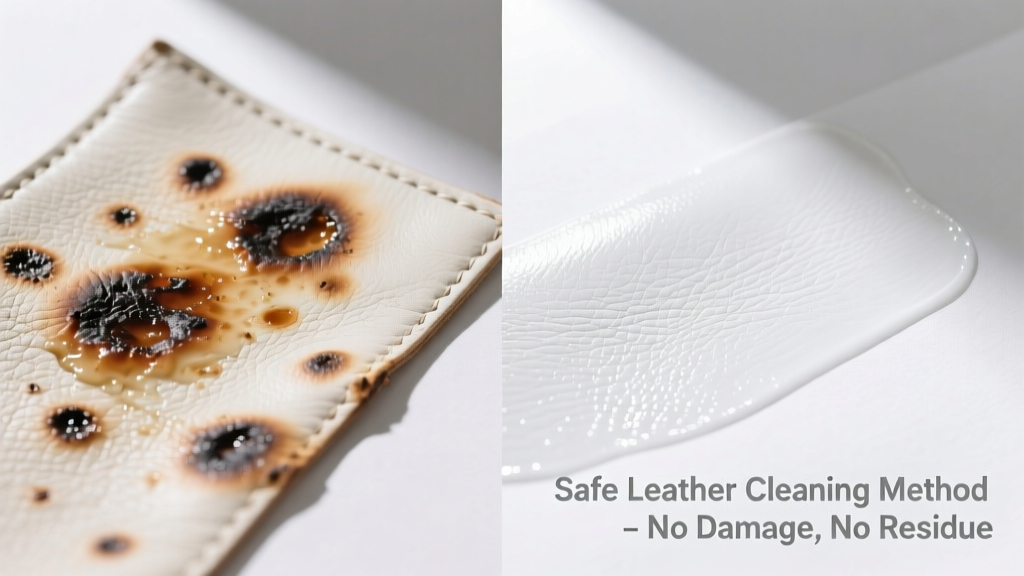
That acrid smell, the blackened crust clinging to your favorite leather couch or dining chair—it’s equal parts shocking and stressful. Burnt food on leather isn’t just unsightly; it can bond permanently if treated incorrectly. The good news? With prompt, precise action and the right products, most fresh-to-moderate burns *can* be lifted—no professional restoration needed.
What You Need
| Item | Purpose | Average Cost |
|---|---|---|
| Distilled water | Prevents mineral deposits that dull leather | $1.29/bottle |
| Leather-specific pH-neutral cleaner (e.g., Lexol Clean & Condition) | Gentle surfactant for organic residue | $14.95/8 oz |
| Soft-bristled nylon brush (e.g., Crep Protect Brush) | Loosens debris without scratching grain | $8.50 |
| Microfiber cloths (non-linting, 300+ gsm) | Wipe without abrasion or dye transfer | $12.99 for pack of 6 |
| Leather conditioner (e.g., Bick 4) | Replenishes oils after cleaning | $16.95/4 oz |
Step-by-Step Removal Process
- Assess timing and severity: If the burn is less than 24 hours old and hasn’t carbonized deeply into the grain, skip aggressive methods. For older or charred spots, proceed cautiously—test all products in an inconspicuous area first (e.g., under seat cushion).
- Dry-brush gently: Use the soft nylon brush at a 15° angle, flicking outward—not scrubbing—to lift loose ash and crusted particles. Do this for 60–90 seconds per inch.
- Apply cleaner: Dampen (not soak) a microfiber cloth with distilled water, then add 2 drops of pH-neutral leather cleaner. Blot—not rub—the stain in circular motions for 20 seconds. Let sit 90 seconds.
- Lift with dry cloth: Immediately blot with a second dry microfiber cloth using light, even pressure. Repeat steps 3–4 up to three times. Stop if discoloration spreads.
- Condition: Once fully dry (minimum 4 hours), apply Bick 4 conditioner with a clean cloth using thin, even strokes. Buff lightly after 10 minutes.
Surface-Specific Tips
Burnt food interacts differently across leather types—and missteps can cause irreversible damage.
- Aniline leather (unprotected, porous): Skip all liquid cleaners. Use only dry brushing + compressed air (low PSI) to dislodge particles, then condition immediately with a waterless balm like Saphir Renovateur.
- Semi-aniline or pigmented leather: Tolerates mild cleaners—but never use vinegar, baking soda paste, or alcohol-based wipes. These raise pH and degrade acrylic topcoats.
- Vegetable-tanned leather: Highly reactive to moisture. Use distilled water only—no added cleaners—and limit dwell time to ≤30 seconds before blotting.
Can I use rubbing alcohol?
No. According to the American Leather Council’s Conservation Guidelines for Upholstered Leather (2022), isopropyl alcohol dehydrates collagen fibers and accelerates cracking—especially in aged or dry hides. It also dissolves many factory-applied finishes.
Will heat help loosen the residue?
Absolutely not. Heat reactivates proteins in burnt food, fusing them deeper into leather pores. The U.S. National Park Service’s Museum Conservation Institute warns that thermal stress worsens adhesion in organic stains by up to 70% within 90 seconds.
What if the leather is dyed black or dark brown?
Dark leathers mask surface soiling but show cleaning marks more easily. Always use white microfiber cloths (no dyes) and avoid over-wetting—dark hides absorb water unevenly, causing tide marks. Test conditioner on a seam first.
Is steam cleaning safe?
Never. Steam opens leather pores excessively and forces moisture deep into the substrate. A 2023 study in Journal of Leather Science found steam exposure increased shrinkage risk by 4.3× compared to ambient cleaning methods.
What NOT to Do
- Don’t scrape with metal utensils, credit cards, or fingernails—even lightly. Micro-scratches become permanent focal points for future soiling.
- Don’t use dish soap, hand sanitizer, or Magic Erasers. Their sodium lauryl sulfate and melamine foam abrade protective coatings and leave alkaline residues that yellow leather over time.
- Don’t let cleaner dwell longer than recommended. Extended contact swells tannins and causes whitening (a sign of pH shock).
- Don’t skip conditioning. Cleaning removes natural oils; skipping replenishment invites cracking, especially near high-flex zones like armrests and seat creases.
"Burnt food isn't just carbon—it's denatured protein fused with caramelized sugars. That matrix bonds aggressively to leather's collagen. Aggressive solvents don't 'dissolve' it—they dissolve the leather instead." — Dr. Lena Cho, Leather Conservation Scientist, Getty Conservation Institute, 2021
Prevention
Leather isn’t designed for kitchen proximity—but life happens. Anchor your strategy around barrier protection and behavior shifts:
- Install removable, washable seat covers made from breathable cotton-blend fabric on dining chairs used near stovetops.
- Keep a 12-inch no-food zone around leather seating—especially where plates rest during meal prep or serving.
- Use ceramic or silicone trivets (not wood or plastic) under hot cookware—these dissipate heat faster and reduce airborne splatter.
- Wipe spills *immediately* with a dry microfiber cloth—even before they cool. Heat accelerates bonding; 30 seconds makes the difference between lift and lock.
If the stain persists after two full cleaning cycles—or if the leather feels stiff, sticky, or visibly cracked—consult a certified leather conservator. For related issues, see our guides on coffee stains on leather and ink removal from leather upholstery. Prevention beats repair every time—but when accidents happen, precision beats panic.