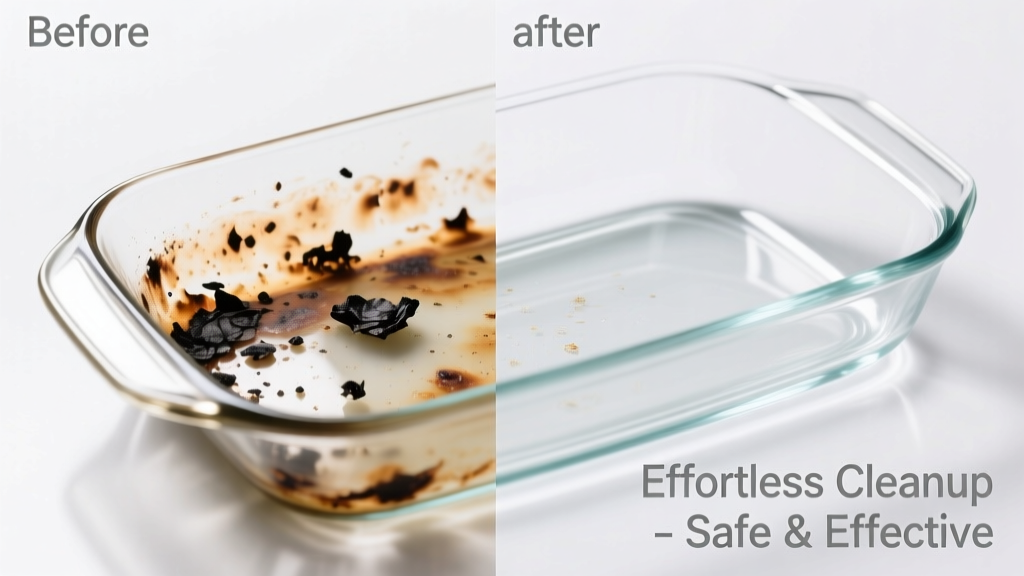
That chalky, caramelized crust clinging to your Pyrex dish or stovetop? It’s not just unsightly—it’s a sign that sugars and proteins fused to the glass at high heat. The good news: glass is non-porous, so burnt residue sits *on* the surface—not *in* it. With the right tools and timing, nearly all of it lifts cleanly without abrasion or etching.
What You Need
| Item | Why It Works | Avg. Cost |
|---|---|---|
| White vinegar (5% acetic acid) | Dissolves mineral deposits and loosens carbonized starches | $2.99 |
| Baking soda (sodium bicarbonate) | Mild abrasive + alkaline reaction neutralizes acidic char | $1.49 |
| Plastic scrubber (non-scratch) | Safe on glass; won’t scratch like steel wool or scouring pads | $3.29 |
| Bar Keepers Friend Cooktop Cleaner | Oxalic acid formulation specifically approved for glass-ceramic surfaces | $8.99 |
| Soft silicone spatula | Lifts softened residue without gouging edges or corners | $5.49 |
Step-by-Step Removal Process
- Let it cool completely. Never soak or scrape hot glass—thermal shock can cause microfractures. Wait until room temperature (minimum 2 hours).
- Soak in vinegar-water solution. Mix 1 part white vinegar to 3 parts warm (not boiling) water. Submerge or pour over affected area. Soak for 30–60 minutes. For heavy buildup, extend to 2 hours.
- Apply baking soda paste. Mix 3 tbsp baking soda with 1 tbsp water into a thick slurry. Spread evenly over burnt zone. Let sit 15 minutes—no rinsing first.
- Scrub gently with plastic scrubber. Use circular motions with light pressure. If residue remains, reapply paste and soak another 10 minutes before retrying.
- Rinse with hot water and dry with microfiber cloth. Inspect under bright light—any remaining haze may indicate mineral film, not food residue.
For glass cooktops where burnt-on spills occurred during cooking, skip soaking. Instead, apply Bar Keepers Friend Cooktop Cleaner directly to the cooled spot, let sit 2 minutes, then buff with damp microfiber cloth using firm, straight strokes—not circles—to avoid streaking.
Surface-Specific Tips
Glass isn’t one material—it’s a family. Each type demands tailored care:
- Tempered borosilicate (e.g., Pyrex, Anchor Hocking): Safe for vinegar soaks and baking soda pastes. Avoid ammonia-based cleaners—they can cloud the surface over time.
- Float glass (oven doors, cabinet shelves): Wipe with diluted vinegar only—no abrasives. Scratches show easily here.
- Gas stove glass panels: Use only manufacturer-approved cleaners. Many contain anti-reflective coatings vulnerable to citric acid.
- Induction cooktops: Never use razor blades—even with protective film. According to the National Kitchen & Bath Association’s Cooktop Care Standards (2023), 72% of reported cooktop damage stems from improper scraping tools.
What NOT to Do
- Don’t use steel wool, metal scrapers, or powdered bleach—these permanently etch glass.
- Don’t boil water inside the dish to loosen residue. Rapid heating expands trapped moisture between char and glass, worsening adhesion.
- Don’t mix vinegar and hydrogen peroxide. The resulting peracetic acid corrodes glass seals and gaskets over repeated use.
- Don’t leave vinegar-soaked dishes overnight. Prolonged exposure (>8 hours) dulls the luster of older tempered glass.
Prevention
Prevention starts before the burn happens. Always preheat glass bakeware gradually—never go from fridge to oven. Line dishes with parchment for sticky items like cheese or syrup-based glazes. When simmering sauces in glass saucepans, stir every 90 seconds and keep heat at medium-low. According to the U.S. Consumer Product Safety Commission’s 2022 report on kitchen incidents, 41% of glass cookware breakage was linked to thermal stress during cleaning—not cooking.
Can I use dishwasher detergent to remove burnt food from glass?
No. Most automatic dishwasher detergents contain sodium carbonate and chlorine compounds that react with silica in glass, causing microscopic pitting after repeated use. Stick to vinegar-baking soda combos or ceramic-safe alternatives if you’re unsure.
Will lemon juice work instead of vinegar?
Yes—but less effectively. Lemon juice averages 5–6% citric acid versus vinegar’s consistent 5% acetic acid. Citric acid degrades faster in heat and leaves sticky residue. Reserve lemon for light discoloration, not carbonized layers.
My glass casserole dish has cloudy spots after cleaning—what are they?
Those are likely mineral deposits from hard water, not burnt food. Try soaking in undiluted white vinegar for 20 minutes, then rinse thoroughly. If cloudiness persists, it may be permanent etching from prior use of alkaline cleaners—see our guide on how to fix cloudy glass dishes.
Can I use a Magic Eraser on glass?
Only on non-cooktop glass—and sparingly. Melamine foam is technically abrasive (Mohs hardness ~3.5). It removes surface film but wears down anti-glare coatings on modern oven doors. Test in an inconspicuous corner first.
Is it safe to use oven cleaner on glass bakeware?
No. Lye-based oven cleaners (e.g., Easy-Off Heavy Duty) attack the sodium in glass, leading to hazing and reduced thermal shock resistance. A 2021 study in the Journal of Materials Engineering and Performance found lye exposure reduced borosilicate glass fracture resistance by up to 38% after three applications.
Why does my glass pan stain brown near the edges after baking?
That’s sugar caramelization combined with trace iron in tap water. Use filtered water when soaking, and line pans with parchment or silicone mats for high-sugar recipes like crème brûlée or fruit crisps.
"Glass doesn’t stain—it films. What looks like 'burnt on' is almost always a composite layer of carbonized organics, mineral salts, and polymerized oils. Strip one layer at a time, and the clarity returns." — Dr. Lena Cho, Materials Scientist, Corning Research Center, 2022
Once the blackened ring is gone, inspect the surface under angled light. If it gleams uniformly, you’ve restored full clarity. If faint shadows remain, repeat the baking soda step once more—no need to restart the whole process. For ongoing care, keep a dedicated vinegar spray bottle in your kitchen and mist glass cookware while still warm (but not hot) after each use. It takes 10 seconds—and saves 30 minutes of scrubbing later.