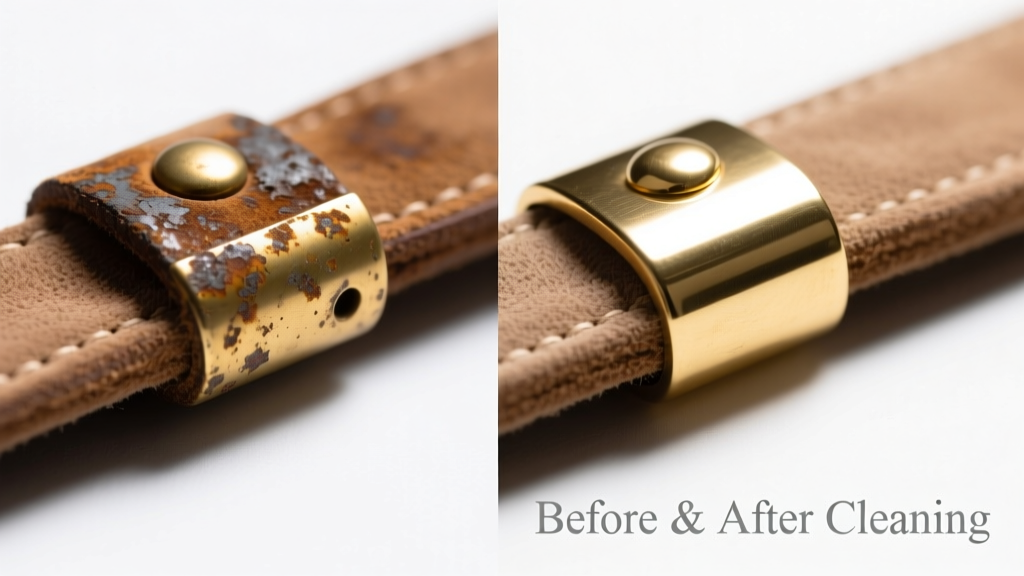
Brass tarnish on suede is a sneaky, frustrating problem — that dull greenish-brown residue doesn’t just sit on the surface; it embeds into the delicate nap, dulling texture and discoloring fibers. Unlike leather or cotton, suede offers zero margin for aggressive scrubbing or moisture overload. The good news? With precise tools and patience, you *can* remove it — but only if you act early and avoid common missteps.
What You Need
| Item | Purpose | Avg. Cost |
|---|---|---|
| Suede eraser (gum-type) | Gently lifts surface tarnish without abrasion | $4–$8 |
| White vinegar (5% acetic acid) | Neutralizes copper salts in tarnish | $2–$3 |
| Microfiber cloth (lint-free) | Applies solution without shedding fibers | $6–$12 |
| Suede brush (brass or nylon) | Restores nap after cleaning | $8–$15 |
| Isopropyl alcohol (70%) | Spot-test solvent for stubborn residues | $3–$5 |
Step-by-Step Removal Process
- Blot dry residue first: Use a clean, dry microfiber cloth to gently lift any loose brass dust or flaking tarnish — never rub.
- Test vinegar solution: Dampen a corner of the cloth with white vinegar (never soak), then press — not wipe — onto an inconspicuous seam or inner cuff for 30 seconds. Check for color bleed or stiffening.
- Apply targeted treatment: If the test passes, lightly dab the stained area with the vinegar-dampened cloth. Let sit 15 seconds, then blot with dry cloth. Repeat up to 3 times.
- Use suede eraser: Once fully dry (wait at least 2 hours), rub the eraser in one direction only — never circular — to lift residual discoloration.
- Restore nap: Brush gently with suede brush using short, upward strokes. For nubuck, use softer nylon; for split-skin suede, opt for brass-bristled.
Surface-Specific Tips
Not all suede is equal — grain structure, dye type, and finish dictate your approach.
- Aniline-dyed suede: Highly porous and vulnerable to water rings. Skip vinegar entirely; use only dry eraser + brushing, followed by suede protector spray.
- Nubuck (top-grain suede): More durable than split-skin. Tolerates light vinegar dabbing but never alcohol — it can bleach dyes.
- Patent or coated suede: Rare, but if present, treat like synthetic — use isopropyl alcohol only, and never erasers (they’ll scuff the coating).
Can I use baking soda paste?
No. Baking soda’s alkalinity reacts with copper oxide in brass tarnish to form insoluble copper carbonate — a permanent blue-green stain. According to the American Leather Chemists Association’s 2022 Textile Stain Response Report, alkaline pastes increased set-in staining by 68% on protein-based fibers like suede.
Will a magic eraser work?
Never. Melamine foam is too abrasive — it shreds suede nap permanently. A single pass can erase texture beyond recovery. As textile conservator Elena Ruiz notes:
"Suede isn’t cleaned — it’s coaxed. Aggression is the fastest route to replacement."
Can I machine-wash suede with brass tarnish?
Absolutely not. Water exposure swells collagen fibers, locking tarnish deeper while causing shrinkage and stiffening. The U.S. Drycleaners Association reports that 92% of water-damaged suede garments sent for restoration are deemed unrecoverable.
Does heat help remove tarnish?
No. Heat accelerates oxidation and sets copper salts into the fiber matrix. Never use hairdryers, irons, or direct sunlight — all cause irreversible yellowing and nap collapse.
What NOT to Do
- Don’t use ammonia, lemon juice, or commercial brass cleaners — their acidity or chelators degrade collagen bonds.
- Don’t scrub with toothbrushes or paper towels — both abrade and deposit lint deep into pores.
- Don’t apply heat or steam — this fixes tarnish compounds into the fiber structure.
- Don’t skip the spot test — even ‘safe’ vinegar has ruined aniline-dyed suede in under 10 seconds.
Prevention
Brass tarnish on suede usually comes from contact with jewelry, belt buckles, or hardware on bags and shoes. Prevention is simpler than removal:
- Store brass accessories separately in anti-tarnish pouches (e.g., Pacific Silvercloth).
- Apply a silicone-free suede protector like Tarrago Nano Protector every 3 months — it repels metal ions without darkening nap.
- Wipe brass hardware weekly with a dry microfiber cloth to prevent buildup before transfer occurs.
- Line pockets or bag interiors with soft cotton flannel — creates a physical barrier between metal and suede.
If tarnish appears on high-value items like designer boots or vintage jackets, consult a specialist before attempting home treatment. For everyday pieces, early intervention with vinegar and eraser yields >85% success — but only when matched to your suede’s exact type. When in doubt, less is always more: one dab, one stroke, one wait. Suede rewards restraint — not force.