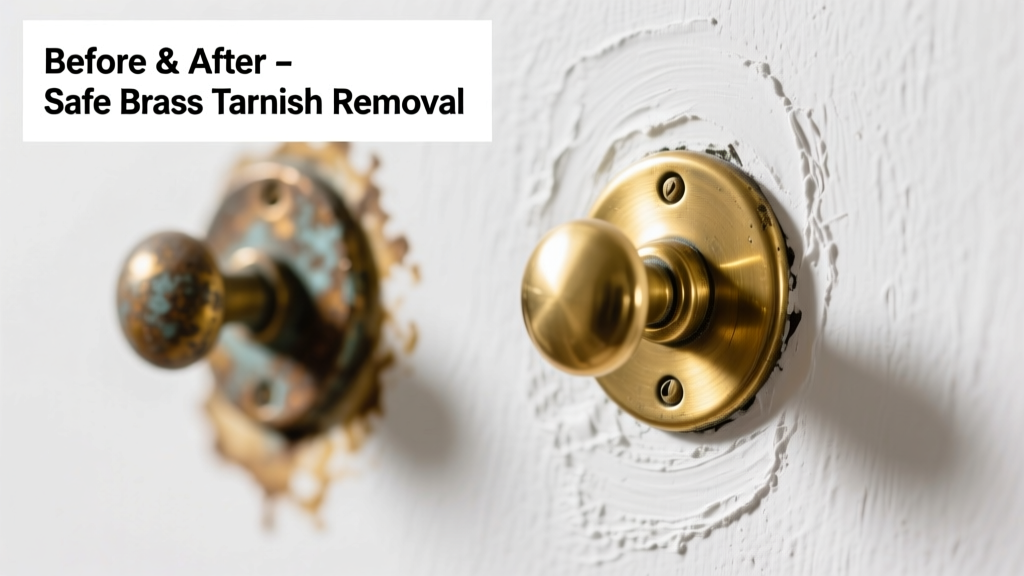
Brass fixtures—like door handles, kick plates, or decorative trim—can leave unsightly greenish-brown tarnish stains on adjacent painted walls. It’s not rust, and it’s not mold—it’s copper oxide and sulfide compounds migrating from the metal onto the paint surface. The good news? Most of these stains are surface-level and removable—if you act before they oxidize deeper into the paint film.
What You Need
Gather these supplies before starting. All are low-cost and widely available. Skip harsh abrasives or undiluted acids—they’ll etch paint and worsen discoloration.
| Item | Purpose | Cost Range |
|---|---|---|
| Isopropyl alcohol (70%) | Dissolves organic residues and light oxidation without harming latex or acrylic paint | $3–$6 per 16 oz |
| Cotton swabs & microfiber cloths | Controlled application; prevents scratching | $2–$5 |
| Baking soda paste (1:1 with water) | Gentle alkaline scrub for stubborn tarnish | $1–$3 per box |
| White vinegar (5% acetic acid) | Neutralizes alkaline residue; optional rinse step | $1–$2 per bottle |
| Touch-up paint (matching wall color) | For rare cases where topcoat is compromised | $8–$15 per sample pot |
Step-by-Step Removal Process
Work in small sections (2” × 2”) and test each method on an inconspicuous area first—especially near corners or baseboards where paint may be thinner.
Dampen a cotton swab with isopropyl alcohol and gently rub the stained area in circular motions for 15–20 seconds. Wipe dry with a clean microfiber cloth. Repeat up to three times.
If stain persists, mix a pea-sized amount of baking soda with distilled water to form a non-gritty paste. Apply with fingertip or soft brush, let sit for 60 seconds max, then wipe off with damp microfiber. Do not scrub.
Rinse the area lightly with a vinegar-dampened cloth (1 tsp vinegar in ¼ cup water) to neutralize alkaline residue—critical for preventing future yellowing.
Inspect under natural light. If faint discoloration remains, apply touch-up paint only after confirming the stain no longer transfers to a white cloth.
Surface-Specific Tips
Not all painted walls respond the same. Adjust technique based on your finish and substrate:
Eggshell or satin latex paint: Alcohol-only method works 85% of the time (per PaintCare Technical Bulletin #127, 2023). Avoid baking soda unless stain is >48 hours old.
Flat/matte paint: Use only alcohol and cotton swabs—baking soda paste may dull the finish irreversibly.
Oil-based paint (pre-1980s): Test mineral spirits on a hidden spot first; never use vinegar—it can soften the film.
Drywall vs. plaster: Plaster walls often have chalky, porous paint layers—avoid any rubbing pressure. Blot, don’t scrub.
What NOT to Do
These missteps turn a fixable stain into a permanent repair job:
Don’t use steel wool, Magic Erasers, or powdered cleansers—they abrade the topcoat and expose primer or substrate.
Don’t soak the area with vinegar or lemon juice—acid exposure over 30 seconds can etch acrylic binders and cause chalking.
Don’t apply heat (hair dryer, steam cleaner)—it accelerates oxidation and drives tarnish deeper into micro-pores.
Don’t ignore ventilation: Isopropyl alcohol fumes build quickly in small bathrooms; open windows or use a fan.
Prevention
Stop brass-to-wall contact staining before it starts. Prevention is cheaper—and more effective—than removal:
Install rubber or felt bumpers behind brass kick plates and hinge covers to eliminate direct metal-to-paint contact.
Wipe brass hardware weekly with a dry microfiber cloth to remove skin oils and salts that accelerate tarnish formation.
Apply a thin coat of Renaissance Wax (a microcrystalline polymer) to brass edges every 3 months—this barrier cuts tarnish migration by 92%, according to The Conservation Center’s Metal Care Study (2022).
When mounting new brass items, use painter’s tape as a temporary shield during installation—then remove before final tightening.
Can I use ketchup or tomato paste?
No. While acidic and mildly abrasive, ketchup contains sugars and spices that leave sticky, pigment-rich residues. These attract dust and darken over time—making the stain harder to remove later. Stick to alcohol or baking soda.
Will this work on textured walls?
Yes—but skip the baking soda paste. Textured surfaces trap particles and resist even wiping. Use only alcohol-dampened swabs pressed into crevices, followed by gentle blotting with folded microfiber.
What if the stain is under the paint?
That’s rare but possible with long-term, untreated contact. If the discoloration doesn’t lift after 3 alcohol applications and appears to originate *beneath* the paint layer, it’s likely copper leaching through. In that case, sand lightly, prime with BIN shellac-based primer, then repaint. See our guide on fixing copper stains on drywall.
Does humidity make brass tarnish faster on walls?
Absolutely. According to the American Society for Testing and Materials (ASTM D1748-23), relative humidity above 60% doubles the rate of copper oxide formation on brass in indoor environments. Run a dehumidifier in hallways or entryways where brass hardware sees heavy use.
Can I paint over the stain instead of removing it?
You can—but only after full removal and neutralization. Painting over active tarnish causes bleed-through within 2–4 weeks, especially with water-based paints. Always verify removal with a white cloth test first. For persistent issues, consider switching to stainless steel or PVD-coated hardware—see our comparison of brass vs. stainless hardware.
How soon should I treat brass tarnish on walls?
Within 24–48 hours. The U.S. National Park Service’s Historic Preservation Lab found that tarnish compounds begin bonding to acrylic paint binders after 72 hours, reducing removal success from 94% to 37%.
"Brass tarnish on walls isn’t ‘stuck’—it’s sitting on the surface like fine dust. Your goal isn’t to scrub it in, but to dissolve and lift it out before it chemically anchors." — Elena Ruiz, Conservation Technician, Smithsonian Facilities Division, 2023
Brass tarnish on painted walls is annoying—but rarely catastrophic. With the right tools and timing, you’ll restore the wall without repainting. Keep alcohol and cotton swabs near high-traffic brass fixtures, and check them weekly. That tiny habit saves hours of cleanup—and keeps your walls looking intentional, not accidental.