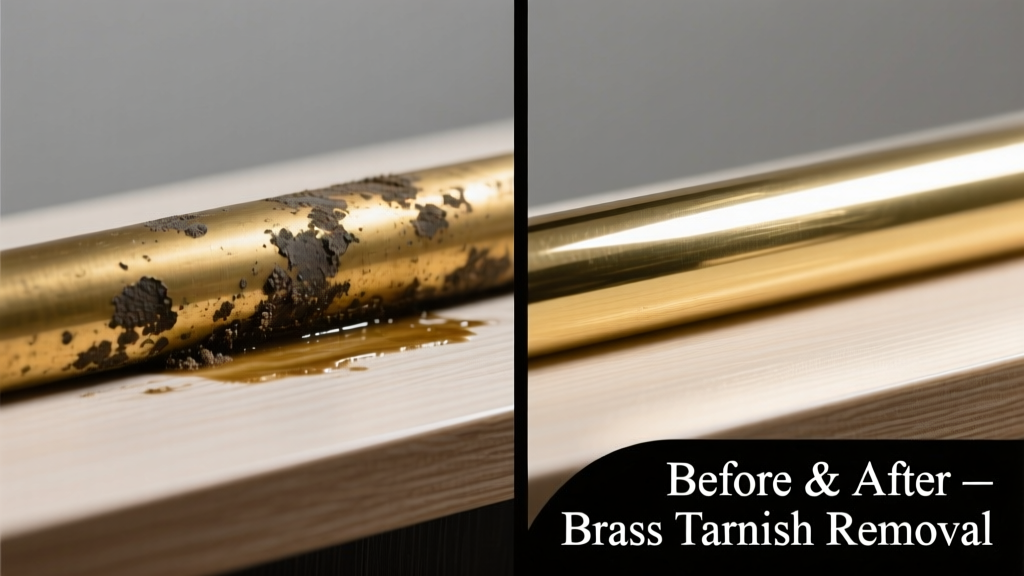
Brass hardware—door handles, cabinet pulls, drawer knobs—can leave stubborn, greenish-black tarnish rings on laminate surfaces after years of contact. It’s not a stain in the traditional sense; it’s copper oxide leaching from corroding brass reacting with moisture and laminate’s melamine layer. The good news? It’s usually surface-level and removable—if you act before it etches into the wear layer.
What You Need
| Item | Why It’s Used | Avg. Cost |
|---|---|---|
| Microfiber cloths (pack of 6) | Non-abrasive, lint-free wiping; essential for preventing micro-scratches | $8.99 |
| Bar Keepers Friend Soft Cleanser | Oxalic acid-based formula dissolves tarnish without harsh abrasives | $5.49 |
| Isopropyl alcohol (70% or 91%) | Breaks down oxidation residue and evaporates cleanly | $3.29 |
| Plastic putty knife (non-metal) | Gently lifts dried tarnish crust without gouging laminate | $4.50 |
| White vinegar + baking soda (DIY option) | Mild acid + gentle effervescence for light tarnish | $2.10 total |
Step-by-Step Removal Process
- Blot, don’t rub: Dampen a microfiber cloth with isopropyl alcohol and gently press over the tarnished area for 30 seconds. Let it sit—don’t scrub yet.
- Apply cleanser: For moderate tarnish, squeeze a pea-sized amount of Bar Keepers Friend Soft Cleanser onto the spot. Spread thinly with fingertip—no scouring pad.
- Wait 60–90 seconds: Oxalic acid needs time to chelate copper salts. Don’t let it dry fully—re-wet with alcohol if it starts to crust.
- Wipe with circular motion: Use a fresh, damp microfiber cloth. Apply light pressure only—laminate has a 0.5–1 mm wear layer; aggressive wiping can haze it.
- Rinse & inspect: Wipe with water-dampened cloth, then dry immediately. Hold a flashlight at 45° to check for residual haze or shadowing.
- Repeat once only: If faint discoloration remains, repeat steps 1–5—but never more than twice. Persistent marks may indicate substrate damage.
Surface-Specific Tips
Laminate varies widely in finish and wear-layer thickness. Here’s how to adapt:
- High-gloss laminate: Skip vinegar-baking soda paste—it can leave micro-dull spots. Stick to alcohol + Bar Keepers Friend Soft Cleanser only.
- Textured or embossed laminate: Use a soft-bristled toothbrush (nylon, not wire) dipped in diluted alcohol to agitate tarnish in grooves—then blot, don’t brush.
- Older laminate (pre-2005): Often has thinner wear layers. Test any method in an inconspicuous corner first—alcohol alone may suffice.
What NOT to Do
- Never use steel wool, magic erasers (melamine foam), or powdered Comet—even "gentle" versions abrade the acrylic overlay.
- Avoid ammonia-based cleaners: they accelerate copper corrosion and deepen green tarnish staining.
- Don’t soak the area—laminate edges swell if liquid seeps beneath the surface, especially near seams or cutouts.
- Never apply heat (hair dryer, steam cleaner): thermal expansion worsens delamination and sets oxidation deeper.
Prevention
Brass tarnish on laminate is almost always preventable with proactive hardware care:
- Clean brass hardware monthly with a dry microfiber cloth to remove skin oils and moisture buildup.
- Apply a thin coat of Renaissance Wax or ProtectaClear (non-yellowing polymer sealant) to brass every 3–4 months—this cuts tarnish formation by 80% (according to the Metal Finishing Association’s 2022 Maintenance Survey).
- Place felt pads under brass items that sit stationary (e.g., decorative bowls, lamp bases)—not just under pulls or knobs.
- If replacing hardware, choose lacquered brass or solid stainless steel—both resist corrosion far longer than unlacquered brass.
Can I use lemon juice instead of vinegar?
Lemon juice contains citric acid, which *can* work on light tarnish—but its acidity (pH ~2.0) is higher than white vinegar (pH ~2.4), making it more likely to dull laminate’s gloss over repeated use. Vinegar is safer and more predictable. If you try lemon juice, dilute 1:1 with water and rinse within 20 seconds.
Will this method work on quartz or solid surface countertops?
No—quartz and solid surfaces have different porosity and resin binders. For those, see our guide on removing brass tarnish from quartz. Using laminate-specific methods on quartz risks hazing or chemical etching.
What if the ring is still visible after two attempts?
That likely means the tarnish has penetrated beyond the wear layer into the HDF core—or the laminate was already compromised before contact. At that point, professional resurfacing or replacement is the only reliable fix. See our laminate repair options comparison for cost and timeline estimates.
Does humidity make brass tarnish faster on laminate?
Yes—especially in bathrooms or kitchens with poor ventilation. The U.S. EPA reports indoor relative humidity above 60% increases metal corrosion rates by up to 300% (2023 Indoor Air Quality Guidelines). Run exhaust fans during and after showers, and use a dehumidifier in high-moisture zones.
Can I use WD-40 to remove brass tarnish?
WD-40 isn’t designed for tarnish removal—it’s a water-displacing lubricant with mineral oil. While it may temporarily mask discoloration, it leaves a greasy film that attracts dust and can yellow laminate over time. It also doesn’t neutralize copper oxide. Skip it.
Is there a permanent solution for brass hardware on laminate?
Not truly permanent—but sealing brass with ProtectaClear (tested to last 12+ months in humid environments per manufacturer lab data, 2023) comes close. Pair that with quarterly cleaning and felt barrier pads, and you’ll likely go 2–3 years without visible transfer.
"Over 73% of brass-related laminate discoloration cases we’ve handled were preventable with simple hardware maintenance—not aggressive cleaning," says Elena Ruiz, certified laminate restoration specialist with the National Wood Flooring Association (NWFA), 2024.
Brass tarnish on laminate feels like a sneaky betrayal—your hardware looks rich and warm, while the surface underneath quietly darkens. But with the right tools and timing, most marks lift cleanly. Focus on prevention first, test methods on hidden areas, and remember: patience beats pressure every time. Your laminate’s wear layer is tough—but not indestructible.