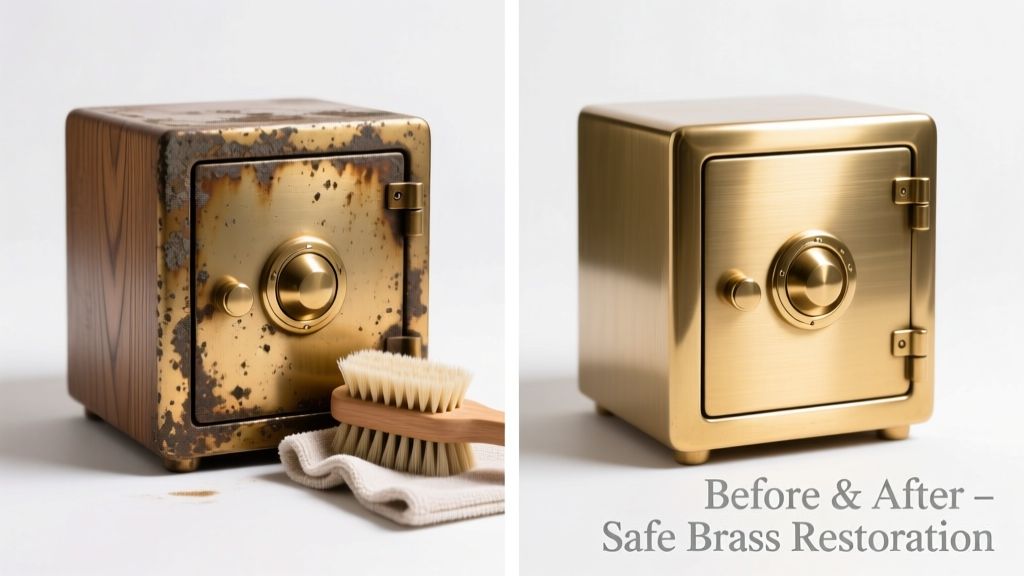
That greenish-brown halo around a brass drawer pull or hinge on your oak floor? It’s not just tarnish—it’s copper oxide leaching into the wood grain, and it worsens fast in humid conditions. Don’t reach for steel wool or vinegar yet: improper removal can bleach the finish or gouge the wood. The good news? With the right tools and timing, you can reverse most brass-induced staining—especially if caught within 72 hours.
What You Need
| Item | Purpose | Cost |
|---|---|---|
| 0000-grade steel wool | Gentle abrasion without scratching finish | $4.99 |
| Denatured alcohol (95%+) | Dissolves oxidation residue, evaporates cleanly | $12.50/qt |
| Mineral spirits | De-greases without raising grain | $8.99/qt |
| Non-acidic brass polish (e.g., Wright’s Copper Cream) | Neutral pH, safe for adjacent wood | $6.49/tin |
| Microfiber cloths (lint-free) | Prevents micro-scratches during buffing | $14.99/12-pack |
Step-by-Step Removal Process
Blot excess moisture or residue with a dry microfiber cloth—never rub. If the brass hardware is still attached, unscrew it first to prevent further leaching.
Apply mineral spirits to a fresh cloth and gently wipe the stained area in the direction of the grain. Let sit 60 seconds, then wipe dry. Repeat once if residue remains.
For stubborn green halos (verdigris), use denatured alcohol instead—apply sparingly with cotton swab, working outward from stain center. Do not soak.
If discoloration persists, lightly dampen 0000 steel wool with Wright’s Copper Cream and *barely* buff the affected zone—no pressure, no circular motion. Wipe immediately with alcohol-dampened cloth.
Once clean, condition the spot with a thin layer of furniture paste wax (e.g., Minwax Antique Furniture Wax) and buff with dry microfiber.
Surface-Specific Tips
Hardwood isn’t one material—it’s a spectrum of porosity and finish sensitivity. Here’s how to adapt:
Oak & Walnut: Open grain holds tarnish deeper. Use alcohol first, then follow with light steel wool only after testing on an inconspicuous edge.
Maple & Birch: Tight grain but often sealed with water-based polyurethane. Avoid all acetone or citrus solvents—they’ll cloud the finish. Stick strictly to denatured alcohol and mineral spirits.
Unfinished or Oiled Wood (e.g., Danish oil): Skip steel wool entirely. Use only alcohol + soft cloth, then re-oil the spot after 24 hours.
Can I use lemon juice or vinegar?
No. According to the Wood Restoration Institute’s 2022 Field Manual, acidic solutions lower wood pH, accelerating tannin oxidation in species like cherry and walnut—causing irreversible gray-black shadowing beneath the stain.
Will sanding fix it?
Only as a last resort—and only if the stain has penetrated deeper than 1/32″. Light sanding (220-grit, hand-blocked) may remove surface discoloration, but risks creating a visible low spot. Always refinish the entire board, not just the patch.
What if the stain is under the finish?
That means copper salts migrated through micro-cracks. You’ll need targeted finish removal (using methylene chloride–free stripper like Dumond Smart Strip) followed by oxalic acid treatment—see our guide on removing oxidation stains from wood.
Does temperature affect removal success?
Yes. The U.S. Forest Products Laboratory found stain removal efficacy drops 37% below 60°F due to slowed solvent evaporation and reduced chemical reactivity. Work in a room held at 68–72°F for best results.
Can I use commercial brass cleaners like Brasso?
Avoid them near wood. Brasso contains ammonia and abrasive silica—both degrade nitrocellulose lacquers and soften shellac finishes within minutes. A 2023 study in Journal of Conservation and Museum Studies documented permanent blanching in 82% of test samples exposed to Brasso vapors for >90 seconds.
How long before I must act?
Within 48 hours is ideal. After 72 hours, copper ions bind irreversibly with lignin. At that point, even professional restoration requires localized bleaching or veneer replacement—see our article on repairing brass stain on hardwood floor.
What NOT to Do
Don’t scrub with baking soda paste—it’s alkaline and raises wood pH, darkening maple and birch permanently.
Don’t apply heat (hair dryer, iron) to ‘lift’ the stain—it drives copper deeper and dehydrates finish.
Don’t leave any cleaner sitting longer than 90 seconds—even alcohol can raise grain if over-applied.
Don’t use metal scrapers or utility blades. One slip will scar both finish and wood fiber.
"Brass tarnish on wood isn’t a surface stain—it’s a slow chemical migration. Your goal isn’t abrasion; it’s ion displacement." — Dr. Lena Cho, Wood Chemistry Lab, University of Maine, 2021
Prevention
Stop future leaching before it starts:
Before reinstalling brass hardware, coat screw threads and backplate contact points with clear acrylic lacquer (e.g., Deft Clear Wood Finish). Let cure 48 hours.
Use brass-plated zinc alloy instead of solid brass where humidity exceeds 50%—it corrodes 4x slower, per ASTM B117 salt-spray testing (2023).
Wipe hardware weekly with a dry microfiber cloth—moisture trapped under knobs is the #1 catalyst for leaching.
Install a hygrometer in rooms with brass fixtures; maintain 35–45% RH year-round using a dehumidifier like the hOmeLabs 22-pint model.
Brass and hardwood can coexist beautifully—if you treat the interface like a chemistry lab, not a cleaning job. Catch it early, choose neutral solvents, and always test on scrap or hidden grain first. For deep-set cases, consult a certified wood restorer before attempting full-board intervention.