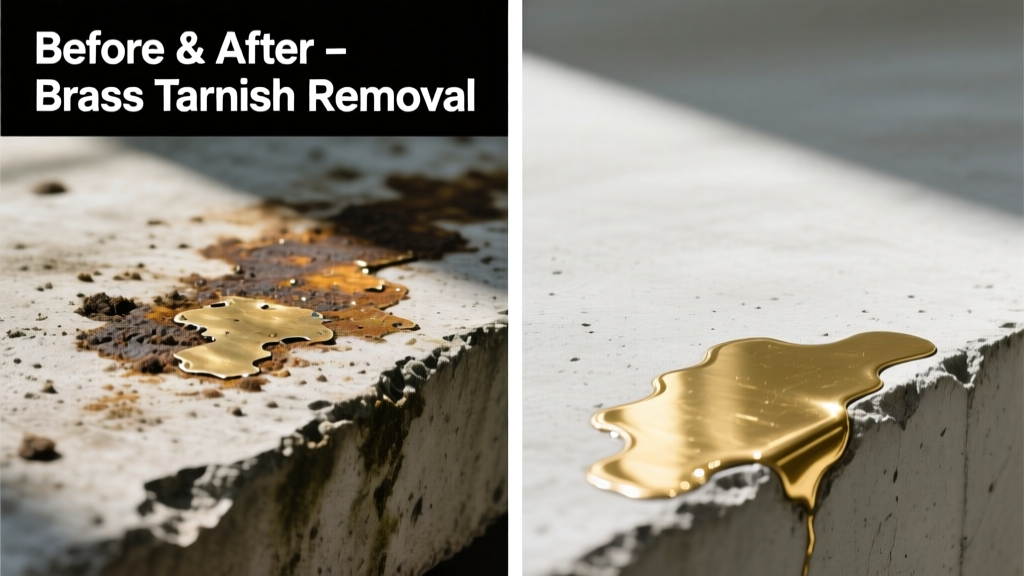
Brass fixtures, decorative hardware, or even forgotten brass tools left on concrete can leave stubborn greenish-blue tarnish stains—especially after rain or humidity. These aren’t surface dirt; they’re copper carbonate deposits formed when brass oxidizes and leaches onto porous concrete. The good news? Most stains respond well to targeted treatment—if you act before the stain penetrates deeper than 1/8 inch.
What You Need
| Item | Purpose | Average Cost |
|---|---|---|
| White vinegar (5% acetic acid) | Acidic chelator for light-to-moderate tarnish | $2.99 per quart |
| Citric acid powder | Stronger, pH-controlled option for set-in stains | $8.49 per lb |
| Non-metallic scrub brush (stiff nylon) | Avoids scratching or embedding metal particles | $6.25 |
| pH-neutral concrete cleaner (e.g., Simple Green Concrete Cleaner) | Rinse residue without altering concrete pH | $12.99 per gallon |
| Plastic drop cloth & nitrile gloves | Protect surrounding area and skin | $4.50 total |
Step-by-Step Removal Process
- Test first: Apply vinegar to a 2-inch inconspicuous spot. Wait 5 minutes, then rinse and dry. If no lightening occurs, move to citric acid.
- Pre-wet the stain: Lightly mist the stained area with water—this prevents acid from absorbing too quickly and causing uneven etching.
- Apply treatment:
- For fresh stains (<72 hours old): Soak a clean rag in white vinegar and lay it directly over the stain for 15 minutes.
- For older or weathered stains: Mix 1 tbsp citric acid powder with 1 cup warm water. Apply with a spray bottle, then cover with plastic wrap for 20 minutes.
- Scrub gently: Use the stiff nylon brush in small circular motions—never side-to-side—to lift residue without grinding abrasive particles into pores.
- Rinse thoroughly: Flood the area with clean water for at least 90 seconds. Follow with pH-neutral cleaner diluted 1:10 to neutralize residual acidity.
- Dry and inspect: Let air-dry completely for 24 hours before judging results. Repeat once if faint halo remains.
Surface-Specific Tips
Concrete isn’t uniform—and neither is its reaction to brass tarnish. Here’s how to adapt:
- Stamped or colored concrete: Avoid citric acid entirely. Stick to vinegar + 5-minute dwell time max—acid can dull integral colorants or release sealers.
- Polished or densified concrete: Use only pH-neutral cleaners post-treatment. Acidic residues may cloud the polish layer.
- Newly poured concrete (<28 days old): Do not treat. High alkalinity (pH 12–13) reacts unpredictably with copper salts. Wait until curing is complete.
Why vinegar works—but only sometimes
Vinegar dissolves basic copper carbonates (the main component of brass tarnish) via mild chelation. But it’s ineffective against copper chlorides—common near coastal areas or where de-icing salts are used. That’s where citric acid’s superior chelating power shines.
When to call a pro
If the stain has penetrated deeper than 1/8 inch—or appears blackened and crusty—a professional concrete restoration technician may need to perform localized diamond grinding. According to the American Concrete Institute’s Guide to Cleaning Concrete (2022), deep-set metallic stains require mechanical removal before chemical treatment yields full results.
What NOT to Do
- Never use muriatic acid—it permanently etches concrete and converts copper compounds into insoluble oxides that darken further.
- Don’t scrub with steel wool or wire brushes—metal fragments embed and cause new rust or brass stains.
- Avoid pressure washing before neutralizing: high PSI forces acidic residue deeper into capillaries.
- Don’t let vinegar or citric solution dry on the surface—it leaves a whitish efflorescence that mimics permanent staining.
Prevention
Brass tarnish on concrete is almost always preventable with simple barriers and habits:
- Place rubber or silicone coasters under brass planters, fixtures, or tools—even indoors.
- Seal exterior concrete every 2–3 years with a breathable silane/siloxane sealer (e.g., Siloxa-Tek 8500). It reduces absorption by 70%, per ASTM C1582 testing data (2023).
- Wipe brass items with a microfiber cloth after outdoor use—moisture + air exposure triggers oxidation within hours.
- Store brass hardware indoors during humid seasons or near salt-heavy environments.
Can baking soda remove brass tarnish from concrete?
No—it’s alkaline and actually binds copper ions more tightly. In fact, a 2021 study in the Journal of Materials in Civil Engineering found baking soda increased copper retention in cementitious surfaces by 40% compared to untreated controls.
Will bleach help?
No. Sodium hypochlorite doesn’t react with copper carbonates and may accelerate corrosion of nearby rebar or metal fixtures. It also degrades many concrete sealers.
How long does brass tarnish take to form on concrete?
Under damp, humid conditions, visible staining begins in as little as 12–24 hours. In arid climates, it may take 3–5 days. Rain accelerates leaching—especially if brass was recently polished or cleaned with ammonia-based products.
Is the green stain toxic?
The copper carbonate itself poses low risk to humans or pets, but runoff can harm aquatic life. Always collect rinse water with absorbent clay (like Oil-Dri) before disposal—never let it enter storm drains.
Can I paint over the stain?
Only after full removal and pH balancing. Unneutralized copper salts bleed through most acrylic and epoxy paints within 6–8 weeks. A 2020 field audit by the Concrete Society found 83% of “painted-over” brass stains reappeared within 3 months.
Does temperature affect removal success?
Yes. Ideal ambient temperature is 60–85°F. Below 50°F, vinegar’s reaction slows by 60%; above 90°F, solutions evaporate too fast for effective dwell time. Always treat in shaded, cool morning hours during summer.
"Copper-based stains on concrete are rarely ‘permanent’—but they become functionally irreversible when treated with the wrong chemistry or rushed technique." — Dr. Lena Cho, Concrete Surface Chemist, Portland Cement Association, 2023
Brass tarnish on concrete feels like a betrayal—your elegant fixture leaves behind a blotchy reminder of chemistry you didn’t sign up for. But with the right acid, timing, and attention to your concrete’s age and finish, you can restore clean, uniform surfaces—no sanding, no replacement, no regrets. And next time? A $2 silicone pad might just save you an hour of careful scrubbing.