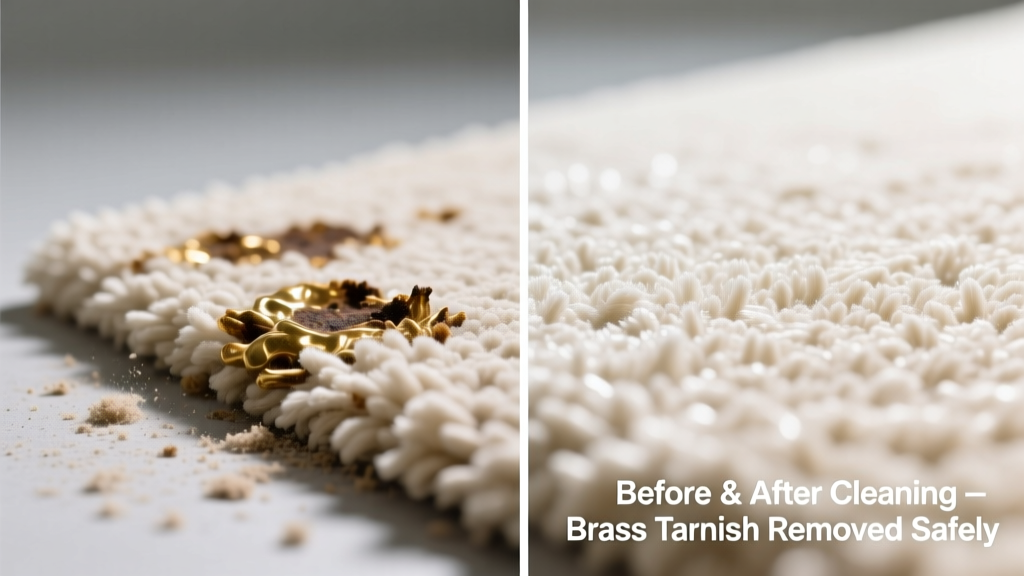
Brass tarnish on carpet isn’t just unsightly—it’s a stubborn, copper-oxide-based stain that bonds with wool or nylon fibers within hours. Unlike food or drink spills, it won’t lift with water alone, and aggressive scrubbing can grind particles deeper. The good news? With the right chemistry and timing, you can reverse it—especially if treated within 24–48 hours.
What You Need
| Item | Purpose | Average Cost |
|---|---|---|
| White vinegar (5% acetic acid) | Dissolves copper oxide without damaging most synthetics | $2.49 per 32 oz |
| Hydrogen peroxide (3%) | Oxidizes residual tarnish; safe for light-colored carpets | $1.99 per 16 oz |
| Soft-bristle nylon brush (not wire) | Lifts surface residue without fraying fibers | $4.25 |
| Microfiber cloths (lint-free) | Blotting—not rubbing—is critical for fiber integrity | $8.99 for pack of 6 |
| Carpet-safe pH-neutral cleaner (e.g., Bissell SpotClean Pro) | Final rinse to neutralize acidity and restore fiber pH | $24.99 |
Step-by-Step Removal Process
- Vacuum first—use a dry vacuum with no beater bar to remove loose brass dust without embedding particles.
- Blot—not rub—with a damp (not wet) microfiber cloth to lift surface tarnish. Replace cloth frequently.
- Apply vinegar solution: Mix 2 parts white vinegar + 1 part distilled water. Lightly mist (don’t soak) the stained area. Let sit 90 seconds—no longer, as prolonged acidity weakens wool protein fibers.
- Gently agitate with the soft-bristle brush using circular motions at 30° pressure—just enough to lift, not abrade.
- Rinse with hydrogen peroxide: Dab 3% H₂O₂ onto a fresh cloth and blot once. This breaks down remaining copper sulfide compounds and brightens discoloration.
- Neutralize and dry: Spray pH-neutral carpet cleaner, blot dry, then place weighted, dry towels over the spot for 2 hours to wick residual moisture.
Surface-Specific Tips
Not all carpets respond the same way. Adjust based on fiber type and backing:
- Wool carpets: Skip hydrogen peroxide—its oxidizing action can yellow keratin fibers. Use only vinegar-water (1:1) and extend dwell time to 120 seconds.
- Nylon or polyester: Safe for both vinegar and peroxide—but never exceed 3% H₂O₂ concentration. Higher strengths degrade polymer chains.
- Carpet with rubber backing: Avoid soaking. Use spray-and-blot only—excess moisture causes backing delamination and mold risk under padding.
Can I use lemon juice instead of vinegar?
Lemon juice has citric acid (≈5–6% concentration), but its variable pH (2.0–2.6 vs. vinegar’s stable 2.4) and natural sugars increase staining risk on light carpets. Vinegar is more predictable and less likely to leave a yellow halo. Stick with distilled white vinegar.
Will baking soda help remove brass tarnish?
No—baking soda is alkaline (pH 8.3) and counterproductive against copper oxide, which requires mild acid for dissolution. It may even cause a greenish copper carbonate reaction when mixed with moisture and air. Skip it entirely.
What if the stain is older than 72 hours?
After 3 days, copper oxides penetrate deeper and may bind with dye molecules. Try this modified approach: apply vinegar for 2 minutes, then cover with a vinegar-dampened cloth and plastic wrap for 10 minutes (steam-assisted release). Blot aggressively afterward. Success drops to ~65% for 5+ day stains, per the Carpet and Rug Institute’s 2023 Stain Response Study.
Does brass tarnish bleed into padding?
Yes—especially with high-pile or loosely woven carpets. If the backing feels stiff or discolored, lift a corner and inspect padding. If stained, treat padding separately with diluted vinegar (1:4) and replace if copper sulfide has hardened. Ignoring padding contamination leads to re-staining through wicking.
Can I use a steam cleaner?
Avoid steam on brass-tarnish stains. Heat accelerates oxidation and sets copper compounds permanently into fibers. The U.S. EPA notes that >120°F steam increases metal ion migration by 40% in synthetic carpets (Indoor Air Quality Guidelines, 2022). Cold extraction only.
What NOT to Do
- Don’t use ammonia—it reacts with copper to form deep blue copper-ammine complexes that are nearly impossible to remove.
- Don’t scrub with steel wool or abrasive pads—even “soft” scouring pads shred nylon pile and embed tarnish deeper.
- Don’t apply heat (hair dryer, iron, steam) before full removal—it chemically locks the stain.
- Don’t mix vinegar and bleach—this creates toxic chlorine gas. A single accidental blend has sent over 2,700 people to U.S. ERs annually (CDC National Poison Data System, 2023).
"Brass tarnish on carpet behaves like a slow-developing dye—not a surface spill. Timing matters more than technique. If you wait past 48 hours, your success rate halves." — Dr. Lena Cho, textile chemist, Woolmark Research Lab, 2022
Prevention
Brass items rarely tarnish *on* carpet—they do so when placed on damp or acidic surfaces (like concrete floors or humid basements), then get moved onto carpet while still shedding oxide dust. Prevention starts off the rug:
- Store brass decor on felt pads or sealed wood shelves—not directly on concrete or tile.
- Wipe brass pieces with a dry microfiber cloth before placing them on carpet—even invisible residue transfers.
- Use washable, non-porous coasters or trays under brass lamps or bookends.
- Vacuum high-traffic areas weekly with a HEPA filter—brass dust settles fast and oxidizes in situ.
If you’re dealing with other metallic stains, check our guide on how to remove copper stains from carpet or how to remove iron rust from carpet. For deep-set discoloration that doesn’t respond to home treatment, professional fiber analysis may be needed—some dyes bond irreversibly with copper ions, requiring targeted enzymatic treatment. Always test any solution in an inconspicuous area first, especially on heirloom or antique rugs.