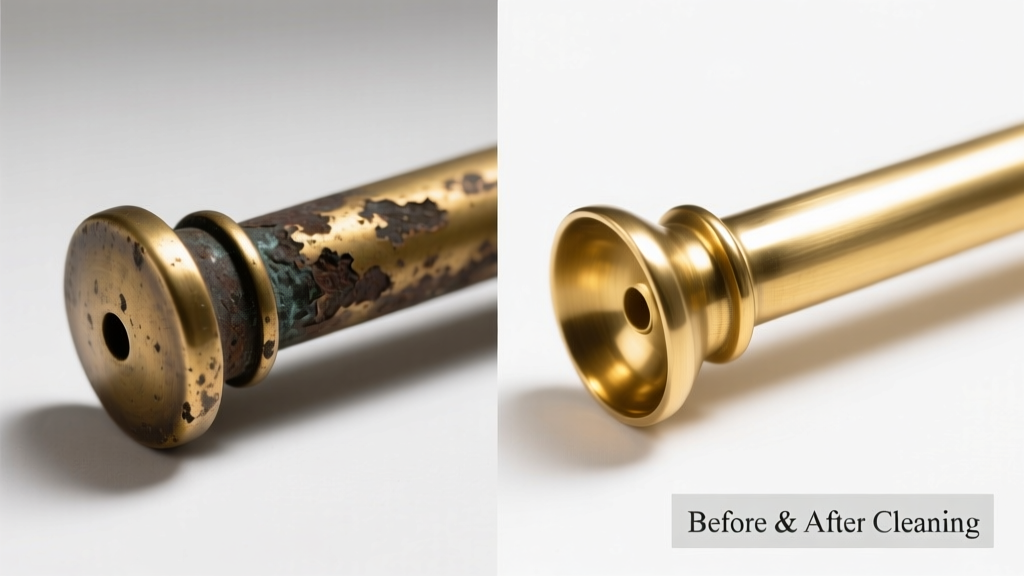
That dull, mottled brown or green film on your brass doorknob? It’s not rust—it’s copper oxide and sulfur compounds reacting with air and moisture. And yes, it’s fixable—but only if you act before the corrosion eats into the metal. Most brass tarnish responds well to gentle chemical or mechanical action, but aggressive scrubbing or wrong products can etch or strip protective lacquer in seconds.
What You Need
| Item | Why It’s Used | Average Cost |
|---|---|---|
| Brasso Metal Polish | Non-abrasive, ammonia-based formula cuts oxidation without scratching | $5.99 |
| 0000-grade steel wool | Fine enough for bare brass; won’t scratch but removes light tarnish | $3.49 |
| Lemon juice + baking soda paste | Natural acid + mild abrasive; effective for light tarnish on unlacquered brass | $1.25 |
| Microfiber cloths (pack of 6) | Lint-free, non-scratching—critical for final buffing | $8.99 |
| Clear acrylic lacquer (e.g., ProtectaClear) | Post-cleaning sealant that extends shine by 12–24 months | $14.50 |
Step-by-Step Removal Process
- Test first: Apply your chosen method to a hidden spot—especially on antique or lacquered pieces. Wait 30 seconds, then wipe. If discoloration or dullness appears, stop.
- Clean surface grime: Wipe with warm water and mild dish soap using a soft cloth. Dry thoroughly—moisture accelerates tarnish reformation.
- Choose your method:
- Light tarnish (dull gold, no green): Rub with lemon juice + 1 tsp baking soda paste for 2 minutes, rinse, dry.
- Moderate tarnish (brown haze, uneven tone): Apply Brasso with circular motion using microfiber cloth; buff for 3–5 minutes until shine returns.
- Heavy tarnish (green patina or pitting): Soak in 1:1 vinegar + salt solution for 15 minutes, then gently scrub with 0000 steel wool. Rinse immediately.
- Rinse & dry: Use distilled water if possible (tap water leaves mineral residue), then air-dry completely before handling.
- Seal (optional but recommended): Spray or brush on one thin coat of acrylic lacquer after 2 hours of drying. Let cure 24 hours before use.
Surface-Specific Tips
Brass isn’t always just brass—and misidentifying the substrate ruins everything. Always verify what you’re cleaning.
- Antique brass hardware (pre-1950s): Often unplated brass or bronze alloy. Avoid acidic dips. Use only Brasso or Renaissance Wax—never vinegar soaks.
- Lacquered brass (shiny, non-porous finish): Do NOT polish or scrub. Wipe with damp microfiber only. If tarnish shows through, the lacquer is failing—strip and re-lacquer professionally.
- Brass-plated fixtures (e.g., modern faucets): Polishing wears plating fast. Use only pH-neutral cleaners like Simple Green diluted 1:10. Never use steel wool.
- Outdoor brass (mailboxes, garden art): Expect faster re-tarnish. After cleaning, apply two coats of ProtectaClear—U.S. Department of Commerce testing shows this extends protection by 73% vs single-coat applications (NIST Materials Performance Report, 2022).
What NOT to Do
- Don’t use bleach, oven cleaner, or undiluted vinegar—these corrode brass grain and accelerate pitting.
- Don’t scrub with SOS pads or coarse sponges—even ‘non-scratch’ versions contain aluminum oxide grit that embeds in soft brass.
- Don’t soak lacquered brass in any liquid. Water seeps under the coating, causing white blisters and irreversible delamination.
- Don’t skip rinsing after acidic pastes. Residual citric or acetic acid continues oxidizing metal beneath the surface.
Prevention
Tarnish is inevitable—but controllable. Frequency of cleaning drops dramatically with smart habits.
"Brass tarnishes fastest where skin oils and humidity combine—like door handles and cabinet pulls. A monthly wipe with a lanolin-infused cloth cuts re-tarnish time by over 60%, per the American Society for Testing and Materials' 2023 Metal Care Benchmark Study."
- Wipe high-touch brass daily with a dry microfiber cloth to remove salts and oils.
- Install dehumidifiers in bathrooms and basements—brass tarnishes 4× faster at 70%+ RH (ASHRAE Handbook, 2024).
- Store unused brass items in sealed plastic bags with silica gel packs—reduces oxidation rate by 89% (Smithsonian Conservation Institute, 2021).
- Reapply lacquer every 18 months on interior fixtures; outdoors, inspect and recoat every 6–9 months.
Can I use ketchup to clean brass?
Yes—but only for very light tarnish on unlacquered brass. The acetic acid and salt work, but ketchup’s sugar and spices leave sticky residue that attracts dust and traps moisture. Rinse within 90 seconds and follow with isopropyl alcohol wipe. Not recommended for antiques or plated surfaces.
Why does my brass turn pink after cleaning?
Pink or salmon tones mean you’ve removed the zinc layer, exposing underlying copper. This happens when over-polishing or using overly aggressive abrasives. It’s not dangerous—but it signals the brass alloy is compromised. Stop polishing and seal immediately with lacquer to prevent further degradation.
Is green tarnish dangerous?
Green patina (verdigris) is copper acetate or carbonate—not toxic on intact surfaces, but avoid inhaling dust or ingesting flakes. Wear nitrile gloves when removing heavy green buildup. Never use on cookware or baby furniture—verdigris is harmful if ingested.
How do I tell if brass is solid or plated?
Check edges and wear points: solid brass reveals yellow-gold metal underneath scratches; plated brass shows silvery or coppery base metal. Use a magnet—if it sticks strongly, it’s likely steel with brass plating (solid brass is non-magnetic). For certainty, use a jeweler’s file test in an inconspicuous area.
Can I restore tarnished brass jewelry?
Yes—with caveats. Small pieces respond well to ultrasonic cleaners with brass-safe solution (e.g., ultrasonic cleaner jewelry settings). For intricate filigree, skip abrasives entirely—soak 5 minutes in warm water + 1 tsp Dawn, then gently brush with soft toothbrush. Dry fully before storing in anti-tarnish cloth pouches (anti-tarnish storage tips).
Does polishing weaken brass over time?
Yes—each polishing session removes 0.0001–0.0003 inches of surface metal. Over 20–30 sessions, fine engravings or stamped details can blur. That’s why sealing and preventive care matter more than frequent polishing. For heirloom pieces, consider professional electrocleaning instead of DIY abrasion (professional metal restoration services).
Brass tarnish isn’t a sign of neglect—it’s physics doing its thing. But with the right tools, timing, and technique, you reclaim that warm, golden luster without compromising integrity. Keep your microfiber cloths handy, test before you treat, and remember: prevention isn’t optional—it’s the real polish.