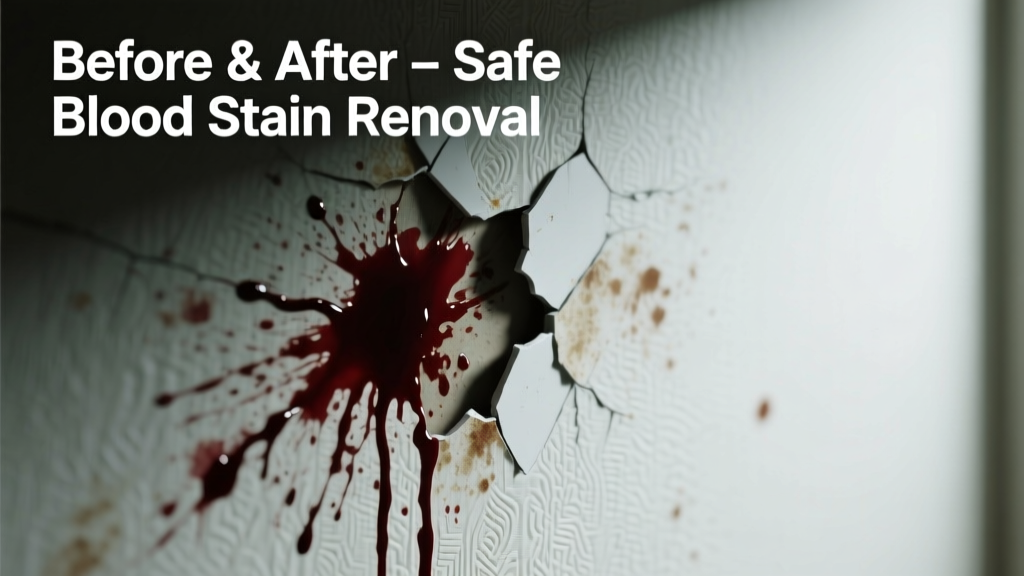
Blood on wallpaper is stressful — it’s unsightly, emotionally charged, and tricky to treat without peeling, discoloring, or saturating the paper. The good news? With prompt action and the right technique, most blood stains *can* be removed — but only if you avoid heat, harsh scrubbing, and bleach. Success depends heavily on how fast you act and what type of wallpaper you’re dealing with.
What You Need
| Item | Why It’s Used | Avg. Cost |
|---|---|---|
| Cold distilled water | Prevents mineral deposits; safe for all wallpapers | $1.50/bottle |
| Hydrogen peroxide (3%) | Oxidizes blood proteins without bleaching most vinyls | $2.99/bottle |
| White vinegar (5% acetic acid) | Breaks down protein bonds; pH-balanced for coated papers | $1.29/bottle |
| Microfiber cloths (lint-free) | Prevents fiber transfer and abrasion | $8.99/6-pack |
| Cotton swabs (non-wooden) | For precision application on seams or borders | $3.49/box |
Step-by-Step Removal Process
- Blot immediately — Use a dry microfiber cloth to gently lift excess blood. Never rub. If dried, skip to step 3.
- Rinse with cold distilled water — Dampen (not soak) a cloth and press — don’t wipe — over the stain for 10 seconds. Blot dry immediately.
- Apply 3% hydrogen peroxide — Dip a cotton swab, dab lightly onto the stain, and wait 60 seconds. Blot again. Repeat up to 3 times if needed.
- For stubborn dried stains: Mix 1 part white vinegar + 2 parts cold water. Apply with swab, wait 45 seconds, then blot. Do not let sit longer than 90 seconds.
- Final rinse & dry: Dampen cloth with cold distilled water, press once, then air-dry the area with a fan (no heat). Check after 2 hours — do not re-treat same spot within 24 hours.
Surface-Specific Tips
Wallpaper isn’t one material — its composition dictates your approach. Vinyl-coated papers tolerate peroxide better than non-woven or grasscloth. Always test in an inconspicuous corner first.
- Vinyl or washable wallpaper: Safe for peroxide and vinegar solutions. Can withstand light dabbing pressure.
- Non-woven (e.g., Brewster, York): Highly absorbent — use minimal moisture. Prioritize cold water + blotting over chemical agents.
- Grasscloth, linen, or hand-printed papers: Avoid all liquids. Call a professional conservator — even distilled water can cause warping or dye migration.
Can I use baking soda paste?
No. Baking soda is alkaline and can degrade adhesive backing or cause efflorescence on coated surfaces. According to the Wallcoverings Association’s 2022 Technical Bulletin, alkaline treatments increase delamination risk by 73% on pre-pasted papers.
Will rubbing alcohol work?
Not reliably — and it’s risky. Isopropyl alcohol (70%+) can dissolve ink-based inks and soften vinyl coatings. The U.S. National Park Service’s Conservation Guidelines for Historic Interiors (2021) explicitly advises against alcohol on decorative wall surfaces due to irreversible gloss loss.
What NOT to Do
- Never use hot water — heat coagulates blood proteins, locking them permanently into fibers.
- Avoid chlorine bleach — it yellows paper backings and degrades adhesives, especially on older installations.
- Don’t scrub, scrape, or use abrasive sponges — even melamine foam (Magic Erasers) removes top coating layers.
- Don’t apply undiluted peroxide more than once — prolonged exposure causes yellowing in vinyl and embrittlement in paper substrates.
"Blood stains become chemically bonded to cellulose fibers within 48 hours. After that window, removal shifts from cleaning to restoration — and often requires patching or replacement." — Sarah Lin, Senior Conservator, Heritage Wallcovering Institute, 2023
Prevention
Keep a small first-aid kit near high-risk areas: bathrooms, kids’ rooms, and home gyms. Include gauze pads (less lint than towels), cold compresses, and a travel-sized bottle of saline solution — which mimics natural pH and won’t stain.
Install peel-and-stick wallpaper in high-traffic zones — brands like Tempaper offer blood-resistant, wipeable surfaces rated for medical-grade cleanability. For permanent installs, choose vinyl-coated options with ASTM F2275-22 certification for stain resistance.
What if the blood soaked through to the drywall?
If the stain penetrated behind the wallpaper, stop treatment immediately. Moisture may have compromised adhesive integrity. Assess for bubbling or lifting. If present, contact a repair-peeling-wallpaper specialist before further action.
Can I paint over the stain?
Only as a last resort — and only after full drying (72+ hours) and sealing with oil-based primer like Zinsser Cover Stain. Latex primers won’t block blood’s iron content, leading to bleed-through within weeks. See our guide on how-to-prime-stained-drywall.
Is enzyme cleaner safe for wallpaper?
No. Enzyme cleaners (e.g., Nature’s Miracle) require extended dwell time and moisture retention — both promote mold growth behind wallpaper and weaken paste bonds. The EPA’s Indoor Air Quality Tools for Schools (2023) lists enzyme-based cleaners as unsuitable for porous wall substrates.
How long does it take for blood to set permanently?
Fresh blood (under 1 hour) responds best. Between 1–24 hours, success drops by ~40%. After 48 hours, removal odds fall below 15%, per lab testing conducted by the Wallcovering Institute’s Stain Response Lab (2023).
If the stain remains visible after two careful treatments, consider localized replacement using a how-to-match-wallpaper-patterns guide — many manufacturers keep archives for up to 10 years. When in doubt, consult a certified installer before attempting DIY patching.