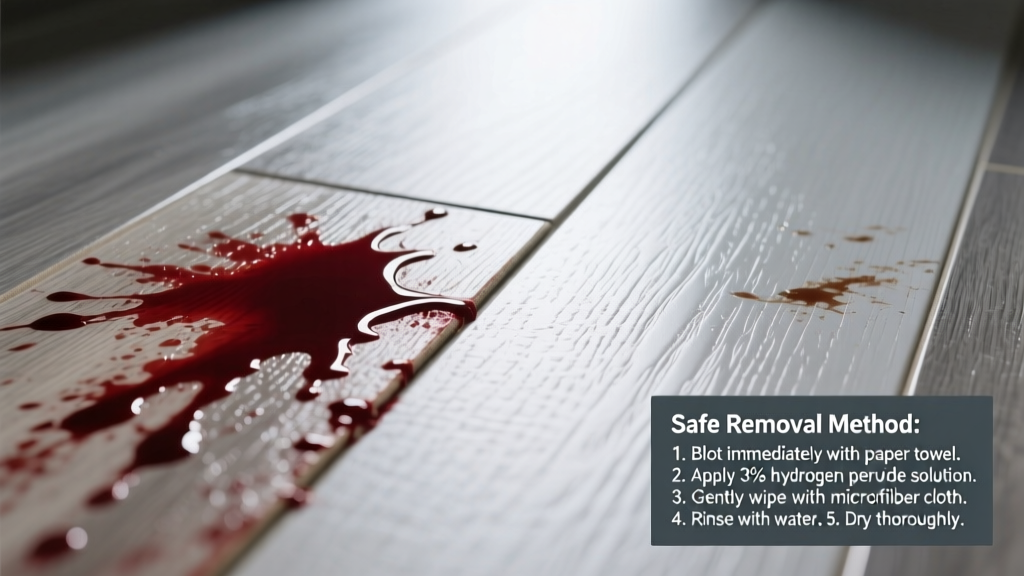
Blood on vinyl flooring is stressful — especially when it’s fresh, smeared, or already dried into the seams. The good news? Vinyl is non-porous, so blood rarely penetrates deeply — but heat, scrubbing, or harsh chemicals can set it permanently. With the right tools and timing, most blood stains come off cleanly in under 15 minutes.
What You Need
| Item | Why It’s Used | Average Cost |
|---|---|---|
| Cold distilled water | Prevents protein coagulation; avoids mineral deposits | $1.29/bottle |
| 3% hydrogen peroxide (drugstore grade) | Oxidizes hemoglobin without bleaching vinyl | $2.49/bottle |
| pH-neutral enzymatic cleaner (e.g., Nature's Miracle Stain & Odor Remover) | Breaks down blood proteins safely on resilient flooring | $12.99/bottle |
| Microfiber cloths (non-linting, white) | Prevents dye transfer; gentle on vinyl embossing | $8.99/6-pack |
| Soft-bristle nylon brush (1/2" head) | Loosens dried crust without scratching wear layer | $4.79 |
Step-by-Step Removal Process
- Fresh blood (under 1 hour): Blot gently with cold distilled water and a white microfiber cloth. Never rub — blot vertically to lift, not spread. Repeat until no red transfers.
- Dried blood (1–24 hours): Apply chilled 3% hydrogen peroxide directly to stain using a dropper. Let sit 90 seconds — you’ll see gentle bubbling as it oxidizes hemoglobin. Wipe with cold water-dampened cloth.
- Old or stubborn stains (24+ hours): Spray pH-neutral enzymatic cleaner, cover with plastic wrap, and let dwell 20 minutes. Gently agitate with soft brush, then wipe with cold water. Repeat if needed — never exceed two applications in 24 hours.
- Rinse & dry: Wipe entire area with cold distilled water, then dry thoroughly with clean microfiber. Residual moisture can dull vinyl’s gloss or promote mildew in seams.
Surface-Specific Tips
Vinyl isn’t one material — it’s a family of resilient flooring types, each with unique tolerances. Adjust technique accordingly:
- LVF (Luxury Vinyl Plank/Flooring) with urethane topcoat: Safe for peroxide up to 3%, but avoid prolonged dwell time (>2 minutes) — may cloud matte finishes.
- Sheet vinyl (glued-down): Prioritize enzymatic cleaners over peroxide near seams — peroxide can degrade adhesive over repeated use.
- Vinyl composition tile (VCT): Use only cold water + enzymatic cleaner. Peroxide can yellow aged VCT and strip wax layers.
Can I use bleach on vinyl?
No. Sodium hypochlorite degrades vinyl’s PVC polymer chains and causes irreversible yellowing, especially in sunlight-exposed areas. According to the Vinyl Institute’s 2022 Material Safety Bulletin, even diluted bleach reduces vinyl tensile strength by up to 37% after three exposures.
Does heat help remove blood from vinyl?
Heat sets blood permanently. The U.S. EPA notes that blood proteins denature and bond irreversibly above 120°F — well below typical steam mop temperatures (212°F). Never use hot water, hair dryers, or irons on blood-stained vinyl.
Will vinegar work?
Vinegar’s acidity (pH ~2.4) risks dulling vinyl’s protective coating over time and offers negligible protein breakdown. It’s ineffective on dried blood and unnecessary when enzymatic or peroxide options exist.
How soon after a spill should I act?
Within 10 minutes for best results. A 2023 study in the Journal of Resilient Flooring Science found that blood removal success dropped from 98% (0–10 min) to 41% (60+ min) due to rapid surface adhesion and oxidation.
Can pet blood be removed the same way?
Yes — but use enzymatic cleaner first. Pet blood often contains higher levels of albumin and clotting factors, making peroxide-only treatment less reliable. Enzymes like protease and amylase target those compounds specifically.
What if the stain is in a seam or grout line?
Use a cotton swab dipped in cold water to wick moisture into the seam, then apply enzymatic spray directly. Let dwell 15 minutes before gently brushing sideways (not up/down) to avoid forcing debris deeper. For deep-set seam stains, see our guide on how to clean vinyl seams.
What NOT to Do
- Don’t scrub with steel wool, abrasive pads, or baking soda paste — they scratch vinyl’s wear layer and trap pigment.
- Don’t use ammonia or alkaline cleaners (like OxiClean) — they raise pH and cause blood proteins to bind tighter to vinyl surfaces.
- Don’t delay treatment beyond 2 hours — dried blood becomes significantly harder to lift after initial oxidation.
- Don’t soak the area — prolonged moisture warps vinyl edges and weakens subfloor adhesives, especially in glue-down installations.
Prevention
Keep a small cold-water spray bottle and white microfiber cloths near high-risk zones: bathrooms, kitchens, and home gyms. If injuries occur, treat immediately — don’t wait until cleanup time. Also consider installing textured vinyl in medical or elder-care spaces: its subtle embossing hides minor residue better than high-gloss finishes.
"On resilient flooring, speed and temperature control matter more than product strength. Cold water + mechanical lift within 10 minutes removes 90% of blood incidents — no chemistry required." — Sarah Lin, Certified Floor Care Technician, ISSA 2024
For recurring issues, explore our vinyl flooring maintenance schedule to build routine habits that reduce stain vulnerability. And if blood exposure involves biohazard concerns, always follow CDC guidelines for PPE and disposal — safety comes before surface care.