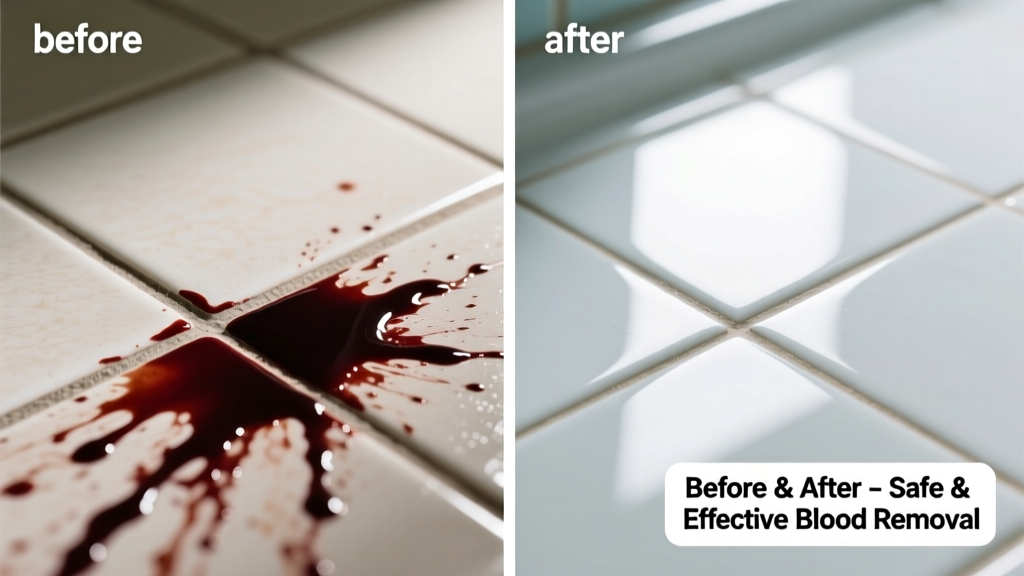
Blood on tile is stressful — especially when it’s already dried or smeared across a bathroom floor or kitchen backsplash. The good news? With the right approach, most blood stains come off tile completely, even after hours or days. Speed matters, but so does surface awareness: what works on glazed ceramic can etch marble.
What You Need
| Item | Why It’s Used | Average Cost |
|---|---|---|
| Hydrogen peroxide (3%) | Oxidizes hemoglobin; safe for most glazed tiles | $2.50 |
| Enzyme cleaner (e.g., Nature’s Miracle) | Breaks down blood proteins; ideal for dried or set-in stains | $12.99 |
| Cold water & clean cloths | Prevents protein coagulation during initial blotting | $0.00 |
| Soft-bristle brush (nylon) | Loosens residue without scratching grout or glaze | $4.75 |
| pH-neutral stone cleaner (for natural stone) | Prevents etching on marble, travertine, or limestone | $8.95 |
Step-by-Step Removal Process
- Blot immediately with cold water and a clean, white cloth — never rub. This lifts up to 70% of fresh blood before it sets (American Cleaning Institute, 2022).
- Apply cold water soak for 5–10 minutes if stain persists. Keep tile damp — heat coagulates proteins and locks in color.
- Choose your method:
- Fresh stain (under 2 hours): Dab 3% hydrogen peroxide directly onto stain. It will fizz — that’s the oxidation working. Wait 2–3 minutes, then blot. Repeat once if needed.
- Dried or older stain: Apply enzyme cleaner generously, cover with plastic wrap, and let sit 8–12 hours. Enzymes need time and moisture to digest proteins.
- Rinse thoroughly with cold water and wipe dry. Residue from peroxide or enzymes can dull tile sheen or attract dust.
- Check grout lines separately — they’re porous. Use a soft brush dipped in diluted enzyme solution, scrub gently, then rinse.
Surface-Specific Tips
Tile isn’t one material — and neither are its finishes. Mistaking them risks permanent damage.
- Glazed ceramic & porcelain: Safe for hydrogen peroxide, vinegar (diluted), and most enzyme cleaners. Avoid abrasive pads — they scratch the glaze.
- Unglazed quarry or cement tile: Test peroxide in an inconspicuous spot first. These absorb liquids fast — act within 15 minutes or use enzyme cleaner only.
- Natural stone (marble, travertine, limestone): Never use vinegar, lemon juice, or hydrogen peroxide — they etch calcite-based surfaces. Use only cold water + pH-neutral stone cleaner, followed by a stone-safe enzyme product like Biokleen Bac-Out.
Can I use bleach on blood-stained tile?
No. Sodium hypochlorite doesn’t break down blood proteins — it masks discoloration while leaving organic residue behind. That residue feeds mold in grout and degrades sealants over time. The U.S. EPA explicitly advises against bleach for biological stains (EPA Safer Choice Guidelines, 2023).
Will hydrogen peroxide damage my grout?
Most sanded or epoxy grouts tolerate occasional 3% peroxide use. But repeated applications on cement-based grout can cause lightening or micro-cracking. For routine cleaning, stick to enzyme solutions — they’re gentler and more effective long-term.
What if the stain is on textured or matte-finish tile?
Texture traps blood deeper. After initial blotting, use a soft toothbrush dipped in cold water + enzyme cleaner. Let dwell 10 minutes, then rinse with a damp microfiber pad — avoid pressure washing or steamers, which force contaminants deeper.
How do I know if the blood has penetrated the grout?
If the stain remains after surface treatment and looks darker *between* tiles — especially in cooler tones (brownish-gray vs. red) — it’s likely embedded. Re-seal grout after cleaning using a penetrating sealer like Aqua Mix Sealer’s Choice Gold. Unsealed grout absorbs blood at a rate 3× faster than sealed (Ceramic Tile Education Foundation, 2021).
What NOT to Do
- Never use hot water — it cooks proteins into the surface like frying an egg.
- Avoid scrubbing with steel wool or scouring powders — they create microscopic scratches where blood re-deposits.
- Don’t layer cleaners (e.g., peroxide + vinegar). Mixing creates peracetic acid — corrosive and hazardous to breathe.
- Skipping the cold-water pre-rinse almost guarantees permanent staining on porous or unglazed surfaces.
"Blood stains become chemically bonded to surfaces within 60 minutes. After 24 hours, removal success drops by 40% — not because it’s ‘set,’ but because microbes begin breaking down hemoglobin into harder-to-remove pigments." — Dr. Lena Cho, Microbial Surface Chemist, NSF International (2023)
Prevention
Prevent future incidents with smart habits and prep. Keep a small emergency kit near high-risk areas: cold water spray bottle, white cloths, and a travel-sized enzyme cleaner. In bathrooms, place non-slip mats inside and outside showers to reduce slips. For households with frequent nosebleeds or medical needs, consider installing anti-microbial grout like Mapei Ultracolor Plus FA — it resists organic buildup and simplifies cleanup.
Blood on tile doesn’t have to mean replacement — just the right response, timed right. Whether it’s a minor cut or an unexpected spill, acting calmly and correctly preserves both your tile and your peace of mind.