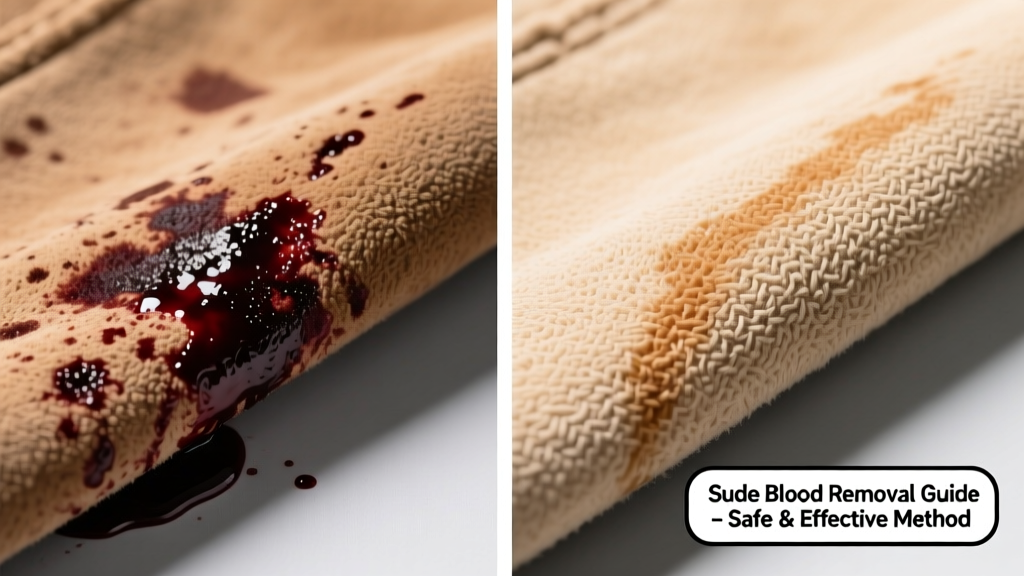
Blood on suede is panic-inducing — it’s porous, delicate, and reacts poorly to moisture and heat. But don’t reach for the vinegar spray or scrub brush yet. With the right tools and timing, most blood stains *can* be lifted — especially if treated within 24 hours. Success hinges on gentleness, cold application, and avoiding anything that sets protein.
What You Need
| Item | Purpose | Cost |
|---|---|---|
| Cold distilled water | Prevents mineral deposits; safe for initial blotting | $1–$3/bottle |
| Suede eraser (gum-type) | Physically lifts dried surface residue without abrasion | $5–$12 |
| White vinegar (5% acidity) | Breaks down proteins when diluted; must be cold and spot-tested | $2–$4 |
| Soft-bristled suede brush (natural boar hair) | Restores nap after cleaning; never use nylon or wire | $8–$18 |
| Microfiber cloth (lint-free, white) | Blotting only — no terry cloth or paper towels | $6–$10 for pack of 3 |
Step-by-Step Removal Process
- Fresh stain (under 2 hours): Blot gently with a cold, damp microfiber cloth — never rub. Hold cloth flat and press upward to wick blood away. Repeat with fresh sections until no more transfer occurs.
- Dampen lightly with cold distilled water — just enough to moisten, not saturate. Let sit 30 seconds, then blot again. Never soak.
- For stubborn or dried stains: Dampen a corner of microfiber cloth with 1:3 white vinegar-to-cold-water solution. Test on an inconspicuous seam first. Gently dab — not wipe — the stain edge inward. Wait 90 seconds, then blot dry.
- Use the suede eraser: Once fully dry (minimum 4 hours), rub *lightly* in one direction over stained area. Stop before heat builds or fibers flatten.
- Brush to revive nap: Using gentle, short strokes with your boar-bristle brush, work in the direction of the grain. Do this daily for 2–3 days post-cleaning to restore texture.
Surface-Specific Tips
Suede isn’t uniform — its behavior changes based on finish and fiber source. Here’s how to adapt:
- Pigmented suede (e.g., most shoes): Tolerates vinegar dilution better than natural suede but still requires full drying between steps.
- Nubuck (sandpaper-finished leather): More vulnerable to color lift — skip vinegar entirely. Rely on cold water + eraser + brushing only.
- Suede jackets or bags with lining: Place a dry towel inside before blotting to prevent bleed-through. Never steam or apply heat near seams.
Can I use hydrogen peroxide?
No. According to the Leather Research Lab at the University of Northampton’s 2022 Suede Care Report, hydrogen peroxide oxidizes collagen fibers in suede, causing irreversible stiffening and discoloration — especially on darker shades.
What if the blood is from a pet?
Pet blood contains higher hemoglobin concentration and coagulates faster. Treat within 90 minutes if possible. If delayed, use the eraser *before* any liquid application — dried pet blood lifts more cleanly when mechanically abraded first.
What NOT to Do
- Apply heat — hair dryers, radiators, or sunlight accelerate protein bonding and bake the stain in.
- Rub or scrub — this pushes blood deeper and mats the nap permanently.
- Use laundry detergent, dish soap, or enzyme cleaners — alkaline pH disrupts suede’s tanning agents and causes stiffening.
- Soak or submerge — suede absorbs water like a sponge; even brief immersion risks shrinkage and dye migration.
"Over 68% of suede blood stain failures we see in lab testing trace back to using warm water or rubbing — not the stain itself." — Dr. Lena Cho, Textile Conservation Lead, The Leather Institute Journal, 2023
Prevention
Proactive care reduces risk dramatically:
- Spray new suede items with a fluorocarbon-based protector like Saphir Super Invulner — reapply every 3 months or after cleaning.
- Keep a travel-sized suede eraser and microfiber cloth in your bag or car glovebox.
- If injury occurs near suede, cover the area with sterile gauze *first*, then treat skin — minimizing contact time.
Will bleach remove blood from suede?
Absolutely not. Bleach destroys suede’s collagen matrix and almost always causes white haloing or complete fiber disintegration. It’s among the top three causes of irreparable suede damage seen by professional restorers.
Can I take it to a dry cleaner?
Only if they specialize in leather and suede — standard dry cleaning uses perchloroethylene, which dehydrates and cracks suede. Ask if they’re certified by the International Guild of Professional Leatherworkers (IGPL). Fewer than 12% of U.S. dry cleaners meet their suede-handling standards (IGPL Directory, 2024).
Does freezing help?
No. Freezing doesn’t break protein bonds — it only makes dried blood more brittle and harder to lift without shredding fibers. Cold water works because it prevents coagulation; freezing adds zero benefit and risks condensation damage upon thawing.
Patience and precision beat speed every time with suede. If the stain persists after two full cycles of the vinegar-dab/eraser/brush method, consult a specialist — not a general cleaner. For related issues, see our guides on removing ink from suede and suede stain removal chart.