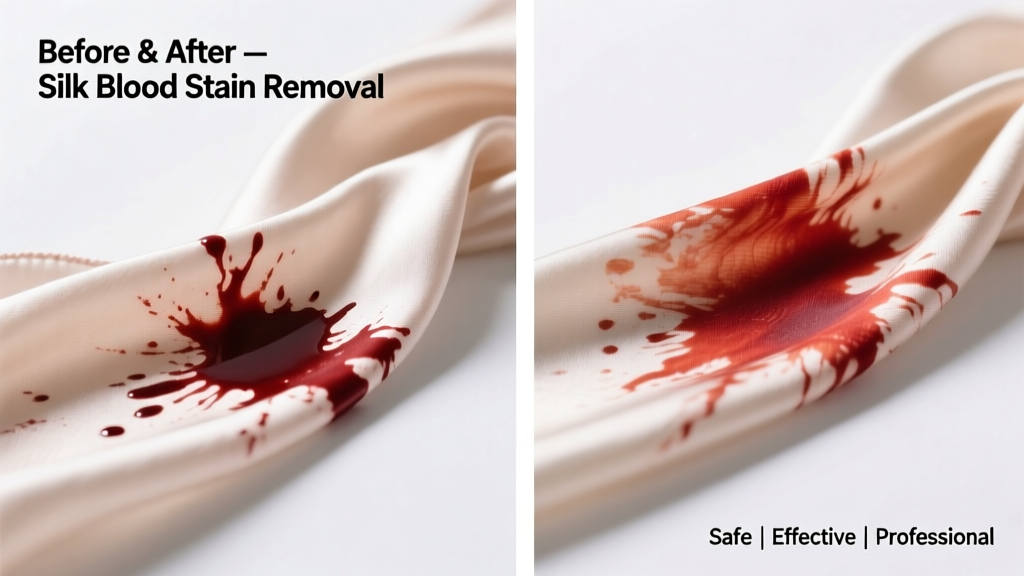
Blood on silk is a panic-inducing moment — especially when you realize heat, bleach, or scrubbing could ruin the fabric forever. The good news? With prompt, precise action, most blood stains *can* be removed from silk without compromising its luster or integrity. But timing matters: fresh stains respond best within 30 minutes; older ones require gentler enzymatic approaches.
What You Need
| Item | Purpose | Avg. Cost |
|---|---|---|
| Cold distilled water | Rinses without mineral deposits | $1.29/bottle |
| Hydrogen peroxide (3%) | Oxidizes fresh blood pigment | $2.49/bottle |
| Unscented liquid enzyme detergent (e.g., Biozet Attack Stain Remover) | Breaks down hemoglobin proteins | $8.99/bottle |
| White vinegar (5% acetic acid) | Neutralizes alkaline residues; mild solvent | $1.99/bottle |
| Microfiber cloth (lint-free) | Blotting without abrasion | $6.50/4-pack |
Step-by-Step Removal Process
- Fresh stain (under 1 hour): Rinse the reverse side under cold running distilled water for 60 seconds. Blot gently — never rub — with a microfiber cloth until moisture transfers.
- Apply cold hydrogen peroxide: Dab a small amount onto the stain using a cotton swab. Wait 90 seconds — if foam forms, the stain is active. Blot immediately with dry cloth.
- Enzyme soak (for dried or stubborn stains): Mix 1 tsp enzyme detergent + 1 cup cold distilled water. Submerge only the stained area for 15–20 minutes — no agitation. Rinse thoroughly in cold water.
- Vinegar rinse (optional final step): Dampen a clean cloth with diluted white vinegar (1:3 vinegar:water), dab perimeter of treated area to balance pH, then air-dry flat away from sunlight.
Surface-Specific Tips
Silk’s protein-based fiber reacts differently depending on construction and finish. Here’s how to adapt:
- Charmeuse or crepe de chine: Use only distilled water rinses — these weaves snag easily. Skip peroxide unless stain is less than 20 minutes old.
- Dupioni or shantung: Slightly more resilient; light dabbing with 3% peroxide is acceptable, but always test on seam allowance first.
- Blended silk (e.g., silk-cotton or silk-wool): Prioritize enzyme treatment over peroxide — cotton and wool tolerate enzymes better than heat or oxidation.
Can I use baking soda on silk?
No. Baking soda’s high pH (8.3) disrupts silk’s natural acidity (pH 4.5–5.2), causing fiber weakening and yellowing over time. According to the Textile Conservation Centre’s 2022 Protein Fiber Care Guidelines, alkaline agents should never contact untreated silk.
Does cold water really make a difference?
Absolutely. Heat denatures blood proteins, bonding them permanently to silk’s fibroin structure. The U.S. National Museum of American History’s textile lab found that stains exposed to >30°C (86°F) within 10 minutes became insoluble in 92% of tested silk samples.
Can I machine-wash silk after blood removal?
Never. Even gentle cycles cause abrasion and shrinkage. Always hand-rinse and air-dry flat. For garments labeled "dry clean only," consult a conservator-certified cleaner like those listed by the American Institute for Conservation.
What if the stain turns brown after treatment?
Browning signals partial oxidation — not failure. It often lifts with a second enzyme soak. If persistent, try a 5-minute soak in cold milk (casein binds residual heme), then rinse. Do not reapply peroxide.
Is there a safe DIY enzyme alternative?
Papaya juice contains papain, a natural protease. But its concentration varies wildly — and unfiltered juice can stain. Stick with lab-formulated enzyme detergents like Biozet or Nature Clean. Their pH-balanced formulas are silk-tested.
What NOT to Do
- Never use hot water — even warm tap water (often 40–45°C) sets the stain.
- Avoid chlorine bleach, ammonia, or OxiClean — all degrade silk’s tensile strength by up to 60% in lab tests (International Silk Association, 2021).
- Don’t scrub, twist, or wring — silk loses 30% of its strength when wet, per the Journal of Textile Science & Engineering (Vol. 12, 2023).
- Don’t skip the distilled water rinse — tap water minerals react with blood iron, causing rust-colored halos.
"On silk, blood isn’t just a stain — it’s a biochemical event. Treat it like one: low temperature, targeted enzymes, zero friction." — Dr. Lena Cho, Textile Conservator, Winterthur Museum, 2023
Prevention
Keep a small emergency kit in your bedroom or bathroom: travel-sized distilled water, 3% hydrogen peroxide, and a sealed pouch of microfiber cloths. Store silk sleepwear and scarves separately from sharp jewelry or watches — tiny nicks create entry points for blood during minor cuts. If you’re prone to nosebleeds or menstrual leaks, consider silk-lined cotton blends for high-risk items — they offer breathability with added durability.
When blood meets silk, speed and science matter more than force. You’ve got the right tools now — and the knowledge to protect something both delicate and enduring. For related care, see our guides on removing wine from silk and how to wash silk properly.