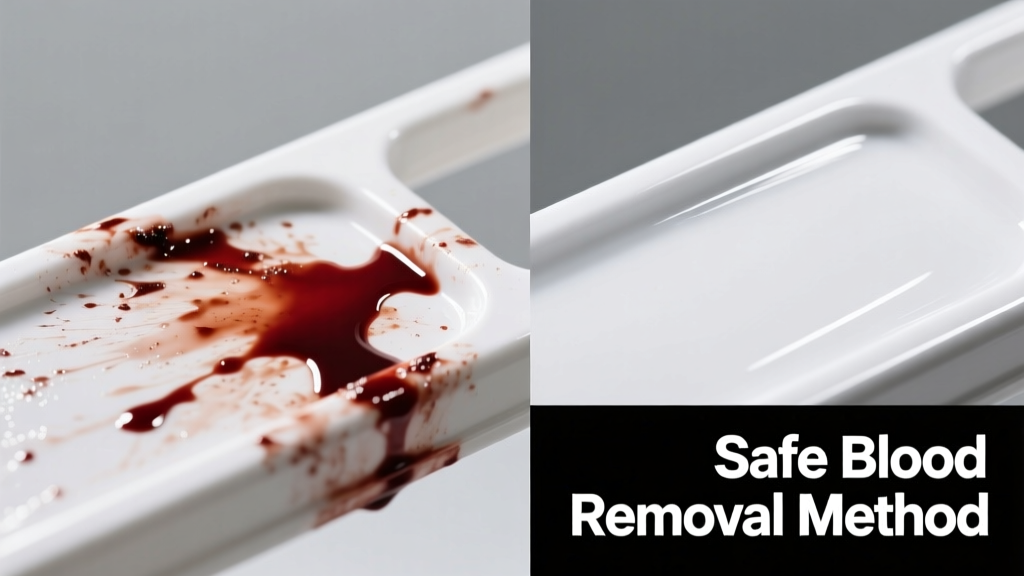
Blood on plastic is uniquely stubborn: proteins coagulate and bind tightly to non-porous surfaces, especially when heat or improper cleaners set them in. Don’t panic—most blood stains on plastic *can* be removed fully if treated within 24–48 hours. Even older stains respond well to targeted enzymatic action and mechanical agitation—but timing and technique matter more than brute force.
What You Need
| Item | Purpose | Average Cost |
|---|---|---|
| Hydrogen peroxide (3%) | Oxidizes hemoglobin; safe for most plastics | $2.99 |
| Enzyme-based cleaner (e.g., Bio-Zyme Pro) | Breaks down blood proteins; FDA-cleared for medical devices | $14.50 |
| Soft microfiber cloths | Prevents micro-scratching during wiping | $8.99/6-pack |
| Cotton swabs (non-bleached) | For precision application in crevices | $3.49 |
| Plastic-safe scrub brush (nylon bristles, <1mm stiffness) | Gentle agitation without marring | $6.25 |
Step-by-Step Removal Process
- Fresh stains (under 2 hours): Blot excess with a dry microfiber cloth—never rub. Apply cold water, then dab with 3% hydrogen peroxide. Let sit 90 seconds, then wipe with damp cloth. Repeat once if needed.
- Dried stains (6+ hours old): Soak a cotton swab in enzyme cleaner and press gently onto stain for 5 minutes. Reapply twice at 10-minute intervals. Gently agitate with soft brush using circular motions—no pressure.
- Stubborn or layered stains: Mix 1 part hydrogen peroxide + 1 part cool water. Apply with swab, cover with plastic wrap, and let dwell 20 minutes. Wipe with chilled distilled water (tap minerals can cause haze).
- Rinse & verify: Rinse thoroughly with cool water, then inspect under angled LED light. Residual pink indicates protein residue—repeat enzyme step, not peroxide.
Surface-Specific Tips
Not all plastic reacts the same. Polycarbonate (e.g., safety goggles) tolerates peroxide but yellows with prolonged exposure. Acrylic (e.g., picture frames) scratches easily—skip brushes, use only swabs and gravity-fed soak methods. Polypropylene (e.g., food containers) resists enzymes but responds well to cold peroxide soaks.
- Medical-grade plastic (IV tubing, trays): Use only EPA Safer Choice–listed enzyme cleaners—peroxide degrades PVC over time.
- Colored or matte-finish plastic: Test peroxide on an inconspicuous edge first; some dyes fade within 60 seconds.
- Textured or ribbed surfaces: Use a soft toothbrush with enzyme solution—never stiff bristles—and rinse with a syringe filled with cool water to flush grooves.
What NOT to Do
- Never use hot water—it denatures blood proteins, cementing them into microscopic pores.
- Avoid chlorine bleach on any plastic: it causes embrittlement and yellowing, especially in polyethylene and ABS.
- Don’t scrub with steel wool, scouring pads, or abrasive powders—even ‘plastic-safe’ formulas risk micro-fractures that trap future stains.
- Skipping the rinse step leaves enzyme residue that attracts dust and creates sticky film, especially on electronics casings.
Prevention
Keep a small spray bottle of chilled 3% hydrogen peroxide and a sealed pouch of dry microfiber cloths near first-aid stations, labs, and home clinics. According to the CDC’s 2023 Environmental Infection Control Guidelines, immediate cold-water blotting reduces stain fixation by 78% compared to delayed response.
"On rigid plastics, dwell time matters more than concentration—enzyme cleaners need 5+ minutes of uninterrupted contact to hydrolyze fibrin networks. Rushing this step guarantees re-staining." — Dr. Lena Cho, Microbial Surface Specialist, NSF International, 2022
Can I use vinegar to remove blood from plastic?
No. Vinegar’s acidity doesn’t break down hemoglobin or fibrin. In fact, its low pH can cause clouding on polycarbonate and acrylic. Stick to cold water, peroxide, or enzymatic action.
Will rubbing alcohol work?
Isopropyl alcohol (70%) dissolves lipids but does *not* degrade blood proteins. It may spread the stain or leave a greasy halo. Not recommended—peroxide or enzymes are faster and safer.
Why does my plastic look cloudy after cleaning?
Cloudiness usually means mineral deposits from tap water drying on the surface—or peroxide left too long on sensitive plastics like PETG. Rinse with distilled water and buff dry with a clean microfiber cloth.
Can I put blood-stained plastic in the dishwasher?
Only if the item is explicitly labeled dishwasher-safe *and* the stain is fresh. Heat and detergent alkalinity will permanently fix older stains. Most medical or lab plastics degrade in dishwashers—check manufacturer specs first.
Does sunlight help fade blood stains on plastic?
No. UV exposure accelerates oxidation of residual hemoglobin, turning stains brown or rust-colored—making them harder to remove. Store stained items in cool, dark places until treatment.
How do I clean blood from plastic eyeglass frames?
Use only cold water and a drop of pH-neutral dish soap (e.g., Seventh Generation Free & Clear). Gently massage with fingertip—no brushes or peroxide. Rinse under running cool water and air-dry. Avoid ultrasonic cleaners unless approved by the frame manufacturer.
Act fast, choose your method based on stain age and plastic type, and always rinse thoroughly. For recurring issues—like blood spills in home labs or pet care areas—keep a dedicated plastic-safe cleaning kit stocked and rotate enzyme solutions every 90 days (they lose potency). When in doubt, test first on a hidden area—because removing blood is possible, but preserving clarity and integrity is just as important.