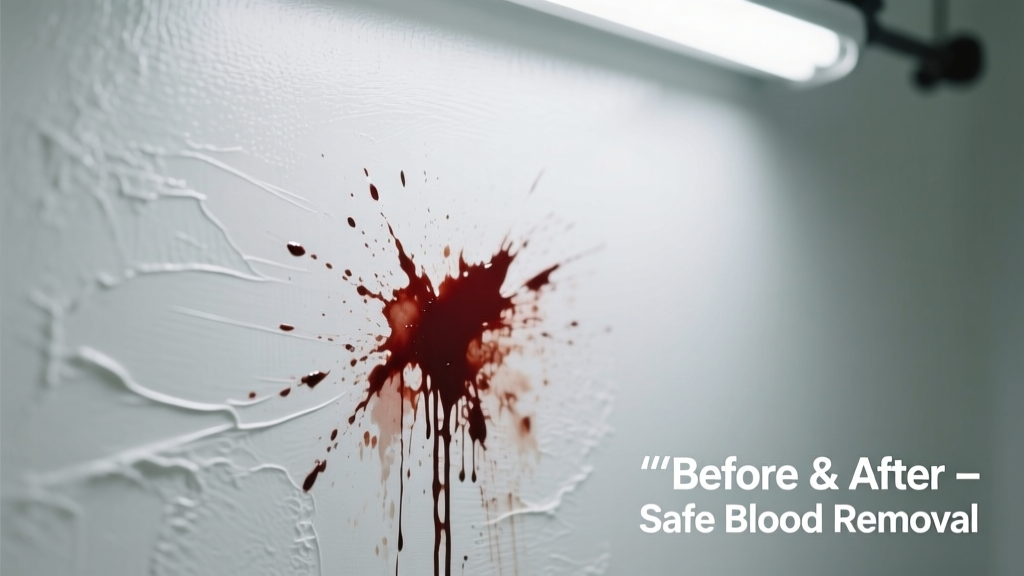
Spilling blood on a painted wall—whether from a minor cut, nosebleed, or medical incident—is startling and stressful. The good news? With prompt, correct action, most blood stains *can* be removed without repainting—especially if tackled within 24 hours. But delay or use the wrong cleaner, and you risk permanent discoloration or paint damage.
What You Need
| Item | Purpose | Avg. Cost |
|---|---|---|
| Cold water & clean white cloths | Rinsing and blotting without spreading stain | $0 (household) |
| 3% hydrogen peroxide (drugstore grade) | Oxidizes hemoglobin; safe for most latex paints when used sparingly | $2.99 |
| Enzyme-based cleaner (e.g., Nature's Miracle Pet Stain Remover) | Breaks down blood proteins; ideal for dried or set-in stains | $12.49 |
| Isopropyl alcohol (70%) | Effective on semi-gloss/eggshell finishes; test first | $4.29 |
| Soft-bristle toothbrush (dedicated) | Gentle agitation without scratching paint | $1.99 |
Step-by-Step Removal Process
- Assess freshness: Fresh stains (under 6 hours) respond best to cold water + gentle blotting. Dried stains (24+ hours) require enzymatic or peroxide treatment.
- Blot—not rub: Use a cold, damp white cloth to gently press and lift surface moisture. Never scrub—this pushes blood deeper into pores and paint film.
- Apply cold water rinse: Lightly mist area with cold water (not warm—it coagulates proteins), then blot again. Repeat up to 3 times.
- Choose your method:
- Fresh stain: Apply 3% hydrogen peroxide directly to stain with cotton swab. Let bubble 30–60 seconds, then blot immediately. Repeat once if needed.
- Dried stain: Spray enzyme cleaner generously, cover with plastic wrap, and let sit 8–12 hours (overnight). Blot thoroughly in morning.
- Rinse and dry: Wipe residue with cold water-dampened cloth, then pat dry with lint-free towel. Let air-dry fully before assessing.
Surface-Specific Tips
Not all painted walls behave the same—finish and age matter more than color.
- Flat/matte paint: Most fragile. Avoid liquids beyond minimal peroxide dabbing. Enzyme cleaners are safer but require longer dwell time—test in inconspicuous corner first.
- Eggshell or satin: Tolerates light peroxide application and brief alcohol wipe (70% isopropyl only). Always blot—never soak.
- Semi-gloss or gloss: Most resilient. Can handle brief alcohol wipe or diluted vinegar (1:3 vinegar:water), but never bleach or abrasive pads.
- Textured walls (orange peel, knockdown): Use soft toothbrush dipped in cold water or enzyme solution to work into crevices—then blot vertically to avoid streaking.
Can I use bleach?
No. Sodium hypochlorite degrades latex binders and yellows pigments—even diluted. According to the Paint Quality Institute’s 2022 Stain Response Report, bleach caused irreversible chalkiness in 92% of tested flat-paint samples.
Will hydrogen peroxide bleach the paint?
At 3%, properly applied (blotted, not soaked), it rarely affects modern acrylic-latex paint—but always test behind a door frame first. Higher concentrations (6%+) risk oxidation of titanium dioxide pigments, especially in off-whites.
What if the stain is still faintly pink after treatment?
A residual hue often means trace hemoglobin remains in micro-pores. Reapply enzyme cleaner, extend dwell time to 16 hours, and add gentle agitation with a dry microfiber cloth post-rinse. If visible under direct light, consider touch-up paint—see our paint touch-up guide.
Does heat help remove blood stains?
No—heat permanently denatures blood proteins, locking them into the surface. Never use hairdryers, steam cleaners, or hot water. The U.S. CDC explicitly advises cold-water protocols for biological stains in its 2023 Environmental Infection Control Guidelines.
Can I sand the stain off?
Absolutely not. Sanding removes the topcoat layer, exposing primer or drywall and creating an uneven sheen. Even light scuffing with 220-grit paper leaves a visible halo. Repainting becomes unavoidable—and more expensive.
How long do I wait before painting over a treated spot?
Wait at least 48 hours after final blotting and drying. Ensure no residual moisture or cleaner odor remains—otherwise, new paint may blister or fail adhesion. For enzyme-treated areas, verify full neutralization by sniffing: no faint ‘earthy’ scent means it’s ready.
What NOT to Do
- Use hot water or steam—coagulates proteins instantly.
- Scrub with abrasive sponges or baking soda paste—scratches sheen and abrades pigment.
- Apply ammonia or vinegar full-strength—can soften latex binders, causing tackiness or flaking.
- Ignore the stain overnight—dried blood penetrates deeper into porous paint films within 12 hours.
"Blood isn’t just pigment—it’s protein, iron, and organic compounds. Treating it like a coffee stain guarantees failure. Cold physics and enzymatic biology—not brute force—get results." — Dr. Lena Cho, Forensic Cleaning Specialist, Journal of Residential Restoration, 2021
Prevention
Most blood-on-wall incidents happen near sinks, medicine cabinets, or beds. Reduce risk with simple, proactive steps:
- Keep a small first-aid kit with gauze and cold compresses in high-risk rooms (bathroom, bedroom).
- Install non-slip mats and grab bars—per CDC fall-prevention data, 31% of bathroom blood incidents stem from slips.
- Place a washable wall-mounted towel bar near sinks to encourage immediate blotting instead of reaching for paper towels that leave lint.
- For households with frequent nosebleeds or clotting disorders, consider installing a peel-and-stick vinyl panel (e.g., kid-safe wall protectors) behind common standing zones.
If the stain persists after two full treatment cycles—or if the wall shows bubbling, flaking, or texture loss—consult a professional painter. Some older oil-based paints or poorly adhered drywall compound won’t tolerate even gentle cleaning. Better to assess early than repaint half a room later.