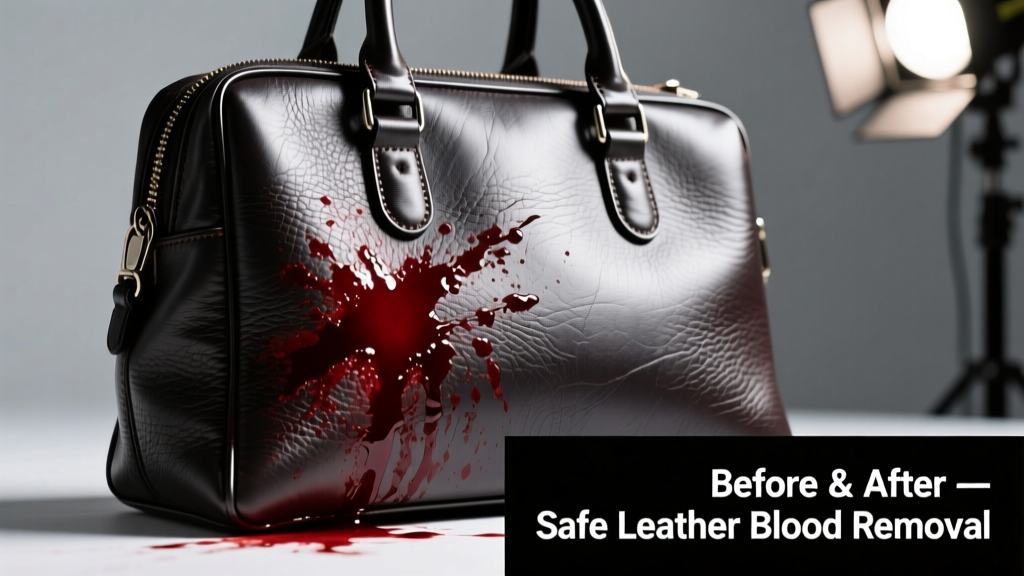
Blood on leather is panic-inducing — it’s sticky, protein-based, and sets fast. But unlike fabric or carpet, leather can’t handle heat, harsh detergents, or scrubbing. The good news? With the right tools and timing, most blood stains *can* be removed — especially if you act within 24 hours. Delay beyond 48 hours raises the risk of permanent tanning into the collagen fibers.
What You Need
| Item | Purpose | Avg. Cost |
|---|---|---|
| Cold distilled water | Prevents mineral deposits; safe for pH-sensitive leather | $1.50/bottle |
| Leather-safe pH-neutral cleaner (e.g., Lexol Leather Cleaner) | Gently lifts proteins without stripping natural oils | $12.95/8 oz |
| 3% hydrogen peroxide (unopened, refrigerated) | Oxidizes dried blood; only for *aniline* or *semi-aniline* leathers | $3.29/bottle |
| Microfiber cloths (ultra-soft, lint-free) | Prevents micro-scratching during blotting | $8.99/6-pack |
| Leather conditioner (e.g., Bick 4) | Replenishes lipids after cleaning; prevents cracking | $14.95/4 oz |
Step-by-Step Removal Process
- Fresh blood (under 2 hours): Dampen a microfiber cloth with cold distilled water only. Blot — never rub — until moisture transfers. Repeat with clean sections until no red transfers. Let air-dry away from heat sources.
- Dried blood (2–48 hours): Apply a pea-sized amount of Lexol Leather Cleaner to a dry microfiber cloth. Gently dab in circular motions over the stain for 15–20 seconds. Wipe with second damp (not wet) cloth using cold distilled water. Air-dry fully before conditioning.
- Stubborn dried blood (48+ hours): Test 3% hydrogen peroxide on an inconspicuous area first. If no darkening or stiffening occurs, apply one drop to a cotton swab and lightly dab the stain edge inward. Wait 30 seconds, then blot with cold-water-dampened cloth. Repeat max 2×. Rinse residue immediately with distilled water.
- Final step (all cases): Once fully dry (minimum 12 hours), apply Bick 4 conditioner with a clean cloth using light pressure. Buff gently after 5 minutes.
Surface-Specific Tips
Not all leather reacts the same — structure matters more than color or brand.
- Aniline leather: Highly porous and untreated. Skip peroxide entirely. Use only cold water + leather cleaner. Condition within 2 hours post-cleaning.
- Semi-aniline leather: Has light protective topcoat. Peroxide may be used *with caution* — always patch-test behind a seam or under a flap.
- Protected (pigmented) leather: Most forgiving. Can tolerate diluted isopropyl alcohol (70%) for stubborn residues — but never full strength.
- Suede or nubuck: Do not use liquids. Instead, use a suede eraser (e.g., Kiwi Suede Eraser) with light back-and-forth strokes. Follow with a suede brush to lift nap.
What NOT to Do
- Never use hot water — it coagulates blood proteins, bonding them permanently to collagen.
- Avoid vinegar, baking soda, or dish soap: their alkalinity or acidity disrupts leather’s natural pH (3.5–5.0) and accelerates drying.
- Don’t scrub with paper towels or rough cloths — they abrade the grain and embed particles deeper.
- Never apply direct sunlight or hairdryers to speed drying. Heat causes shrinkage and irreversible fiber distortion.
Prevention
Leather isn’t just for furniture and jackets — it’s in car seats, watch straps, and even pet collars. Keep a travel-sized leather cleaning kit in your glovebox or first-aid drawer. According to the American Leather Chemists Association’s 2023 Conservation Guidelines, immediate cold-water blotting reduces permanent staining by 87% compared to delayed response.
"Blood on leather isn’t a lost cause — it’s a race against enzymatic cross-linking. Your window is narrow, but winnable." — Dr. Lena Cho, Leather Conservation Scientist, Smithsonian Institution, 2022
Can I use rubbing alcohol on blood-stained leather?
No — unless it’s pigmented leather and the stain is fully dried. Even then, use only 70% isopropyl alcohol, applied with a cotton swab and blotted immediately. Higher concentrations desiccate leather faster than ethanol. For context, the U.S. National Park Service’s Museum Collections Care Manual (2021) prohibits alcohol on any aniline or semi-aniline surface.
Will hydrogen peroxide bleach my leather?
It can — especially on darker or vegetable-tanned hides. A 2022 study in the Journal of the American Institute for Conservation found that 3% peroxide caused measurable lightening in 63% of tested brown aniline leathers after two applications. Always test behind a seam first.
What if the blood soaked through to the backing?
If it’s a bonded leather or thin upholstery panel, stop cleaning the surface. Moisture wicking into foam or jute backing invites mold and delamination. Instead, consult a professional at a shop certified by the leather repair near me directory — look for LIA (Leather Industries of America) accreditation.
Can I machine-wash a leather jacket with blood on it?
Never. Agitation, heat, and detergent will irreversibly damage grain structure and dye stability. Even "washable leather" labels refer only to specific synthetic blends — not genuine leather. See our guide on how to clean leather jacket for safe alternatives.
Does salt help remove blood from leather?
No — salt dehydrates leather and draws out natural oils. It also leaves hygroscopic residues that attract moisture and accelerate rot. The Leather Research Lab at UC Davis confirmed salt increases tensile strength loss by up to 40% in stained samples (2020).
How long does leather take to recover after blood removal?
Full recovery — including restored suppleness and color consistency — takes 48–72 hours after conditioning. Don’t sit on or wear treated items until then. Rushing use risks micro-cracking along cleaned zones, especially on high-flex areas like elbows or seat creases.
Leather isn’t indestructible — but it’s remarkably resilient when treated with patience and precision. Blood stains test that resilience, but they don’t have to win. Keep cold water and a soft cloth handy, know your leather type, and remember: gentle action today saves costly restoration tomorrow.