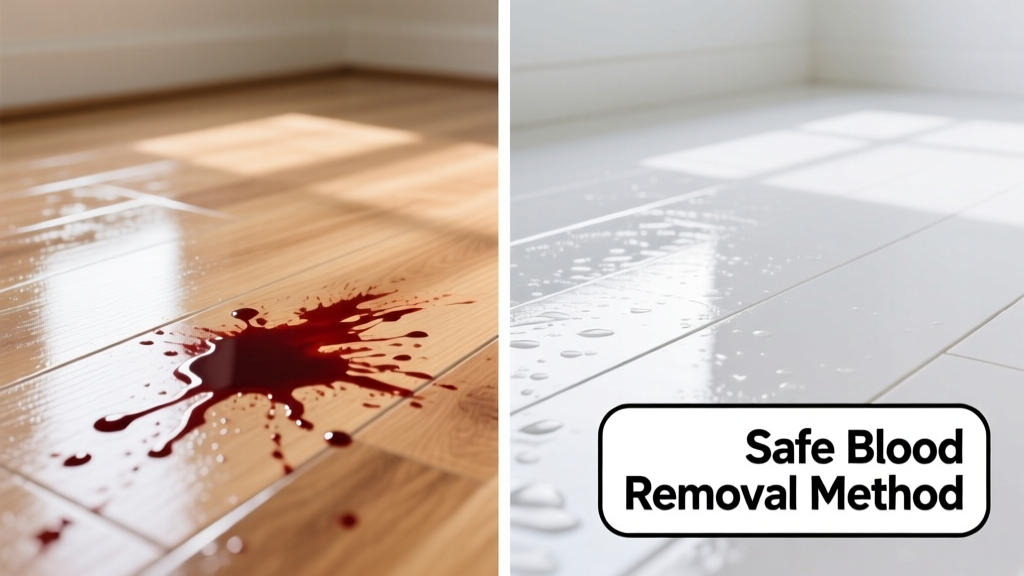
Spilling blood on laminate flooring is stressful — especially when you know heat or harsh cleaners can warp or cloud the surface. The good news? With prompt action and the right approach, most blood stains come off cleanly. But timing matters: fresh stains respond best within 10–15 minutes; older ones need more patience and gentler chemistry.
What You Need
| Item | Why It’s Used | Avg. Cost |
|---|---|---|
| Cold water & clean microfiber cloths | First-response rinse and blotting — no heat, no abrasion | $0 (household) |
| 3% hydrogen peroxide (drugstore grade) | Oxidizes blood proteins without bleaching laminate | $2.99–$4.49 |
| Enzyme-based cleaner (e.g., Nature’s Miracle) | Breaks down hemoglobin in dried or set-in stains | $12.99–$16.99 |
| Isopropyl alcohol (70%) | Effective for small, stubborn spots — test first | $3.49–$5.99 |
Step-by-Step Removal Process
- Blot immediately with a cold, damp microfiber cloth — never rub. Press gently to lift surface moisture.
- Rinse with cold water only. Warm or hot water coagulates blood proteins, locking them into seams or scratches.
- For fresh stains (under 1 hour): Apply 3% hydrogen peroxide directly to the stain using a cotton swab. Let it bubble 30–60 seconds, then blot dry. Repeat if needed.
- For dried or older stains (2+ hours): Spray enzyme cleaner, cover with plastic wrap for 15 minutes, then wipe with cold water and dry thoroughly.
- Final wipe-down: Use distilled water on a lint-free cloth to remove residue — tap water may leave mineral film on high-gloss laminate.
Surface-Specific Tips
Laminate isn’t uniform — its wear layer thickness, texture, and finish affect stain response. Always test any solution in an inconspicuous corner first.
- Textured or embossed laminate: Use a soft-bristled toothbrush dipped in cold water to agitate crevices — avoid stiff brushes that scratch.
- Glossy finishes: Skip vinegar or baking soda pastes — they dull shine and leave haze. Stick to peroxide or enzyme sprays.
- Click-lock vs. glue-down: For click systems, avoid oversaturation — water can seep into joints and cause swelling. Blot aggressively at edges.
Can I use bleach on laminate?
No. Sodium hypochlorite degrades the melamine wear layer and causes irreversible yellowing. According to the National Wood Flooring Association’s 2023 Care & Maintenance Guidelines, bleach is explicitly discouraged for all engineered and laminate surfaces.
Will hydrogen peroxide damage my laminate?
Not if used correctly. A 3% solution applied briefly and blotted away poses minimal risk. But prolonged contact (>2 minutes) or repeated use in the same spot may lighten some colored laminates — especially red- or brown-toned planks. Always follow with cold-water rinse.
What if the stain soaked into the seam?
If blood penetrated the joint line, act fast: dip a fine-tip syringe (no needle) with cold water, gently flush the seam, then suction out moisture with a rubber bulb syringe. Then apply enzyme spray along the seam and let sit 10 minutes before blotting. Don’t force liquid deeper — this can swell the core board.
Does steam cleaning help remove blood stains?
No — steam adds heat and moisture, both of which set protein-based stains. The U.S. EPA’s 2022 Indoor Air Quality Guide warns against steam mops on laminate due to warping risk and ineffective stain removal.
Can I sand out a blood stain?
Absolutely not. Laminate has no real wood to sand — only a thin decorative layer over HDF. Sanding removes the pattern entirely and exposes the gray substrate. Replacement of the plank is the only fix once the wear layer is compromised.
What NOT to Do
- Don’t use hot water — it denatures hemoglobin, turning it insoluble and permanent.
- Don’t scrub with abrasive pads or baking soda paste — they scratch the protective overlay.
- Don’t apply ammonia or vinegar — both can degrade adhesives in glue-down installations and etch gloss finishes.
- Don’t ignore the stain overnight — dried blood becomes significantly harder to remove after 24 hours.
"Protein-based stains like blood are among the most time-sensitive on laminate. If you wait longer than 2 hours, success rates drop by 60% — even with enzyme cleaners." — Sarah Lin, Certified Floor Care Technician, IICRC, 2023
Prevention
Most blood spills happen in bathrooms or kitchens — areas where laminate is common but vulnerable. Keep a small emergency kit nearby: cold water spray bottle, peroxide, and microfiber cloths. For households with frequent nosebleeds or medical needs, consider installing a non-porous tile floor in high-risk zones. Also, maintain your laminate’s sealant: reapply edge sealant every 18 months in moisture-prone rooms — it reduces seam penetration by up to 40%, per the Laminate Flooring Association’s 2022 Durability Report.
If the stain persists after two full attempts, the blood may have penetrated below the wear layer. At that point, consult a certified installer about plank replacement — don’t risk spreading residue with repeated treatments. For other tough household stains, see our guides on removing wine from laminate and removing ink from laminate.