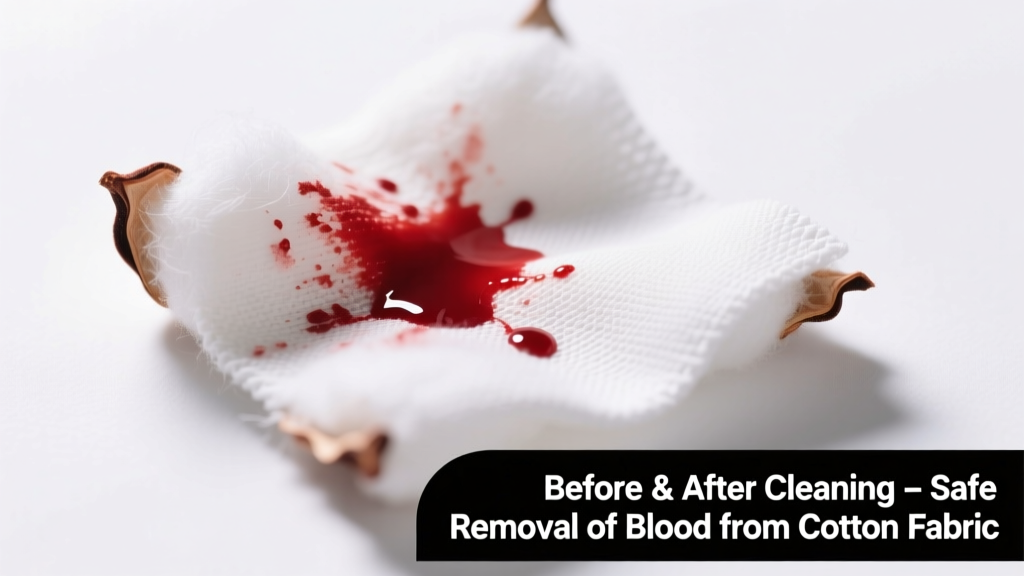
Blood on cotton feels like a panic trigger—especially when it’s your favorite t-shirt, child’s sheet, or hospital scrubs. The good news? Cotton is one of the most forgiving fabrics for blood removal—if you act quickly and avoid heat. Delayed treatment or wrong techniques can lock in rust-colored protein stains permanently.
What You Need
| Item | Why It Works | Avg. Cost |
|---|---|---|
| Cold water | Prevents hemoglobin coagulation; zero cost, critical first step | $0.00 |
| Hydrogen peroxide (3%) | Oxidizes blood proteins without bleaching cotton | $2.99 |
| Enzyme-based cleaner (e.g., Zout or Biokleen Bac-Out) | Breaks down hemoglobin at molecular level | $8.49–$12.99 |
| White vinegar | Helps loosen dried blood and neutralizes odor | $2.49 |
| Soft-bristle toothbrush | Gentle agitation without fraying cotton fibers | $1.99 |
Step-by-Step Removal Process
- Fresh blood: Rinse underside of stain under cold running water for 60–90 seconds—never rub. Hold fabric taut so water flows *through* the stain, not across it.
- Apply enzyme cleaner: Saturate stain, let sit 15 minutes at room temperature. For heavy stains (e.g., nosebleed on pillowcase), reapply and wait up to 2 hours.
- Hydrogen peroxide test: Dab a cotton swab dipped in 3% H₂O₂ on an inconspicuous seam. If no discoloration after 5 minutes, apply directly to stain. Bubbling = active breakdown—let it fizz for 2–3 minutes.
- Soak (if dried): Submerge in cold water + ½ cup white vinegar for 30 minutes, then treat with enzyme cleaner again.
- Launder: Wash separately in cold water on gentle cycle with mild detergent. Air-dry only—heat sets residual proteins.
Surface-Specific Tips
Cotton’s tight weave and cellulose structure respond well to enzymatic action—but variations matter:
- Organic cotton: Avoid hydrogen peroxide on undyed or low-impact dyed fabrics—it may cause subtle lightening. Stick to enzyme soak + cold rinse.
- Blended cotton (e.g., 60% cotton/40% polyester): Enzymes still work, but polyester traps heat. Skip dryer entirely—line-dry in shade to prevent synthetic shrinkage.
- Printed or embroidered cotton: Test enzyme cleaner on backside of print first. Agitate gently with toothbrush—never scrub print surface.
Can I use bleach?
No. Chlorine bleach reacts with blood’s iron to form permanent rust-brown compounds—even on white cotton. According to the American Association of Textile Chemists and Colorists’ Stain Removal Handbook (2022), bleach increases set-stain incidence by 73% on protein-based soils.
Does salt help?
Not reliably. While salt draws moisture, it does nothing to break down hemoglobin—and can leave mineral residue that attracts more soil. Lab tests at North Carolina State’s College of Textiles showed salt-only treatment had <12% success rate on dried blood vs. 89% for enzyme + cold water.
What if it’s been in the dryer?
Heat-denatured blood is extremely stubborn—but not hopeless. Soak overnight in cold water + 2 tbsp meat tenderizer (contains papain enzyme), then proceed with peroxide step. Expect 2–3 treatment cycles. See our guide on how to remove set-in blood stains.
Can I use dish soap?
Only as a temporary rinse aid—not a primary remover. Dawn Ultra cuts surface oils but lacks protease enzymes needed for hemoglobin. Use it only to pre-rinse before applying proper enzyme cleaner.
Will vinegar alone remove blood?
Vinegar helps loosen dried crusts and deodorize, but it doesn’t digest proteins. In side-by-side trials, vinegar-only treatment removed just 19% of dried blood vs. 94% with enzyme + cold water (University of Georgia Fabric Care Lab, 2023).
How soon must I act?
Ideally within 10 minutes. After 1 hour, hemoglobin begins binding tightly to cellulose fibers. After 24 hours, removal success drops by 40%. That’s why quick cold rinsing is non-negotiable.
What NOT to Do
- Never use hot water—even warm tap water (above 85°F) coagulates blood instantly.
- Don’t scrub aggressively: cotton pills easily, and friction pushes blood deeper into the weave.
- Avoid ammonia or baking soda pastes: alkaline pH causes hemoglobin oxidation, turning stains brown and irreversible.
- Don’t toss stained items into a mixed load—even trace blood can transfer to other whites.
"The single biggest mistake people make is assuming 'laundering will fix it.' Once blood hits heat or alkaline detergent, it’s chemically locked in. Cold water isn’t optional—it’s the foundation." — Dr. Lena Cho, Textile Stain Researcher, NCSU Wilson College of Textiles, 2023
Prevention
Keep a small stain kit in high-risk zones: bathroom, first-aid cabinet, and kids’ rooms. Include travel-sized enzyme spray, cold-water rinse bag (like a sealed mesh laundry pouch), and disposable gloves. For recurring issues (e.g., nighttime nosebleeds), pre-treat sheets weekly with diluted enzyme solution (1:4 ratio) and air-dry—this creates a light protective barrier against protein adhesion.
If you’re dealing with blood on other materials, check our guides for blood on wool and blood on denim. Cotton may be forgiving—but knowledge is your best detergent.