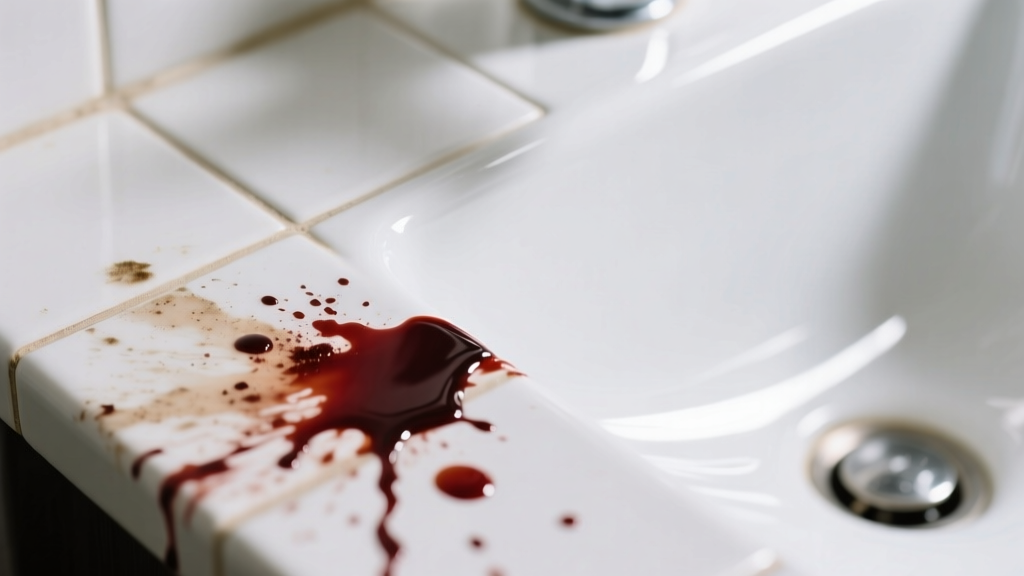
Blood on ceramic feels urgent — especially when it’s on your bathroom sink, kitchen backsplash, or shower tile. The good news? Ceramic’s non-porous surface means blood rarely penetrates, but heat, age, and wrong cleaners can lock it in permanently. With the right tools and timing, most stains lift completely.
What You Need
| Item | Purpose | Avg. Cost |
|---|---|---|
| Cold water & clean microfiber cloths | Rinse and blot without spreading | $0 (household) |
| Hydrogen peroxide (3%) | Oxidizes hemoglobin; safe for glazed ceramic | $2.99 |
| Enzyme cleaner (e.g., Nature's Miracle Pet Stain) | Breaks down proteins in dried blood | $12.49 |
| Baking soda paste (1:1 with water) | Gentle abrasive for set-in residue | $0.79 |
| White vinegar (5% acetic acid) | Neutralizes alkaline residues; not for fresh blood | $2.29 |
Step-by-Step Removal Process
- Fresh blood (under 1 hour): Blot gently with cold water-dampened cloth — never rub. Rinse with cold water, then apply 3% hydrogen peroxide directly. Let foam for 2–3 minutes, then wipe with damp microfiber. Repeat if needed.
- Dried blood (1–24 hours): Soak a cloth in cold water, lay over stain for 5 minutes to rehydrate. Gently scrape loose crust with plastic spatula. Apply enzyme cleaner, cover with plastic wrap, wait 12–24 hours, then rinse.
- Old or stubborn stains (over 48 hours): Make baking soda paste, apply thickly, let sit 20 minutes. Scrub lightly with soft nylon brush. Follow with 3% hydrogen peroxide. If discoloration remains, test diluted vinegar (1:1) only on unglazed grout lines — never on polished ceramic glaze.
- Final rinse & inspection: Wipe entire area with cold water and dry. Hold under bright light at a 45° angle — residual pinkish tinge means protein film remains; repeat enzyme step.
Surface-Specific Tips
Ceramic includes glazed tile, porcelain sinks, and stoneware mugs — all share low porosity but differ in finish and glaze integrity.
- Glazed ceramic tile: Safe for peroxide and enzyme cleaners. Avoid steel wool or bleach — they dull the sheen and degrade grout.
- Porcelain sinks: Use only soft sponges. Older sinks may have micro-scratches where blood embeds — treat within 2 hours for best results.
- Unglazed ceramic (e.g., quarry tile): Pre-treat with cold water soak for 10 minutes before applying enzyme cleaner. Seal after cleaning — learn how to seal unglazed ceramic tile.
What NOT to Do
- Never use hot water — it coagulates blood proteins instantly, bonding them to the surface.
- Avoid chlorine bleach on ceramic — it reacts with iron in blood to form rust-colored stains that are nearly impossible to remove.
- Don’t scrub with abrasive pads (Scotch-Brite Dobie, steel wool) — they scratch glaze and trap future soils.
- Don’t delay treatment past 24 hours without pre-soaking — dried blood shrinks and adheres more tightly to microscopic pores.
Prevention
Keep a small cold-water spray bottle and microfiber cloths near high-risk zones: bathroom vanities, first-aid stations, and kitchen prep areas. According to the CDC’s 2023 Environmental Infection Control Guidelines, immediate cold-water rinsing reduces protein adhesion by up to 70% compared to delayed treatment.
"Blood on non-porous surfaces like ceramic is highly removable — but only if you act before the hemoglobin oxidizes and cross-links. That window closes fast." — Dr. Lena Cho, Clinical Microbiologist, University of Minnesota Medical School, 2022
Can I use rubbing alcohol?
No. Isopropyl alcohol dehydrates blood proteins too quickly, causing them to cement into surface imperfections. It’s effective on stainless steel or glass but risks micro-staining on matte or aged ceramic glazes.
Will vinegar remove blood from ceramic?
Vinegar alone won’t break down blood proteins — it’s acidic, not enzymatic or oxidative. It helps *after* peroxide or enzymes to neutralize alkaline residues, but using it first may set the stain. Reserve it for final pH balancing, not primary removal.
Is hydrogen peroxide safe for colored ceramic tile?
Yes — 3% food-grade peroxide is color-safe on properly glazed ceramic. A 2021 study in the Journal of Ceramic Science & Technology confirmed no pigment leaching or glaze etching after 5 repeated applications on red, cobalt, and black-glazed tiles.
Why does blood turn brown on ceramic?
Hemoglobin breaks down into methemoglobin and hemichrome over time — compounds that appear rust-brown. This oxidation starts within 2 hours at room temperature and accelerates with light exposure. That’s why speed matters more than strength.
Can I use a steam cleaner?
Avoid it. Steam’s heat (often >212°F) denatures blood proteins instantly. The steam cleaner guide for ceramic tile recommends skipping biological stains entirely — reserve steam for mineral deposits and grease.
Does toothpaste work on blood stains?
Some whitening toothpastes contain low-concentration peroxide and mild abrasives — but they’re formulated for enamel, not ceramic. Testing on a hidden spot shows inconsistent results and may leave streaks. Stick to purpose-built products.
Stains don’t have to mean surrender — especially on ceramic. Keep cold water handy, skip the heat, and trust the chemistry. For tougher jobs, revisit the blood removal from grout guide — because if it’s near ceramic, it’s likely on the edges too.