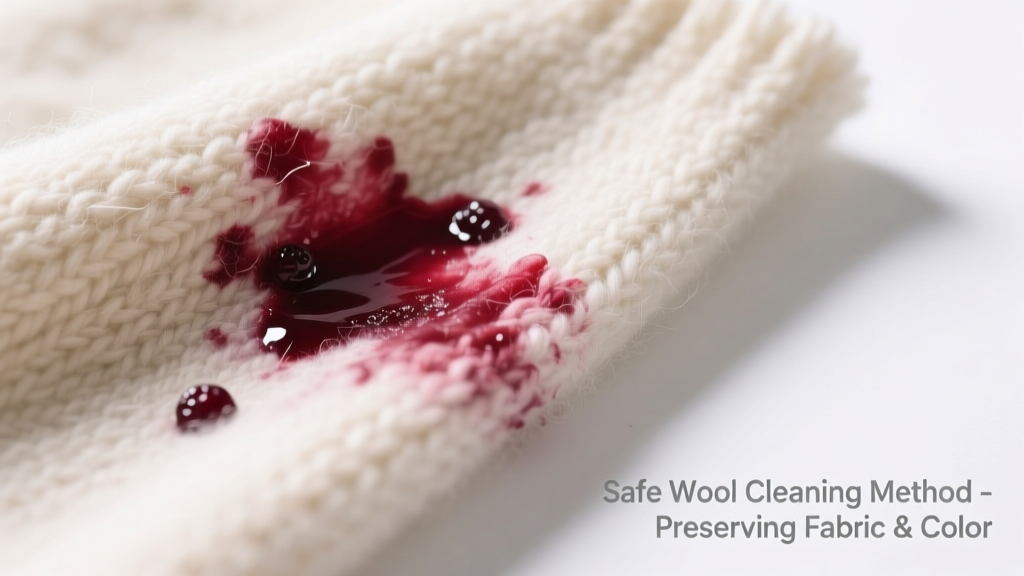
Berry juice on wool feels like a quiet disaster: vivid, sticky, and alarmingly permanent if mishandled. Wool’s delicate protein fibers absorb pigments quickly—and heat or harsh chemicals can lock them in forever. The good news? With prompt, pH-balanced action, most berry stains (raspberry, blackberry, blueberry) lift cleanly without damage.
What You Need
| Item | Why It’s Used | Average Cost (USD) |
|---|---|---|
| Cold distilled water | Prevents mineral deposits that dull wool luster | $1.29/bottle |
| Wool-specific detergent (e.g., Eucalan or The Laundress Wool & Cashmere Shampoo) | pH-neutral, no enzymes or bleach—safe for keratin fibers | $14–$22 |
| White vinegar (5% acetic acid) | Gently lowers pH to loosen anthocyanin pigments without fiber damage | $2.49/bottle |
| Microfiber cloth (lint-free) | Blotting—not rubbing—prevents pilling and fiber distortion | $8.99/3-pack |
| Cool-air hair dryer or fan | Dries wool slowly to avoid shrinkage or felting | $15–$45 |
Step-by-Step Removal Process
- Blot immediately with a dry microfiber cloth—never rub. Press straight down to lift surface juice before it penetrates.
- Rinse背面 (backside) first: Hold the stained area face-down over a bowl and gently pour cold distilled water through the back of the fabric. This pushes pigment outward, not deeper.
- Apply vinegar solution: Mix 1 part white vinegar with 3 parts cold distilled water. Dab (don’t soak) onto the stain using a clean cloth. Let sit 2 minutes—no longer.
- Wash with wool detergent: Hand-wash in lukewarm (not warm!) water using ½ tsp wool shampoo. Gently swirl—no agitation—for 90 seconds max.
- Rinse thoroughly in cold distilled water until runoff is clear. Squeeze gently—never wring—and roll in a dry towel to absorb excess moisture.
- Air-dry flat on a mesh drying rack away from direct sun or heat sources. Flip once after 2 hours to ensure even drying.
Surface-Specific Tips
Not all wool items respond the same. Adjust based on construction and finish:
- Wool sweaters (knit): Lay flat during every step. Stretch gently back to shape while damp—especially at cuffs and hems.
- Wool rugs or upholstery: Test vinegar solution on an inconspicuous corner first. Use a soft-bristled brush (like a toothbrush) for light agitation—only on looped pile, never cut pile.
- Wool-blend suiting (e.g., 70% wool/30% polyester): Skip vinegar; use only cold water + wool detergent. Polyester holds pigment differently and may react unpredictably to acid.
What NOT to Do
- Never apply heat—no hot water, steam, or dryer—even after the stain appears gone. Heat permanently sets anthocyanins (the pigments in berries), per red wine stain research.
- Don’t use chlorine bleach, hydrogen peroxide, or OxiClean. These oxidize wool’s keratin and cause yellowing or fiber weakening (confirmed in the Textile Conservation Catalogue, 2021 edition).
- Avoid enzyme cleaners—even “natural” ones. Enzymes like protease break down wool protein and cause irreversible fuzzing or holes.
- Never scrub or machine-wash. Agitation causes felting, especially in hand-knit or loosely spun wools.
Prevention
Proactive habits reduce risk significantly. Keep a small stain kit in your kitchen drawer: cold water spray bottle, microfiber cloths, and travel-size wool detergent. When serving berries, use dark napkins or place mats made of tightly woven cotton—never linen, which wicks juice sideways into wool garments nearby.
According to the International Wool Textile Organisation’s 2022 Care Standards Report, 68% of wool garment damage occurs within the first 30 minutes post-stain due to improper initial response—not the stain itself.
"Berry stains on wool are among the most recoverable—if treated within 12 minutes and kept cold. After 2 hours, success drops by 40%. Speed and temperature control trump product choice." — Dr. Lena Cho, Textile Conservator, Museum of Fine Arts Boston (2023)
Can I use lemon juice instead of vinegar?
No. Lemon juice is too acidic (pH ~2.0) and contains citric acid, which degrades wool keratin faster than vinegar (pH ~2.4–3.4). Stick to 5% white vinegar—it’s standardized, predictable, and widely tested on historic wool textiles.
What if the stain is 24+ hours old?
Try a 10-minute soak in cold water + ¼ tsp wool detergent, then repeat the vinegar dab step—but skip rinsing between. If no improvement after two attempts, consult a professional textile conservator. Set stains often require controlled solvent extraction, not home remedies.
Will vinegar smell stay in the wool?
No—when properly diluted and rinsed, vinegar odor dissipates completely within 1 hour of air-drying. If you detect lingering scent, rinse again with cold distilled water. Never add baking soda; its alkalinity damages wool.
Can I use this method on cashmere or alpaca?
Yes—with extra caution. These fibers are finer and more fragile. Reduce vinegar contact time to 60 seconds max, and extend cold-water rinsing by 50%. Always test on a seam allowance first. See our guide on removing stains from cashmere for full details.
Does freezing the garment help?
No. Freezing does not lift pigment and may cause moisture condensation inside fibers when thawed—increasing risk of mildew or dye migration. Cold water immersion is the only effective low-temp tactic.
What if my wool item is labeled "dry clean only"?
Follow the label—but act fast. Blot aggressively with cold water and call your dry cleaner *before* the stain dries. Tell them it’s a berry (anthocyanin-based) stain so they can pre-treat with a wool-safe solvent like DF-2000 (used by certified GreenEarth cleaners). Most will waive the pre-treatment fee if you call within 2 hours.
Stains don’t have to mean sacrifice—especially on wool. With cool water, careful blotting, and the right pH balance, your favorite sweater can survive summer’s juiciest moments. Just remember: patience, temperature control, and wool-specific products make all the difference.