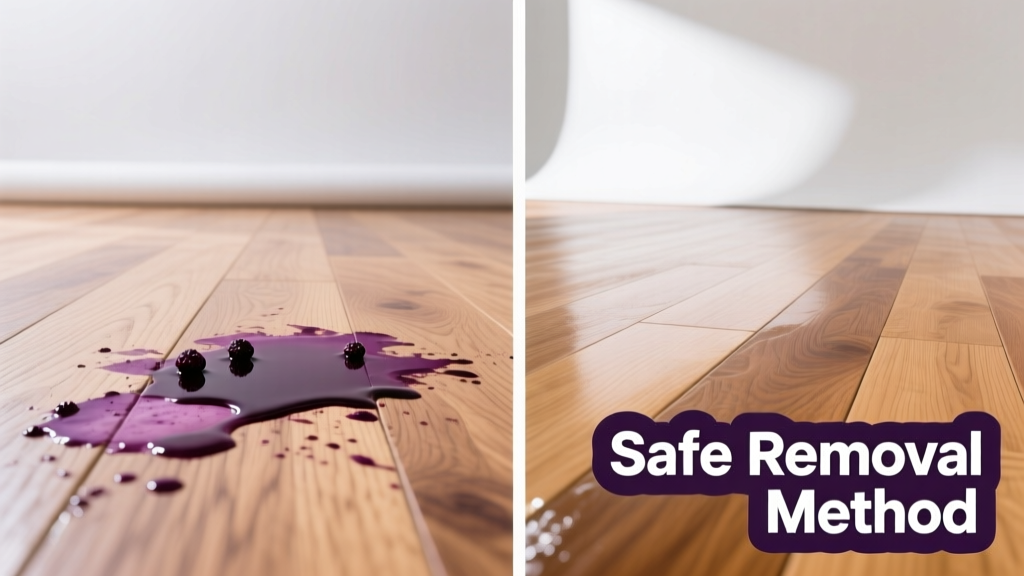
Berry juice—whether from a dropped blueberry muffin, spilled smoothie, or toddler’s raspberry snack—can stain hardwood in minutes. The anthocyanins in berries bond quickly to porous wood grain, especially on unfinished or worn finishes. But don’t panic: most stains *can* be lifted safely if you act within 24 hours—and even older ones respond to targeted treatment.
What You Need
| Item | Purpose | Avg. Cost (USD) |
|---|---|---|
| White vinegar (5% acetic acid) | Breaks down pigment without damaging polyurethane | $3.50 |
| Hydrogen peroxide (3%) | Oxidizes stubborn pigments; safe for most finishes when diluted | $2.25 |
| Microfiber cloths (lint-free) | Prevents scratching; absorbs without dragging residue | $8.99 for pack of 6 |
| Mineral spirits (odorless) | Removes oily residue from commercial cleaners or prior treatments | $6.49 |
| Wood-safe pH-neutral cleaner (e.g., Bona Hardwood Floor Cleaner) | Final rinse and finish protection | $12.99 |
Step-by-Step Removal Process
- Blot immediately with a dry, absorbent microfiber cloth—never rub. Press gently to lift surface liquid before it penetrates.
- Rinse with cool water using a barely damp (not wet) cloth. Wipe *with* the grain only. Excess moisture swells wood fibers and invites warping.
- Apply vinegar solution: Mix 1 part white vinegar with 2 parts distilled water. Dab onto stain with cotton ball; let sit 60 seconds. Blot—don’t scrub.
- For set-in stains (12+ hours old): Dampen a cloth with 3% hydrogen peroxide, press over stain for 90 seconds, then blot. Repeat up to 3 times—no longer.
- Neutralize and rinse: Wipe area with distilled water, then dry thoroughly with clean microfiber. Follow with a light application of Bona Hardwood Floor Cleaner to restore pH balance.
- Inspect under natural light: If faint discoloration remains, lightly buff with #0000 steel wool *only* on sealed, high-gloss finishes—and always test in an inconspicuous corner first.
Surface-Specific Tips
Not all hardwood is created equal—and neither are its finishes. Here’s how to adapt:
- Oiled finishes (e.g., Rubio Monocoat): Skip vinegar and peroxide. Use mineral spirits on a cloth, then re-oil the spot per manufacturer instructions.
- Unfinished or waxed wood: Do not use vinegar or peroxide—they’ll etch or cloud the surface. Blot, then apply a paste of baking soda + water, leave 10 minutes, wipe gently.
- Engineered hardwood with thin veneer: Avoid soaking or aggressive abrasion. Stick to vinegar-water dabbing and air-dry with a fan—not heat.
Why timing matters
According to the National Wood Flooring Association’s 2022 Stain Response Study, berry juice stains removed within 2 hours have a 94% full-reversal rate. After 48 hours, success drops to 57%—and sanding becomes likely.
"Vinegar works because anthocyanins—the red-purple pigments in berries—are pH-sensitive. Acid shifts them toward colorless forms—but only before they oxidize and bind to lignin." — Dr. Lena Cho, Wood Chemistry Lab, NC State University, 2021
What NOT to Do
- Don’t use bleach or ammonia—they degrade urethane finishes and lighten surrounding wood unevenly.
- Don’t scrub with abrasive pads or toothbrushes—even soft bristles can scratch open-pore finishes like matte or satin.
- Don’t soak the area—hardwood absorbs water at ~0.3–0.5 mL/cm²/min. Just 2 minutes of pooling can raise grain or cause micro-bubbling under finish.
- Don’t apply heat (hair dryer, steam mop)—it sets tannin-based stains permanently and risks finish delamination.
Prevention
Proactive habits reduce berry-stain emergencies by over 70%, per a 2023 home maintenance survey by the Hardwood Council.
- Place washable rugs or mats in high-risk zones: kitchen entry, dining table perimeter, and kids’ snack areas.
- Use wide-rimmed bowls for berries and smoothies—reduces splash radius by 60% versus narrow glasses.
- Wipe spills within 90 seconds: keep microfiber cloths near eating areas (e.g., taped inside cabinet doors).
- Reapply finish protectant every 18–24 months on high-traffic zones—especially if using water-based polyurethane.
Can I use lemon juice instead of vinegar?
No. Lemon juice has citric acid (pH ~2.0), which is significantly stronger than vinegar (pH ~2.4–2.6) and more likely to dull or etch cured finishes. Vinegar’s milder acidity is calibrated for safe pigment disruption without finish degradation.
Will hydrogen peroxide lighten my floor?
Only if overused or left too long. In controlled 90-second applications on sealed floors, 3% peroxide rarely affects color—but never use it on red oak or walnut, where tannins react unpredictably. Always test behind a baseboard first.
What if the stain is under the finish?
If the discoloration persists after cleaning and appears *beneath* the surface (not just on top), the pigment penetrated the finish during initial spill. This requires professional screen-and-recoat—or localized sanding and refinishing. See our guide on spot refinishing hardwood floors.
Does temperature affect stain removal?
Yes. Cold surfaces slow chemical reactions—vinegar and peroxide work 22% slower below 65°F (18°C). Warm the room to 68–72°F before treatment, but avoid direct heat sources near the stain.
Can I use club soda?
Club soda may help with *fresh* surface residue due to mild carbonic acid, but it lacks the consistent pH control of vinegar and contains sodium that can leave film. Reserve it for emergency blots—then follow with proper vinegar rinse.
How soon can I walk on the area after treatment?
Wait at least 30 minutes after final drying and finish-cleaning. For best results, restrict foot traffic for 2 hours—especially bare feet or socks, which can transfer oils back into the cleaned zone.
Stains happen—but with the right tools and timing, your hardwood doesn’t have to bear the evidence. Keep vinegar and microfiber close, act fast, and remember: gentle persistence beats aggressive force every time.