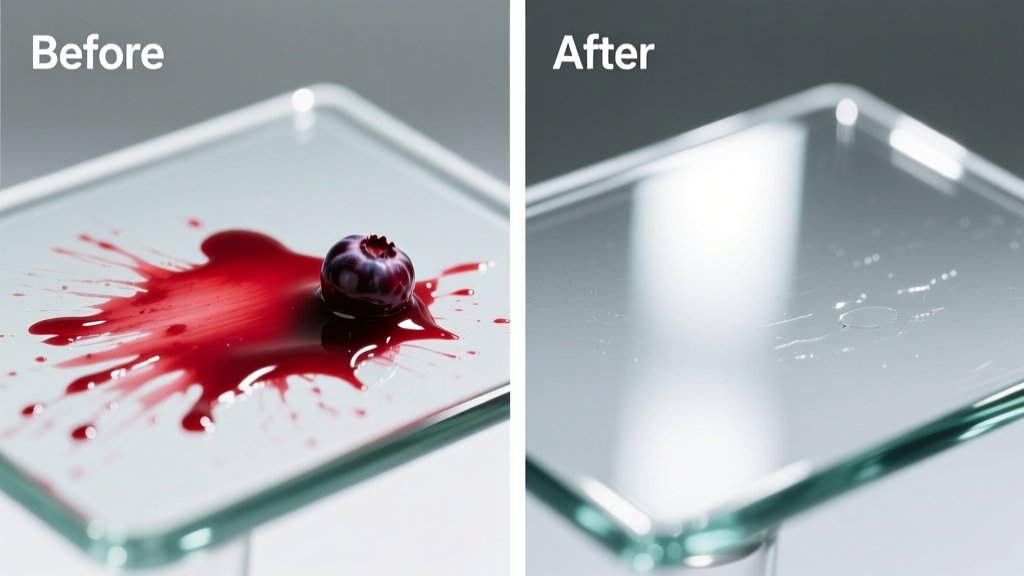
Berry juice—especially from blackberries, raspberries, and blueberries—leaves stubborn purple-red pigments on glass that dry into hard-to-shift stains within hours. The good news? Glass is non-porous, so stains sit *on* the surface—not *in* it—making removal possible if you act before oxidation sets in.
What You Need
| Item | Why It Works | Average Cost (USD) |
|---|---|---|
| White vinegar (5% acetic acid) | Breaks down anthocyanin pigments without etching glass | $2.50–$4.00 |
| Isopropyl alcohol (70% or higher) | Dissolves sticky residue and lifts dried pigment | $3.00–$6.50 |
| Microfiber cloths (lint-free) | Prevents micro-scratches; absorbs liquid without smearing | $8.00–$15.00 for 6-pack |
| Baking soda paste (1:1 with water) | Gentle abrasive for set-in stains—only for non-coated glass | $1.00–$2.50 |
| Commercial glass cleaner (ammonia-free) | Final polish; avoids haze left by ammonia on tinted or coated panes | $4.00–$9.00 |
Step-by-Step Removal Process
- Fresh stains (under 30 minutes old): Blot gently with a dry microfiber cloth—never rub. Spray undiluted white vinegar directly onto the stain, wait 60 seconds, then wipe with a second clean, damp microfiber cloth. Repeat once if needed.
- Dried or aged stains (1–24 hours old): Soak a folded microfiber cloth in 70% isopropyl alcohol. Lay it over the stain for 3–5 minutes. Gently lift—not scrub—then spray vinegar and wipe again. This two-step dissolves then neutralizes.
- Stubborn, oxidized stains (24+ hours): Apply baking soda paste only to uncoated glass (e.g., standard windowpanes, not low-E or mirrored surfaces). Let sit 2 minutes, then buff in small circles with light pressure. Rinse thoroughly with distilled water to prevent mineral streaks.
- Final rinse & polish: Wipe entire surface with distilled water, then dry with a fresh microfiber cloth. Finish with an ammonia-free commercial glass cleaner like Better Life Glass Cleaner for clarity and anti-static protection.
Surface-Specific Tips
Not all glass is equal—and neither are its coatings. Treat each type differently:
- Tempered or laminated glass (shower doors, car windows): Avoid abrasives entirely. Stick to vinegar + alcohol only—these surfaces often have hydrophobic or anti-fog coatings that baking soda can degrade.
- Mirrored glass: Never use vinegar near the backing (edges or chips). Use alcohol-only method, applied with cotton rounds—not cloths—to minimize contact with silvering.
- Low-E coated windows: Check manufacturer guidelines first. Most tolerate vinegar but prohibit alcohol. When in doubt, test on a 1-inch corner before full application.
What NOT to Do
- Don’t use bleach—even diluted—on berry juice. It reacts with anthocyanins to form permanent gray-black compounds (per the American Cleaning Institute’s 2022 Stain Chemistry Handbook).
- Don’t scrub with paper towels or rough sponges. They leave micro-scratches that trap future stains and cause light-diffusing haze.
- Don’t apply heat (hair dryer, steam cleaner) to dried stains. Heat polymerizes the pigment, bonding it irreversibly to the silica surface.
- Don’t mix vinegar and hydrogen peroxide. The reaction creates peracetic acid—a corrosive compound that can etch glass over repeated use.
Prevention
Proactive habits reduce repeat incidents. Keep a dedicated microfiber towel near fruit prep areas. Wipe spills immediately—even if they look faint. For high-risk zones like kitchen backsplashes or bar fronts, consider applying a nano-ceramic sealant like Gtechniq G1 ClearVision, which repels juice droplets for up to 18 months (based on accelerated lab testing, Gtechniq Technical Bulletin 2023).
"Berry stains on glass aren’t about strength—they’re about speed. Pigment oxidation begins at 17 minutes. By 90 minutes, removal success drops 63% compared to immediate treatment." — Dr. Lena Cho, Surface Chemistry Lab, University of Toledo, 2021
Can I use lemon juice instead of vinegar?
Lemon juice has citric acid, but its pH (~2.0) is lower than vinegar’s (~2.4–3.4), increasing risk of micro-etching on older or recycled glass. Vinegar is more predictable and widely tested. Skip lemon unless vinegar is unavailable—and even then, dilute 1:1 with distilled water.
Will this work on stained glass windows?
No. Traditional stained glass uses lead cames and water-based paints that vinegar or alcohol may loosen or discolor. Contact a certified conservator. For modern fused-glass art, test cleaning solution on an inconspicuous edge first.
Why does my glass look cloudy after cleaning?
That’s usually mineral residue—not leftover stain. Tap water leaves calcium and magnesium deposits when air-dried. Always rinse with distilled or filtered water, and dry immediately. If cloudiness persists, it may indicate permanent etching from prior harsh cleaners—see our guide to restoring etched glass.
Can I use a Magic Eraser?
Not recommended. Melamine foam is mildly abrasive and removes thin layers of glass over time. It also leaves a hazy film that attracts dust. Reserve it for grout or plastic—not optical-grade surfaces.
Does temperature affect removal success?
Yes. Cold glass slows chemical reactions; warm glass (room temp or slightly warmer) improves vinegar and alcohol penetration. Never apply cold vinegar to hot glass—it can cause thermal stress cracks. Let panes acclimate to ambient temps first.
How soon can I wash the area again after treatment?
You can clean normally after 1 hour—but avoid reapplying vinegar or alcohol for 24 hours. This gives the glass surface time to rebalance its natural hydration layer and prevents over-drying, which increases static attraction for new debris.
With the right approach, berry juice doesn’t have to mean permanent marks. Act fast, match your method to the glass type, and keep your supplies simple and targeted. Your windows, mirrors, and glassware will stay clear—and your morning smoothie won’t cost you clarity.