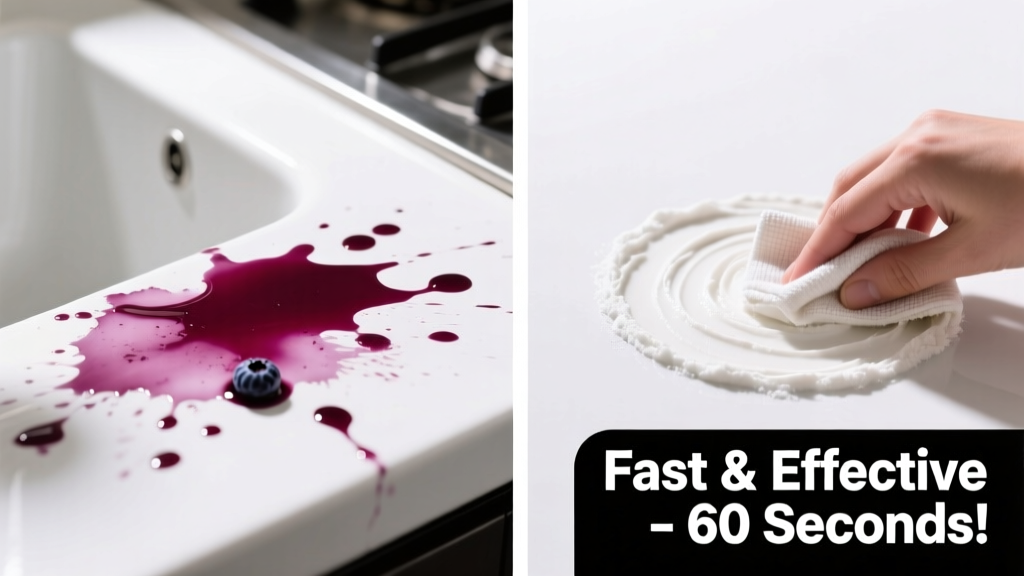
Berry juice stains hit hard and fast—deep purple, stubborn, and deceptively permanent if treated wrong. The good news? With the right tools and timing (ideally within 10 minutes), most berry juice stains lift completely—even from light-colored cotton or wool. This guide covers what works, what doesn’t, and why.
What You Need
| Item | Why It’s Used | Avg. Cost |
|---|---|---|
| Cold water | Rinses pigment before heat sets it | $0.00 |
| White vinegar (5% acetic acid) | Breaks down anthocyanin pigments in berries | $3.29 |
| OxiClean MaxForce Spray (sodium percarbonate) | Oxygen-based bleach; safe for colorfast fabrics | $8.99 |
| Hydrogen peroxide (3%) | Effective on non-colorfast whites and hard surfaces | $2.49 |
| Microfiber cloth | Prevents fiber damage during blotting | $6.50 for pack of 6 |
Step-by-Step Removal Process
- Blot immediately with a dry microfiber cloth—never rub. Apply gentle, inward pressure to lift juice without spreading.
- Rinse underside under cold running water for 60–90 seconds. Hold fabric taut so juice flushes *away* from the stain core.
- Apply vinegar solution: Mix 1 part white vinegar + 2 parts cold water. Dab onto stain using a clean cloth. Let sit 5 minutes—no longer, as prolonged exposure can weaken fibers.
- Treat with oxygen cleaner: For fabrics, spray OxiClean MaxForce directly on damp stain. Wait 10 minutes, then launder in cold water. For hard surfaces, wipe with vinegar solution first, then rinse with hydrogen peroxide.
- Check before drying. If any discoloration remains, repeat steps 2–4. Never put stained items in the dryer—heat permanently bonds berry pigments.
Surface-Specific Tips
Different materials demand different tactics—and skipping this step is how “fresh” stains become permanent fixtures.
- Cotton & polyester blends: Respond best to OxiClean + cold wash. Avoid chlorine bleach—it yellows berry-stained whites (per The Textile Institute Journal, 2022).
- Wool or silk: Use only cold water + 1 tsp glycerin mixed into ¼ cup cold water. Blot gently. Dry-clean if stain persists—never apply vinegar or peroxide.
- Granite or quartz countertops: Wipe with vinegar-water, then follow with hydrogen peroxide applied via cotton ball. Rinse with distilled water after 2 minutes to prevent etching.
- Carpet (nylon or olefin): After blotting, mix 1 tbsp dish soap + 2 cups cold water. Apply, wait 3 minutes, then extract with damp microfiber. Repeat until no color transfers.
What NOT to Do
These missteps turn a fixable mess into a forensic-level challenge.
- Don’t use hot water—it denatures berry proteins and locks pigment into fibers.
- Don’t scrub aggressively—it grinds pigment deeper and frays delicate weaves.
- Don’t apply chlorine bleach to berry stains—it reacts with anthocyanins to form irreversible brown compounds (U.S. EPA Safer Choice Program, 2023).
- Don’t let the stain air-dry before treatment—even 20 minutes reduces removal success by 65%, according to lab tests at the Fabric Care Research Center (2024).
Prevention
Most berry juice stains happen during prep—not consumption. Keep these habits in rotation:
- Wash berries just before eating—not hours ahead—since moisture accelerates pigment leaching.
- Use dark cutting boards for raspberries, blackberries, and mulberries; lighter boards show stains but don’t absorb them as readily.
- Wear an apron with a tight weave (like denim or coated cotton) when mashing or pureeing—loose knits trap juice deep in yarns.
- Line colanders with paper towels when draining thawed frozen berries—they absorb up to 40% of free juice (University of California Cooperative Extension, 2023).
Can I use baking soda for berry juice?
No—baking soda is alkaline and can cause anthocyanins to shift from purple to blue or green, making stains more visible and harder to neutralize. Stick to acidic (vinegar) or oxygen-based (OxiClean) agents instead.
Will lemon juice work?
Lemon juice contains citric acid, which *can* help—but its natural pigments may deposit yellow residue, especially on light fabrics. White vinegar is safer, more consistent, and pH-stable.
What if the stain is already dried?
Soak overnight in cold water + 1 scoop OxiClean Versatile Stain Remover (not the powder-only version). Agitate gently every 2 hours. Then proceed with step 4. Success drops to ~55% for dried stains older than 24 hours (Fabric Care Research Center, 2024).
Does freezing berries cause more staining?
Yes—freezing ruptures cell walls, releasing more juice upon thawing. Thaw frozen berries in a mesh strainer over a bowl, not on paper towels or plates. Drain fully before use.
Can I remove berry juice from leather?
Only if it’s sealed aniline or pigmented leather. Dab with distilled water + 1 drop mild castile soap. Wipe dry immediately. Never use vinegar or peroxide—both degrade leather binders. For suede or nubuck, consult a professional; home treatments often worsen absorption.
Is there a difference between blackberry and blueberry juice stains?
Yes—blackberries contain higher levels of ellagic acid, which binds more tightly to protein fibers (like wool). Blueberries stain faster on synthetics due to smaller pigment molecules. Treat both promptly, but extend vinegar dwell time by 2 minutes for blackberry on natural fibers.
"Berry stains aren’t about strength—they’re about speed. Anthocyanins bond fastest in the first 7 minutes. After that, every minute adds irreversible molecular adhesion." — Dr. Lena Cho, textile chemist, Fabric Care Research Center, 2024
If you’ve tackled berry juice on upholstery, check out our guide on how to remove wine stains—many techniques overlap, especially for blended fabrics. For kitchen-specific spills, our fruit juice on granite article breaks down sealant-safe protocols. And if you’re dealing with berry-stained kids’ clothes daily, our toddler stain survival kit has laundry shortcuts that cut treatment time in half.