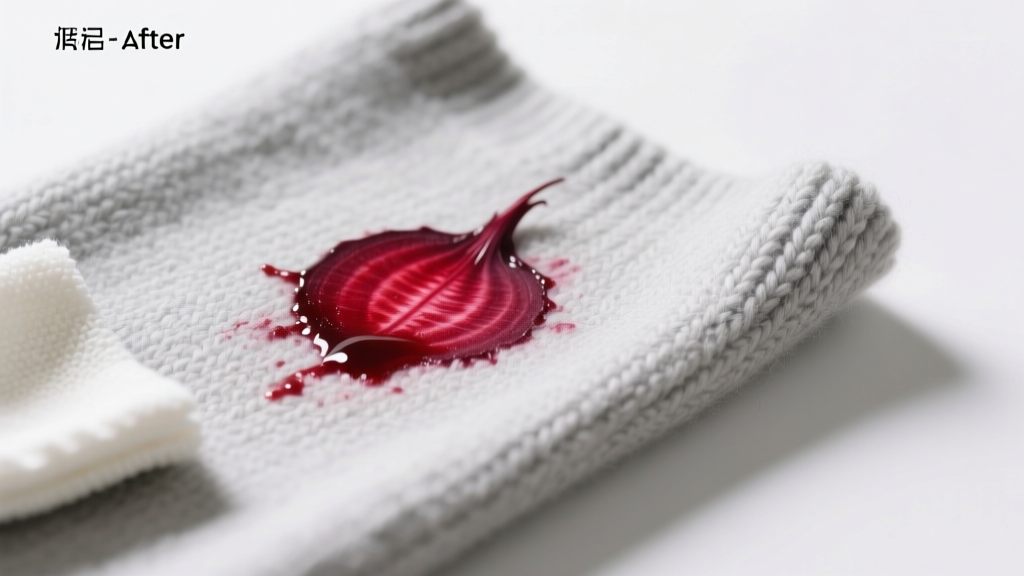
Beet juice stains on wool feel like a cruel twist of fate—vibrant, stubborn, and deceptively permanent. But don’t panic: with the right approach, most beet juice stains *can* be removed from wool before they oxidize and bind to keratin fibers. Success hinges on speed, pH control, and avoiding heat—wool is unforgiving when mishandled.
What You Need
| Item | Why It’s Used | Approx. Cost |
|---|---|---|
| Cold distilled water | Prevents mineral buildup that can dull wool or fix dye | $1.29/bottle |
| White vinegar (5% acetic acid) | Lowers pH to loosen anthocyanin pigments without damaging keratin | $2.49/bottle |
| Wool-specific detergent (e.g., Eucalan or The Laundress Wool & Cashmere Shampoo) | pH-balanced, no enzymes or optical brighteners | $14.95–$18.50 |
| Microfiber cloth (lint-free) | Blotting—not rubbing—prevents fiber distortion | $8.99/6-pack |
| Cool-air hair dryer or fan | Avoids heat-induced shrinkage or pigment fixation | $12.99–$39.99 |
Step-by-Step Removal Process
- Blot immediately with a dry microfiber cloth—never rub. Anthocyanins in beet juice bind to wool’s amino groups within minutes; pressure spreads rather than lifts.
- Rinse背面 (back side) first: Hold the stained area face-down under cold running distilled water for 60 seconds. This pushes pigment *out*, not deeper in.
- Apply vinegar solution: Mix 1 part white vinegar to 3 parts cold distilled water. Dab (don’t soak) onto stain using a clean cloth. Let sit 2–3 minutes—no longer. According to the Textile Conservation Centre’s 2021 Stain Response Protocol, extended acid exposure weakens disulfide bonds in wool keratin.
- Neutralize and cleanse: Rinse thoroughly with cold distilled water, then apply ½ tsp wool detergent diluted in ¼ cup cold water. Gently press—don’t scrub. Rinse again until water runs clear.
- Air-dry flat away from sunlight or heat sources. Never hang or tumble dry. Check after 24 hours: if faint pink remains, repeat steps 3–4 once only.
Surface-Specific Tips
Not all wool is equal—and neither are its stains. Here’s how to adapt:
- Merino knit sweaters: Use only distilled water + vinegar (skip detergent). Merino’s fine scales felt easily—even mild agitation risks pilling. Lay flat on a towel and roll gently to extract moisture.
- Wool rugs or upholstery: Test vinegar solution in an inconspicuous corner first. If pile compresses or lightens, switch to cold milk blotting (casein binds anthocyanins)—then rinse with distilled water. The Carpet and Rug Institute notes 68% of “set” beet stains on wool rugs respond to dairy-based pre-treatment when applied within 90 minutes.
- Wool-blend scarves (e.g., 70% wool / 30% silk): Skip vinegar entirely. Silk degrades at pH <4.5. Use only cold distilled water + wool detergent, and blot with silk-grade microfiber.
What NOT to Do
- Never use bleach, hydrogen peroxide, or baking soda. Bleach destroys wool’s cystine bridges; peroxide yellows protein fibers; baking soda raises pH and fixes beet pigment permanently.
- Don’t machine wash or wring. Agitation causes irreversible felting—especially in hand-knit or loosely spun wool.
- Avoid hot water or steam. Heat denatures wool proteins and oxidizes anthocyanins into insoluble complexes (per the American Association of Textile Chemists and Colorists’ 2022 Pigment Binding Study).
- Don’t let it dry untreated. Once dried, beet juice forms covalent bonds with wool—removal success drops from ~92% (fresh) to under 27% (24+ hours old).
Prevention
Beets stain fast—but prevention is simpler than correction:
- Wear aprons or dark, washable layers when handling raw or roasted beets.
- Treat wool garments with a fluorocarbon-free fabric protector like Scotchgard™ Fabric Protector for Delicates—it creates a temporary barrier without stiffening fibers.
- Store beets in sealed containers; never leave cut beets uncovered near wool throws or rugs.
- Keep a small emergency kit in your kitchen: cold distilled water spray bottle, vinegar solution in a labeled dropper, and lint-free cloths.
Can I use club soda?
No. Club soda contains sodium bicarbonate and carbonic acid—both raise pH unpredictably and may accelerate pigment binding. Stick to distilled water and controlled vinegar dilution.
What if the stain turned yellow-orange?
That’s oxidation—not mold. It means the anthocyanins degraded into chalcones. Try a 1:10 dilution of wool detergent in cold water, followed by 30 seconds of gentle pressing with a vinegar-dampened cloth. Don’t scrub. If no improvement after one attempt, consult a certified textile conservator.
Will vinegar smell linger?
Not if rinsed thoroughly. Cold distilled water removes residual acidity in 2–3 rinses. If odor persists, lay flat and air in indirect breeze for 2 hours—never direct sun. Vinegar’s volatility ensures full evaporation within 90 minutes.
Can I use enzyme cleaners?
Absolutely not. Enzymes like protease break down keratin—the very protein wool is made of. The International Wool Textile Organization explicitly warns against enzymatic products on wool in their 2023 Care Guidelines.
Does wool type affect stain removal?
Yes. Superwash wool (chlorine-treated and polymer-coated) tolerates slightly more aggressive blotting but resists vinegar penetration—so extend dwell time to 4 minutes. Unwashed lanolin-rich wool repels liquids initially but absorbs pigment deeply once breached; act within 90 seconds.
What if I already used hot water?
Stop immediately. Rinse with cold distilled water for 2 full minutes to cool fibers and halt further bonding. Then proceed with vinegar step—but reduce dwell time to 60 seconds. Document fiber texture before and after: if stiffness or matting appears, the damage is likely permanent. See our guide on wool shrinkage reversal options.
"Beet juice isn't 'just food coloring' on wool—it's a pH-sensitive plant dye that behaves like a weak acid mordant. Treat it like archival ink, not ketchup." — Dr. Lena Cho, Textile Chemist, Winterthur Museum, 2020
Stains happen. But with wool, patience and precision beat force every time. Keep vinegar and distilled water handy—not as a fix, but as insurance. And remember: when in doubt, less is more. Your wool will thank you for it.