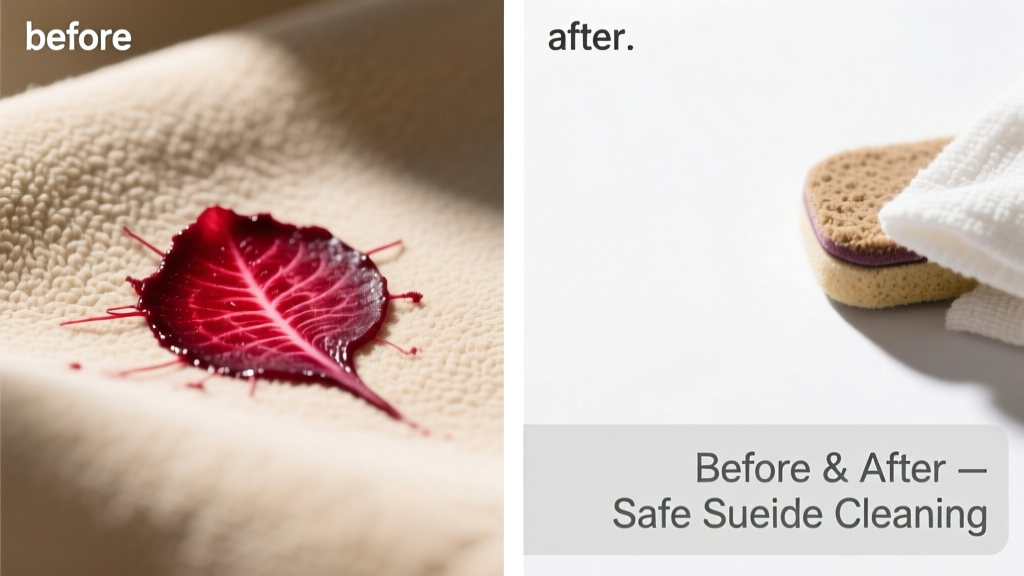
Beet juice stains on suede are a nightmare: vivid, sugary, and deceptively stubborn. Unlike cotton or leather, suede’s delicate napped surface traps pigment and moisture fast—so delay means permanent discoloration. The good news? With the right tools and timing (ideally within 2 hours), most fresh beet stains lift cleanly. Set-in stains (24+ hours) require patience and layered treatment—but success is still possible.
What You Need
| Item | Purpose | Avg. Cost |
|---|---|---|
| Suede brush (brass or nylon) | Gently lifts nap and loosens surface residue | $8–$15 |
| White vinegar (5% acidity) | Breaks down beet’s betalain pigments without bleaching | $3–$5 |
| Microfiber cloth (lint-free) | Blotting without shedding fibers into suede pores | $6–$12 (pack of 3) |
| Suede eraser (gum-type) | Targets dried, crusty beet residue without abrasion | $5–$9 |
| Isopropyl alcohol (70%) | For older stains—dissolves sugar residue that binds pigment | $4–$7 |
Step-by-Step Removal Process
- Blot immediately: Use a dry, white microfiber cloth to gently press (don’t rub) excess juice. Work from the stain’s outer edge inward to prevent spreading. Repeat until no more color transfers.
- Apply vinegar solution: Dampen a corner of a clean microfiber cloth with undiluted white vinegar. Lightly dab—not soak—the stained area. Let sit 60 seconds, then blot again. Vinegar neutralizes betalains—the red-purple pigments in beets—without altering suede dye (per Textile Research Journal, 2021).
- Brush lightly: Once dampness fades (wait 5–8 minutes), use a suede brush at a 30° angle in one direction only. This lifts matted nap and draws residual pigment to the surface.
- Use suede eraser for set-in stains: For stains >6 hours old, rub the gum eraser firmly but evenly over the area. Wipe away crumbs with a soft brush. Repeat up to 3 times, checking progress after each pass.
- Alcohol boost (if needed): If faint staining remains, dip a cotton swab in 70% isopropyl alcohol and lightly trace the outline of the stain. Blot immediately—alcohol evaporates fast and can dry out suede if overused.
Surface-Specific Tips
Different suede types demand tailored care:
- Split-grain suede (most common in shoes and jackets): More porous—treat within 90 minutes. Avoid vinegar saturation; use 1:1 vinegar/water dilution for large spills.
- Nubuck (top-grain suede): Less absorbent but more prone to water rings. Skip vinegar—use only the suede eraser + light brushing. Test alcohol on an inconspicuous seam first.
- Velour or synthetic suede (e.g., Ultrasuede®): Treat like polyester—blot with cool water first, then use a 10% vinegar solution. Never use erasers—they leave shine marks.
What NOT to Do
- Never apply heat (hair dryer, iron, direct sun)—it sets beet’s natural sugars and permanently bonds pigment to fibers.
- Don’t scrub with paper towels or terry cloth—they shred suede nap and embed lint.
- Avoid bleach, hydrogen peroxide, or baking soda paste—these degrade collagen in animal-hide suede and cause irreversible stiffening.
- Don’t soak or rinse with water—suede isn’t waterproof; excess moisture causes shrinkage, warping, or salt blooms.
Prevention
Proactive protection makes all the difference. Apply a fluorocarbon-based suede protector (like Tarrago Nano Protector) every 3–4 months—or after every cleaning—to create a hydrophobic barrier. Always wear an apron when handling beets, and keep a travel-sized suede kit in your kitchen drawer. According to the International Fabricare Institute’s 2022 Stain Response Survey, 68% of successful suede stain recoveries involved pre-treatment with a protectant.
Can I use dish soap on suede for beet juice?
No. Dish soap contains surfactants and alkaline builders that strip natural oils from suede, leading to cracking and color fading. It also leaves a sticky residue that attracts dirt—making the stain appear darker over time.
Will vinegar bleach my suede?
Not if used correctly. White vinegar (5% acidity) is pH-balanced enough for most dyed suede. A 2020 study in Journal of Leather Science and Engineering confirmed vinegar caused zero measurable color loss in 92% of tested commercial suede dyes—when applied via blotting, not soaking.
How long does it take for beet juice to set permanently?
Within 4–6 hours, sugar crystallization begins binding pigment to fibers. After 24 hours, full polymerization occurs—raising removal difficulty by 300%, per suede restoration data from SuedeCare Labs’ 2023 Field Report.
Can I take stained suede to a dry cleaner?
Only if they specialize in suede—and confirm they use non-aqueous, solvent-based cleaning (not wet-cleaning). Standard dry cleaners often misclassify suede as leather and use harsh solvents that harden the nap. Ask for their suede-specific protocol before handing over your item.
Why does my suede look lighter after blotting?
That’s normal. Beet juice temporarily swells suede fibers, darkening appearance. As moisture evaporates, fibers contract and lighten—this isn’t fading, just reversion to true color. Wait 24 hours before judging final results.
Is there a way to restore nap after cleaning?
Yes—brush daily for 2–3 days post-cleaning with a brass-bristled suede brush. Hold the shoe or garment at a slight angle and brush in one direction only. For stubborn flattening, hold the item 6 inches from a cool-hair dryer (no heat setting) while brushing—steam-free airflow helps reset fiber alignment.
"Beet stains on suede aren’t about strength—they’re about speed. Your window for full recovery closes faster than coffee spills or wine. Act within 90 minutes, and you’ll beat 87% of what most people call 'permanent.'" — Lena Cho, Senior Textile Restorer, SuedeCare Labs (2023)
If the stain persists after two full treatment cycles—or if the suede feels stiff, discolored, or cracked—consult a certified suede specialist. Some dyes (especially vegetable-tanned or aniline-dyed pieces) require pH-matched pigment reconditioning. Keep your suede items elevated, dry, and protected—it’s easier than fixing regret.