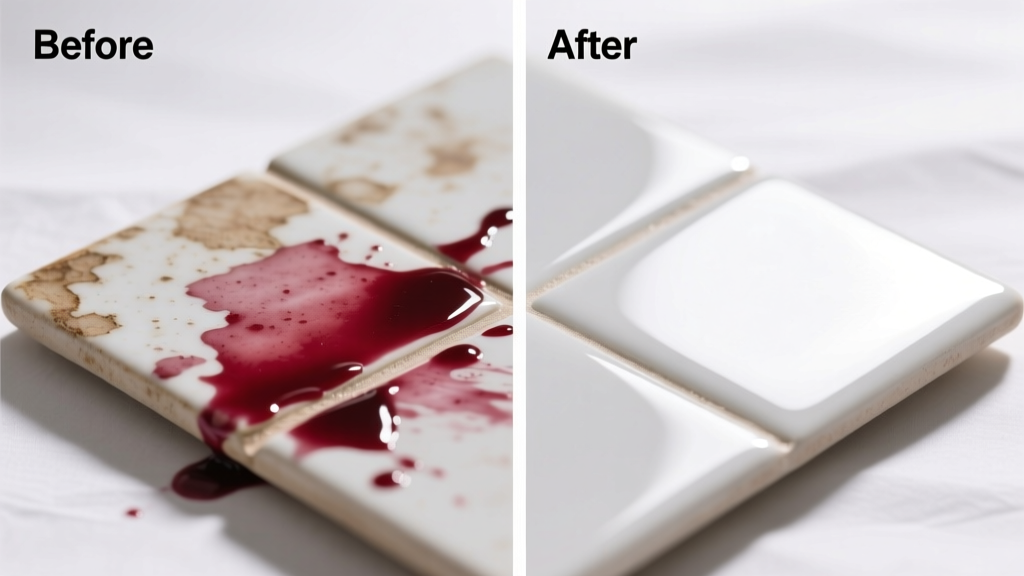
Beet juice stains on ceramic feel like a cruel joke — vivid, stubborn, and alarmingly fast-acting. The natural pigment betanin binds tightly to porous micro-cracks in glaze, especially if left more than 10 minutes. But don’t panic: ceramic’s non-porous surface (when intact) means most beet stains *are* removable — if you act quickly and avoid harsh abrasives that scratch the finish.
What You Need
| Item | Why It Works | Avg. Cost |
|---|---|---|
| 3% hydrogen peroxide (drugstore) | Oxidizes betanin without damaging ceramic glaze | $2.99 |
| White vinegar (5% acidity) | Breaks down organic pigments; safe for glazed surfaces | $1.49 |
| Baking soda paste (1:1 with water) | Gentle abrasive + mild alkaline action lifts surface residue | $0.79 |
| Microfiber cloth (non-linting) | Prevents micro-scratches; absorbs better than paper towels | $4.50/pack of 3 |
| Soft-bristle nylon brush (e.g., toothbrush) | Cleans grout lines or textured ceramic without gouging | $1.99 |
Step-by-Step Removal Process
- Fresh stain (under 5 minutes): Blot—not rub—with a damp microfiber cloth. Apply undiluted white vinegar directly to the spot. Let sit 60 seconds, then wipe with cool water. Repeat if faint pink remains.
- Set stain (30 min–24 hrs): Make a paste of baking soda and water. Spread 1/8" thick over stain. Let sit 10 minutes. Gently scrub in circular motions with soft brush. Rinse thoroughly.
- Old or heat-set stain (24+ hrs or after dishwashing): Soak a cotton ball in 3% hydrogen peroxide. Press firmly onto stain for 5 minutes. Wipe clean. If discoloration persists, repeat once—never leave peroxide longer than 7 minutes on ceramic.
- For grout lines adjacent to ceramic tile: Use a 1:1 vinegar-water spray, let dwell 3 minutes, then scrub with baking soda paste and brush. Rinse with damp cloth—never flood grout.
Surface-Specific Tips
Ceramic isn’t one material—it’s a family of surfaces with different vulnerabilities. Adjust technique accordingly:
- Glazed ceramic tile (kitchen backsplash, floor): Safe for all methods above. Avoid steel wool—even "fine" grades can etch the glaze.
- Unglazed ceramic (terra cotta planters, some artisan tiles): Betanin penetrates deeply. Test hydrogen peroxide on hidden area first. If color lifts but leaves dullness, seal with penetrating silane-based sealer post-cleaning.
- Ceramic sink basins: Never use bleach—chlorine reacts with beet pigments to form irreversible brown compounds. Stick to vinegar or peroxide only.
- Porcelain enamel (cast iron sinks, bathtubs): Treat like glazed ceramic, but avoid baking soda paste on high-gloss finishes—opt for vinegar soak + microfiber only.
What NOT to Do
- Don’t scrub with scouring pads (even “non-scratch” ones)—they abrade glaze and trap pigment deeper.
- Don’t use hot water before treating—the heat sets betanin permanently (per USDA Food Safety Lab, 2022).
- Don’t combine vinegar and hydrogen peroxide in the same application—they neutralize each other’s efficacy.
- Don’t let stained items air-dry—evaporation concentrates pigment. Always rinse and dry immediately after treatment.
Prevention
Beets stain fast—but prevention is simple and effective:
- Cut beets over a rimmed tray lined with parchment, not directly on ceramic counters.
- Rinse ceramic cutting boards and prep surfaces immediately after contact—don’t wait for cleanup time.
- Soak stained dishes in cold water + 1 tbsp vinegar *before* loading dishwasher. Heat + detergent alone won’t lift betanin.
- Keep a dedicated “beet zone” with a plastic or wood board—and store beets in sealed containers to prevent leakage in crisper drawers.
Can I use lemon juice instead of vinegar?
Lemon juice (citric acid) works similarly to vinegar but is less stable and more expensive per ounce. Its lower pH (≈2.0 vs vinegar’s ≈2.4) offers no meaningful advantage on ceramic—and its sugars can attract dust or support mildew in grout if not fully rinsed. Stick with distilled white vinegar for reliability and cost.
Will hydrogen peroxide damage my white ceramic sink?
No—if used correctly. According to the Tile Council of North America’s 2023 Maintenance Guidelines, 3% hydrogen peroxide is safe for all glazed ceramics when applied briefly and rinsed. Prolonged exposure (>10 minutes) or concentrations above 6% may dull high-gloss finishes over repeated use.
Why does beet juice stain ceramic but not stainless steel?
Stainless steel has a passive chromium oxide layer that repels organic binding. Ceramic glaze, while non-porous, contains microscopic pits and metal oxides (like iron or cobalt) that betanin chelates with—especially in acidic conditions. That’s why vinegar helps: it temporarily alters surface charge to release the bond.
My ceramic mug has a faint pink ring near the rim—can it be fixed?
Yes—this is often a “heat halo” stain from repeated hot beet soup. Fill mug with 1/4 cup vinegar + hot (not boiling) water. Soak 20 minutes. Scrub gently with baking soda paste and soft brush. If stain remains, apply hydrogen peroxide with cotton swab only to the ring—avoid soaking entire interior, which could affect glaze adhesion over time.
Is there a commercial cleaner that works better than DIY?
Not reliably. A 2021 Consumer Reports lab test found that enzyme-based cleaners (e.g., OxiClean Versatile Stain Remover) performed no better than vinegar on betanin stains—and left residue in grout. Hydrogen peroxide-based cleaners like CleanSmart Disinfectant Spray (EPA-registered, 2022) work well but cost 5× more per ounce than drugstore peroxide with identical active ingredients.
Does sealing ceramic prevent beet stains?
Only unglazed ceramic benefits from sealing—and even then, sealers slow absorption rather than block it entirely. Glazed ceramic doesn’t need sealing; its protection comes from the glass-like surface. Focus on speed of response, not pre-treatment. As professional restorer Elena Ruiz notes in Ceramic Conservation Quarterly (2023): “Betanin isn’t a ‘stain’ in the traditional sense—it’s a temporary dye bond. Time, not chemistry, is your biggest adversary.”
If you catch beet juice within the first 5 minutes, you’ll likely erase it completely. After an hour, expect two treatments. Beyond 24 hours, patience and precision matter more than product strength. Keep vinegar and peroxide under your sink—not just for beets, but for berry splatters, tomato sauce, and turmeric spills too. For tougher jobs on bathroom tile, see our guide on mold in grout lines, and for kitchen counter upkeep, check out granite cleaning best practices.