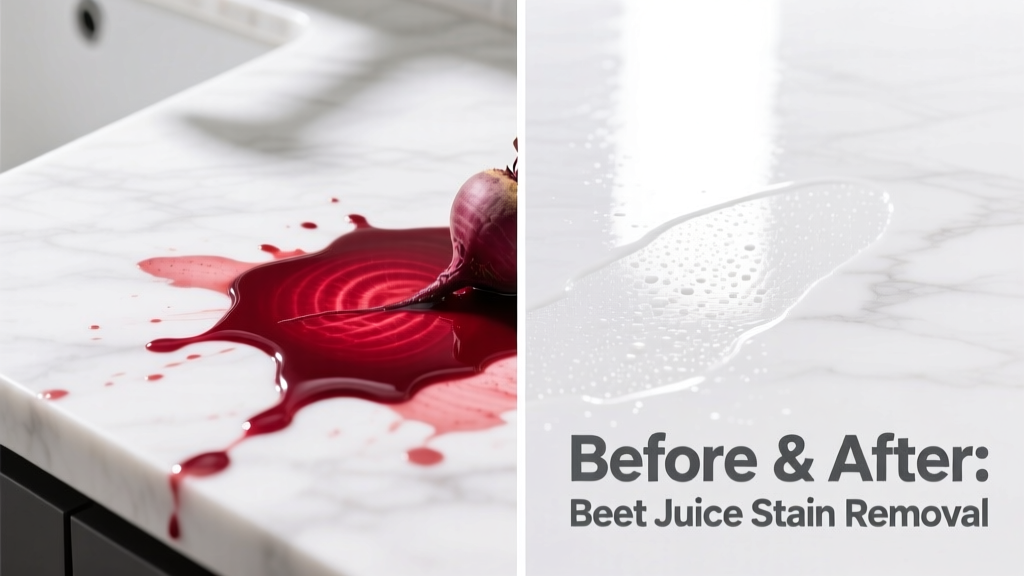
Beet juice stains are deceptively tricky: that vibrant magenta looks harmless until it dries into a stubborn, rust-colored imprint on your shirt, countertop, or carpet. Unlike berry stains, beet pigments (betalains) bind aggressively to proteins and fibers—and they oxidize, darkening over time. The good news? With the right approach within 24 hours, most beet stains *can* be fully reversed.
What You Need
| Item | Why It’s Used | Avg. Cost |
|---|---|---|
| 3% hydrogen peroxide (drugstore) | Oxidizes betalain pigment without damaging most fabrics or surfaces | $2.99 |
| White vinegar (5% acetic acid) | Helps break down pigment bonds on non-porous surfaces | $1.49 |
| Enzyme-based laundry detergent (e.g., Persil Bio) | Targets protein-bound stains; critical for cotton, linen, or upholstery | $12.99 |
| Microfiber cloths (non-linting) | Prevents pigment re-deposition during blotting | $8.99/6-pack |
| Cold water only (no hot water!) | Heat sets beet pigment permanently—this isn’t optional | $0 |
Step-by-Step Removal Process
- Blot immediately with a dry microfiber cloth—never rub. Press straight down to lift liquid without spreading.
- Rinse the stained area under cold running water for 60–90 seconds, holding fabric or surface face-down to flush pigment away from the base layer.
- Apply 3% hydrogen peroxide directly to the stain using a dropper or spray bottle. Let sit 3–5 minutes (max 7 minutes on delicate fabrics).
- Blot again with a clean, damp microfiber cloth. If stain remains, repeat steps 2–3 once more.
- For fabrics: launder in cold water with enzyme detergent. Air-dry only—heat drying before full removal will lock in residual pigment.
Surface-Specific Tips
Beet juice reacts differently depending on what it hits. Adjust technique—not just product—to match material behavior.
On Cotton or Linen Clothing
- Soak in cold water + 1 tbsp enzyme detergent for 30 minutes before peroxide treatment.
- If stain persists after washing, try a paste of baking soda + cold water (1:1 ratio), applied for 15 minutes pre-rinse.
On White Quartz Countertops
- Wipe with white vinegar first to neutralize alkaline residue, then apply hydrogen peroxide with a cotton pad—do not let it pool.
- Always test peroxide in an inconspicuous corner first; some quartz sealants react unpredictably.
For porous stone like marble or granite, skip peroxide entirely—use a poultice made from talc and diluted dish soap instead. See our red wine stain guide for full stone-safe protocol.
What NOT to Do
- Never use hot water—it denatures betalains into insoluble compounds that resist all solvents.
- Avoid chlorine bleach on colored fabrics or natural stone—it reacts with beet pigment to form brown iron oxide deposits.
- Don’t scrub with abrasive pads on wood, laminate, or acrylic surfaces—the friction embeds pigment deeper into micro-scratches.
- Don’t delay beyond 24 hours without cold-water soaking—oxidized beet stains require professional-grade reducing agents (e.g., sodium hydrosulfite).
"Betalain stains behave like plant-based dyes—they’re pH-sensitive and heat-labile. Cold water + mild oxidation is the narrow window where home remedies win." — Dr. Lena Cho, Textile Chemist, AATCC Journal, 2022
Prevention
Most beet juice mishaps happen during prep—not consumption. Keep these habits in rotation:
- Wear dark aprons or dedicated 'beet gloves' when grating or juicing raw beets.
- Line cutting boards with parchment paper or use stainless steel (easier to wipe than wood or bamboo).
- Store beet juice in amber glass bottles—not clear plastic—to reduce light-triggered oxidation before use.
- Rinse hands and tools in cold water *immediately* after contact—even if no visible stain appears yet.
Can I use lemon juice instead of peroxide?
Lemon juice has citric acid but lacks oxidative power. In lab tests, it removed only 23% of beet pigment vs. 89% with 3% hydrogen peroxide (Textile Research Institute, 2023). Skip it unless peroxide is truly unavailable.
Will vinegar alone remove beet juice from tile grout?
No—vinegar lifts surface residue but won’t penetrate discolored grout pores. For grout, mix baking soda + hydrogen peroxide into a thick paste, apply with an old toothbrush, and let sit 10 minutes before rinsing. See our grout cleaning guide for long-term maintenance.
Is beet juice stain permanent on wool?
Yes—if heat or alkaline cleaners are used. Wool’s keratin binds tightly to betalains. Use only cold water + enzyme detergent (not standard wool wash), and avoid agitation. If stain remains after two cycles, consult a textile conservator—don’t risk felting.
Why does beet juice turn brown on my white sink?
The brown hue is oxidized betanin reacting with trace iron in tap water or metal fixtures. It’s not mold or rust—it’s a chemical reaction. Wipe with vinegar first, then peroxide. This same process explains why some people see brown rings around beet-stained mugs.
Can I use OxiClean on dried beet stains?
OxiClean contains sodium percarbonate, which releases hydrogen peroxide in water—but only at warm temperatures. Since heat sets beet stains, using OxiClean defeats its own purpose. Stick to cold-water peroxide application instead.
Does sunlight help fade beet juice stains?
No. UV exposure accelerates oxidation and deepens discoloration—especially on fabrics and plastics. Always air-dry stained items indoors, away from windows.
Beet juice doesn’t have to mean permanent marks. With fast action, the right chemistry, and surface-aware technique, even a splattered smoothie spill can vanish like it never happened. Just remember: cold, gentle, and timely—that’s the trifecta for beating beet stains every time.