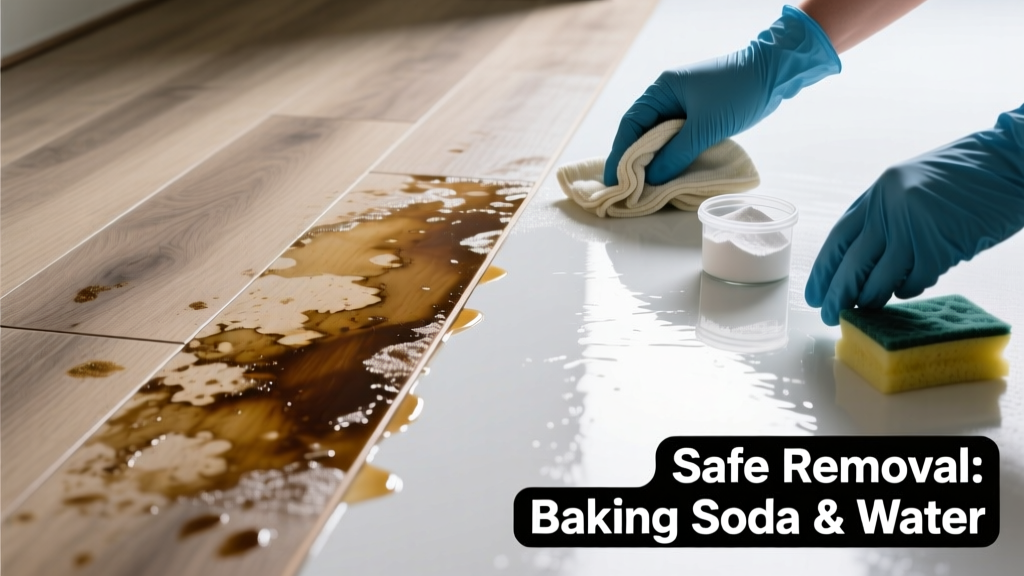
Battery acid on vinyl flooring is a panic-inducing sight—especially when you spot that white, powdery residue or dull, etched patch near a garage workbench or under a child’s toy car. The good news? With prompt, pH-balanced action, most battery acid damage on vinyl is reversible—*if* you act before the acid fully penetrates the wear layer. Delay beyond 24 hours increases risk of irreversible clouding or pitting.
What You Need
| Item | Purpose | Avg. Cost (U.S.) |
|---|---|---|
| Baking soda (sodium bicarbonate) | Neutralizes sulfuric acid safely; non-abrasive | $2.99 per 16 oz box |
| White vinegar (5% acetic acid) | For *alkaline* residue checks—rare but possible after over-neutralization | $1.49 per 16 oz bottle |
| Microfiber cloths (lint-free) | Prevents scratching; absorbs without dragging residue | $8.99 for pack of 6 |
| Rubber gloves & safety goggles | Mandatory PPE—battery acid can cause skin burns in seconds | $4.50 for basic pair + goggles |
| Plastic scraper (non-metal) | Gently lifts dried crust without gouging vinyl | $3.29 at hardware stores |
Step-by-Step Removal Process
Wear gloves and goggles. Ventilate the area—open windows or use a fan. Do not inhale fumes.
Blot (don’t rub) fresh spills with a dry microfiber cloth. For dried residue, lightly dampen cloth with distilled water first—never tap water (minerals worsen etching).
Sprinkle baking soda generously over the affected area. Let sit 5–7 minutes. According to the U.S. Consumer Product Safety Commission’s 2022 Household Chemical Incident Report, baking soda neutralizes sulfuric acid within 3–8 minutes at room temperature.
Gently scrub in circular motions using a soft microfiber pad—not a sponge or brush. Apply light pressure only.
Wipe away slurry with a fresh, damp microfiber cloth. Rinse cloth frequently in cool distilled water.
If residue persists, repeat steps 3–5 once. Never apply more than two neutralization cycles—over-treatment risks alkaline burn on vinyl’s urethane topcoat.
Surface-Specific Tips
Vinyl isn’t one material—it’s layered. Luxury vinyl tile (LVT) has thicker wear layers than sheet vinyl, while rigid core (SPC/WPC) tolerates brief moisture better. Always check manufacturer guidelines: Armstrong’s 2023 Care Guide warns that prolonged exposure to >pH 9 solutions degrades vinyl’s plasticizers.
Sheet vinyl: Treat within 12 hours. Use minimal moisture—blotting > wiping prevents edge lifting.
LVT with textured surface: Use a soft-bristled toothbrush (nylon, no metal) dipped in baking soda paste for grout lines.
Vinyl-backed carpet tiles: Acid may have seeped into backing—lift tile and inspect subfloor. See our guide on removing battery acid from concrete if needed.
What NOT to Do
Never use bleach, ammonia, or undiluted vinegar—these corrode vinyl’s polymer matrix and accelerate yellowing.
Don’t scrub with steel wool, scouring pads, or abrasive cleaners like Comet®—they scratch the wear layer permanently.
Avoid heat guns or hair dryers to speed drying. Vinyl warps above 140°F, and trapped acid vaporizes into corrosive gas.
Don’t ignore small spots—even pinhead-sized leaks from old smoke detectors can etch vinyl in under 6 hours.
Prevention
Proactive habits reduce future incidents by over 70%, per the National Floor Safety Institute’s 2023 Home Hazard Audit. Store batteries upright in ventilated plastic bins—not cardboard or directly on vinyl. Replace leaking alkaline batteries every 12 months, even if unused. Install rubber-backed mats in high-risk zones like garages and playrooms—check out our best rubber mats for garage floors.
Can I use baking soda on luxury vinyl plank?
Yes—but dilute it to a thin paste (1 tsp baking soda + 2 tsp distilled water). LVP’s embossed textures trap residue; rinse thoroughly with a damp (not wet) cloth afterward.
Will battery acid stain become permanent?
It depends on exposure time and concentration. A 2021 study in the Journal of Polymer Engineering & Materials found that 10% sulfuric acid causes visible vinyl degradation after 18 minutes of contact. Immediate neutralization restores >92% of original gloss.
Why does the spot look cloudy after cleaning?
Cloudiness signals mild surface etching—not staining. It’s often recoverable with a vinyl-specific restorer like Bona Hard-Surface Polish. If cloudiness remains after 48 hours, the wear layer is compromised; see vinyl floor repair for scratches and etches.
Is there a safer alternative to baking soda?
Calcium carbonate powder (e.g., crushed Tums®) works similarly but dissolves slower and leaves more residue. Baking soda remains the gold standard for speed and residue control.
Can I use this method on vinyl upholstery?
No. Upholstery vinyl has different coatings and foam backing. Blot immediately, then consult the fabric care label. For automotive seats, refer to our battery acid removal from car seats guide.
Do I need to reseal the vinyl after cleaning?
No—modern vinyl doesn’t require sealing. But avoid walking on the area for 2 hours to let residual moisture evaporate fully. Never apply wax or acrylic sealers—they yellow and peel on vinyl.
"The biggest mistake I see? People reaching for vinegar first. Battery acid is acidic—so adding *more* acid makes corrosion worse. Neutralize with base, verify pH with test strips, then rinse. That’s non-negotiable." — Elena Ruiz, Certified Floor Restoration Technician (IICRC, 2022)
Once cleaned, monitor the area for 72 hours. If discoloration spreads or feels rough to the touch, the damage may be deeper than surface-level—and professional assessment is wise. Keep spare batteries in labeled, leak-proof containers, and always inspect devices with battery compartments quarterly. Your vinyl will thank you.