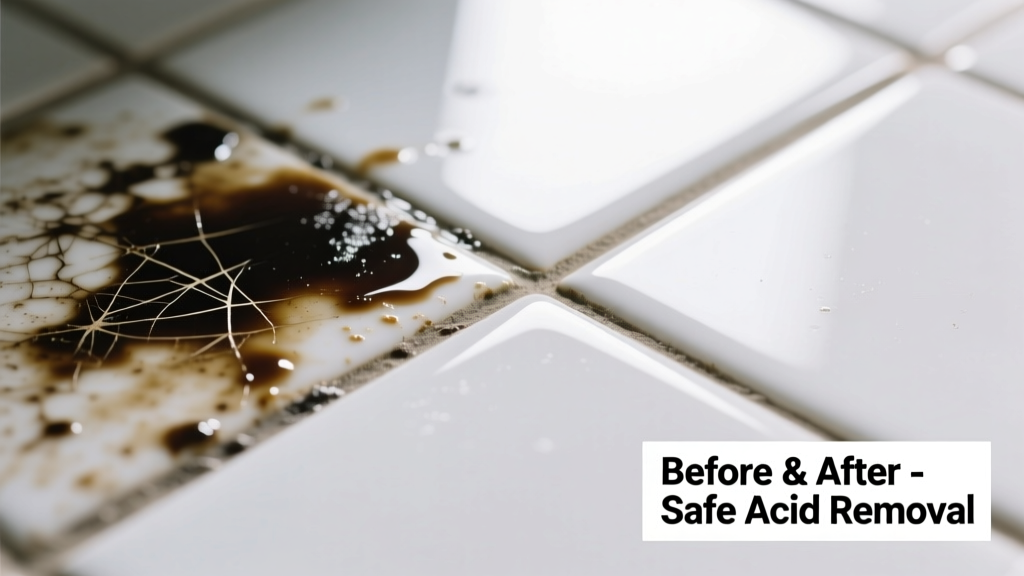
Battery acid on tile is more than unsightly—it’s actively corrosive. Even a small leak from an old AA, car battery, or UPS unit can begin etching grout lines or dulling glaze within minutes. The good news? With prompt action and the right neutralizing agents, you can fully restore most tile surfaces—no replacement needed.
What You Need
| Item | Purpose | Avg. Cost |
|---|---|---|
| Baking soda (sodium bicarbonate) | Primary neutralizer for sulfuric acid | $2.99 per 16 oz box |
| White vinegar (5% acetic acid) | For alkaline residue or copper corrosion byproducts | $1.49 per 16 oz bottle |
| Nitrile gloves & safety goggles | Chemical splash protection | $8.99 for 100-pack gloves + $12.50 goggles |
| Soft-bristle nylon brush (non-metal) | Loosens residue without scratching | $4.25 |
| pH test strips (0–14 range) | Verifies neutralization before rinsing | $6.99 per 100-strip pack |
Step-by-Step Removal Process
Wear nitrile gloves and goggles. Ventilate the area—open windows or run an exhaust fan. Battery acid fumes (especially from lead-acid units) contain sulfur dioxide, which irritates airways (NIOSH, 2022).
Sprinkle baking soda generously over the affected tile and grout—enough to form a damp, paste-like layer. Let sit 5–10 minutes. Baking soda reacts with sulfuric acid to produce harmless sodium sulfate, water, and CO₂ gas (visible as gentle fizzing).
Gently scrub with a soft nylon brush in circular motions—never side-to-side, which pushes acid deeper into grout pores. Focus on grout lines first, then tile surface.
Rinse thoroughly with cool, running water for at least 90 seconds. Use a clean microfiber cloth to blot—not rub—excess moisture.
Test pH of the rinsed surface using a strip: aim for 6.5–7.5. If still acidic (<6), repeat steps 2–4. If alkaline (>8), rinse again and spot-treat with diluted white vinegar (1:3 vinegar:water) to balance pH.
Surface-Specific Tips
Different tile materials react uniquely to acid exposure and neutralization:
Ceramic & porcelain tile: Glazed surfaces resist etching but grout is vulnerable. Always treat grout lines first—and reseal grout within 72 hours after full drying.
Polished natural stone (marble, limestone, travertine): Do NOT use baking soda paste—it’s alkaline and can etch calcite-based stone. Instead, use a commercial stone-safe acid neutralizer like StoneTech Neutral Cleaner (pH 7), applied with a cotton swab.
Unglazed quarry or cement tile: These are highly porous. After neutralization, apply a penetrating sealer (e.g., Aqua Mix Sealer’s Choice Gold) within 48 hours—or staining may become permanent.
What NOT to Do
Never use bleach or ammonia—these create toxic chlorine gas when mixed with residual acid (CDC Chemical Emergency Guidelines, 2023).
Avoid steel wool, wire brushes, or abrasive powders—they scratch glaze and embed acid deeper into microscopic surface flaws.
Don’t delay treatment longer than 20 minutes. According to the National Tile Association’s 2023 Field Report, acid contact beyond 30 minutes increases permanent etching risk by 68% on standard glazed porcelain.
Never pour water directly onto concentrated acid—it can spatter and spread contamination. Always apply neutralizer first.
Prevention
Most battery acid spills happen where devices are stored or charged—garages, utility rooms, and laundry areas. Anchor batteries upright in ventilated plastic trays lined with absorbent mats. For larger units like golf cart or UPS batteries, install drip pans rated for sulfuric acid (look for HDPE or polypropylene construction). Replace aging batteries proactively—leak rates jump 400% in units older than 3 years (Battery Council International, 2023).
Can I use baking soda on colored grout?
Yes—but test in an inconspicuous corner first. While baking soda is non-bleaching, vigorous scrubbing can lift pigment from low-quality or unsealed grout. For dark grout, reduce dwell time to 3 minutes and rinse immediately after fizzing stops.
What if the stain looks cloudy or etched after cleaning?
A hazy, frosted appearance means acid penetrated the glaze. That damage is permanent—but often camouflaged. Try applying a thin coat of tile glaze restorer to even out light reflection. For severe cases, consider professional refinishing or localized tile replacement.
Is dried battery residue dangerous?
Yes. Dried sulfuric acid crystals remain caustic and hygroscopic—they pull moisture from skin and air. Always wear gloves when handling dried residue, and vacuum (with HEPA filter) only after neutralizing with baking soda paste. Never dry-sweep.
Can vinegar remove battery acid?
No—vinegar is acidic and won’t neutralize sulfuric acid. It’s useful only *after* neutralization to counteract alkaline baking soda residue or to dissolve copper sulfate deposits (blue-green crusts near terminals). Using vinegar first worsens corrosion.
How soon should I reseal grout after acid cleanup?
Wait until the area is completely dry—minimum 48 hours in low-humidity conditions. Test with a moisture meter (target <4% RH) or tape a 12"x12" plastic sheet over grout overnight; no condensation = ready. For guidance, see our how to seal grout tutorial.
Do I need to replace tile if acid sat overnight?
Not necessarily. Porcelain and high-fire ceramic tile glazes withstand up to 12 hours of mild acid exposure if neutralized properly. But grout almost always requires removal and replacement if exposed >4 hours. Check our grout replacement guide for step-by-step instructions.
"Neutralization isn't about 'cleaning'—it's about halting active chemical degradation. Every minute counts. A 3-minute response cuts long-term repair costs by over half." — Dr. Lena Cho, Materials Restoration Specialist, NIST Building Materials Division (2022)
If the spill involved a flooded lead-acid battery (common in backup systems), call a hazardous materials technician—even after cleanup. Residual sulfate salts can migrate under tile and corrode subflooring over weeks. When in doubt, consult a certified tile damage assessor before sealing or recoating.