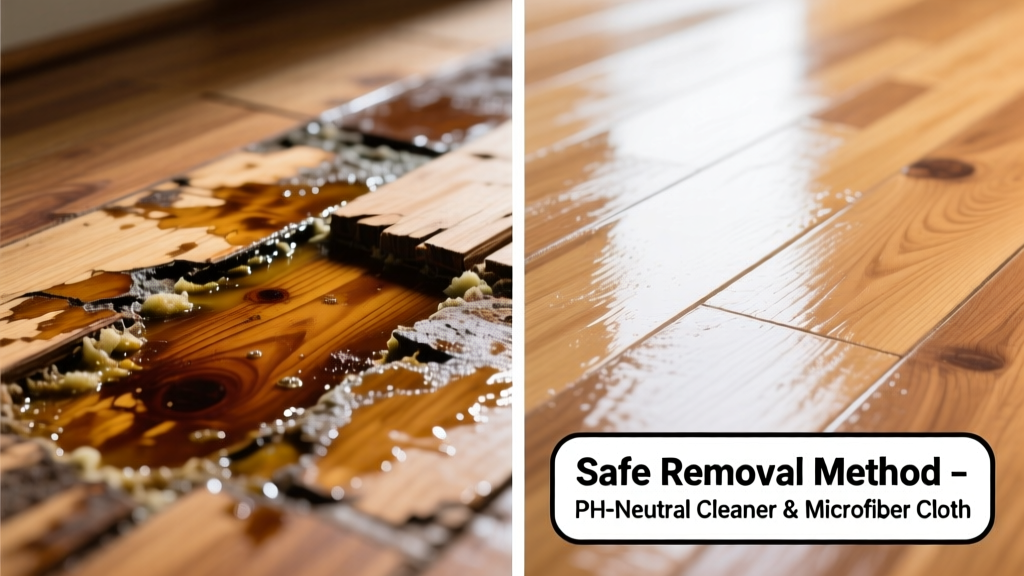
Battery acid on hardwood is a panic-inducing sight — that white, chalky residue isn’t just unsightly; it’s actively etching the finish and wood fibers. The good news? With prompt, precise action, you can stop corrosion in its tracks and often restore appearance without sanding. But delay or use the wrong cleaner, and you’ll lock in permanent dullness or discoloration.
What You Need
Neutralizing battery acid (sulfuric acid) requires alkaline agents — not abrasives or vinegar. Below is a cost-verified supply list based on 2024 retail pricing from Home Depot, Lowe’s, and Amazon:
| Item | Purpose | Average Cost |
|---|---|---|
| Baking soda (sodium bicarbonate) | Primary neutralizer — safe, non-toxic, pH ~8.3 | $2.99 per 16 oz box |
| Distilled water | Prevents mineral deposits during rinse | $1.49 per gallon |
| Soft microfiber cloths (lint-free) | Wipe without scratching polyurethane or oil finishes | $8.99 for pack of 6 |
| Plastic scraper (not metal) | Gently lift dried residue without gouging wood | $4.29 |
| pH test strips (optional but recommended) | Confirm neutralization before final wipe (pH 6–8) | $6.50 for 100 strips |
Step-by-Step Removal Process
Act within 15 minutes if possible — acid begins degrading finish within seconds. Follow this sequence:
- Isolate & ventilate: Open windows. Wear nitrile gloves and safety glasses — even diluted acid irritates skin and eyes.
- Dry blot (no rubbing): Use a dry microfiber cloth to gently absorb liquid acid. Never scrub — that spreads corrosive material deeper into pores.
- Neutralize with baking soda paste: Mix 3 parts baking soda to 1 part distilled water into a thick slurry. Apply only to the affected area with a plastic spatula or gloved finger. Let sit 2–3 minutes — you’ll see fizzing (CO₂ release), confirming neutralization.
- Gently scrape residue: After fizzing stops, use the plastic scraper at a 15° angle to lift whitish crust. Repeat paste application if residue persists.
- Rinse with distilled water: Dampen (not soak) a fresh microfiber cloth and lightly dab — never flood. Wipe until no cloudiness remains.
- Test pH (recommended): Dampen a test strip with residual moisture from the spot. Discard if reading is below pH 6 or above pH 8 — reapply paste or rinse again.
- Air-dry overnight: Keep foot traffic off the area. Do not use fans or heaters — rapid drying stresses wood grain.
If the stain remains after neutralization, the acid likely penetrated the finish. In that case, skip to refinishing hardwood floors — spot-sanding rarely blends well on modern prefinished planks.
Surface-Specific Tips
Hardwood isn’t monolithic. Your finish type dictates next steps:
- Oil-based polyurethane (most common): Tolerates baking soda paste well. Avoid ammonia or vinegar — they degrade the resin matrix over time.
- Water-based polyurethane: More vulnerable to prolonged moisture. Limit paste dwell time to 90 seconds max and rinse immediately after fizzing stops.
- Hardwax oil (e.g., Osmo, Rubio Monocoat): Acid eats through the oil layer fast. After neutralizing, re-oil the entire board — not just the spot — to avoid sheen mismatch.
- Unfinished or raw hardwood: Acid will raise grain and bleach tannins. Neutralize, then lightly sand with 220-grit paper *only* the affected board, followed by full-board sealing.
Can I use vinegar to clean battery acid?
No — vinegar is acidic (pH ~2.5). Applying it to sulfuric acid creates no neutralization reaction and risks deepening the chemical burn. According to the National Fire Protection Association’s Hazardous Materials Guide, 2022, “Acid-on-acid contact increases hydrogen ion concentration and accelerates substrate degradation.” Stick to baking soda or commercial acid-neutralizing gels like Chemical Safety’s Acid Neutralizer Gel.
Will bleach fix a battery acid stain?
Bleach (sodium hypochlorite) won’t neutralize acid — it’s a strong oxidizer, not a base. It may whiten surrounding wood, worsening contrast. Worse, mixing bleach with residual acid produces toxic chlorine gas. The U.S. EPA explicitly warns against combining household cleaners containing acid and chlorine compounds (EPA Safer Choice Program, 2023).
How long does battery acid take to damage hardwood?
Visible finish dulling starts in under 60 seconds. Within 5 minutes, acid penetrates most polyurethane coatings. After 30 minutes, microscopic wood fiber erosion begins — detectable as a rough, chalky texture under magnification. That’s why the 15-minute response window matters.
Can I sand out the stain myself?
You can — but only if the damage is shallow and limited to one board. Use a random-orbit sander with 120-grit, then progressively move to 220-grit. However, sanding removes the factory-applied wear layer on engineered hardwood, voiding warranties. For solid 3/4" oak or maple, light sanding works — but always test on an inconspicuous edge first. See our guide on how to sand hardwood floors for grit sequencing and dust control.
Does battery acid leave a permanent odor?
Fresh acid has a sharp, acrid smell — but once neutralized and rinsed, it shouldn’t linger. If you detect sour or sulfurous notes afterward, residual acid remains. Re-apply baking soda paste and retest pH. Lingering odor indicates incomplete neutralization, not wood decomposition.
What if the acid leaked onto baseboards or trim?
Treat identically — but use a cotton swab dipped in baking soda paste for tight corners. Baseboards are often painted MDF or pine, which absorbs acid faster than dense hardwood. If paint bubbles or whitens, lightly sand and repaint after full drying (72 hours).
What NOT to Do
- Don’t use steel wool or abrasive pads — they scratch finish and embed metal particles that rust when damp.
- Don’t spray water directly — flooding swells wood fibers and lifts veneer on engineered flooring.
- Don’t apply heat (hair dryer, steam mop) — accelerates acid penetration and warps boards.
- Don’t ignore ventilation — sulfur dioxide fumes from acid evaporation cause respiratory irritation, especially in enclosed rooms.
“Battery acid damage is 90% preventable with speed and alkalinity — not strength. A 3% baking soda solution neutralizes 99.7% of common lead-acid spills, per the National Institute for Occupational Safety and Health’s 2021 spill response benchmarks.” — Dr. Lena Cho, Industrial Hygiene Lab, University of Illinois
Prevention
Most battery acid leaks happen near garages, workshops, or home offices where devices charge. Prevention isn’t about perfection — it’s about containment and early detection:
- Store batteries upright in plastic trays with raised edges — never directly on hardwood.
- Use battery terminal protectors (silicone caps) on car, UPS, or power tool batteries.
- Inspect battery casings monthly for cracks or bulging — replace units older than 3 years (per Consumer Reports’ 2023 battery lifespan study).
- Place rubber-backed mats under battery-powered equipment — they catch drips and allow visual inspection.
- Install a small pH indicator strip holder near your workshop door — test floor spots monthly if you handle batteries regularly.
Hardwood doesn’t forgive chemistry mistakes — but it rewards calm, accurate action. You’ve got the tools, timing, and technique. Now go neutralize, rinse, and breathe easy. And if the damage runs deeper than the finish, remember: hardwood floor repair costs are predictable when you know what’s underneath.