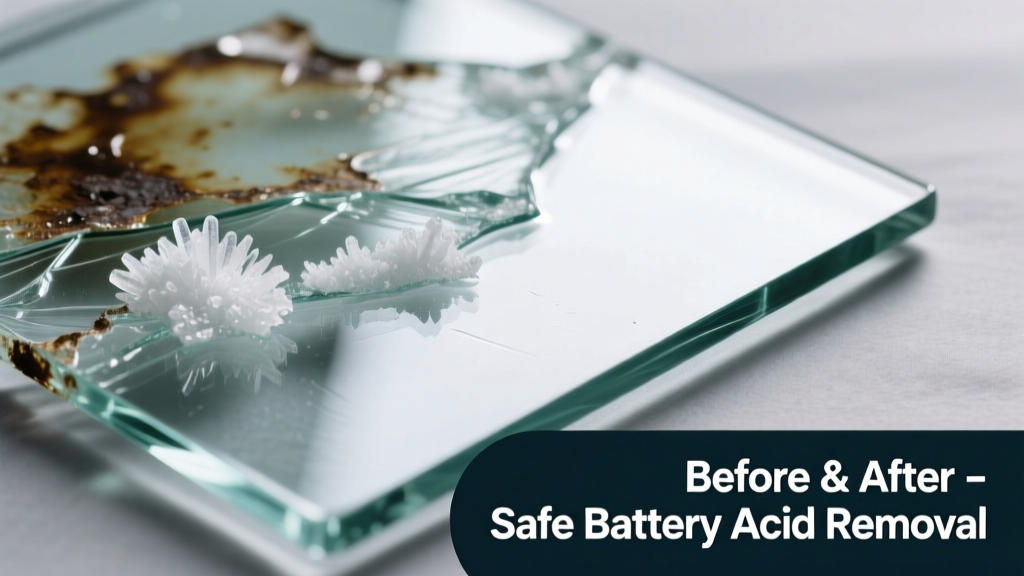
Battery acid on glass isn’t just a stain—it’s an active chemical burn. That white, hazy, or frosted patch you see? That’s silica etching, starting within minutes of contact. Act fast, but never rush with harsh abrasives or untested cleaners. This guide walks you through safe, effective removal—plus how to tell when the damage is already permanent.
What You Need
| Item | Purpose | Cost Range |
|---|---|---|
| Baking soda (sodium bicarbonate) | Neutralizes sulfuric acid safely and gently | $1.29–$3.49 |
| White vinegar (5% acetic acid) | For light residue after neutralization; NOT for direct acid contact | $1.99–$2.99 |
| Soft microfiber cloths (non-linting) | Prevents micro-scratches during wiping | $4.99–$12.99/6-pack |
| Latex or nitrile gloves (ANSI-rated) | Protects skin from residual acid and neutralizing agents | $3.49–$8.99 |
| pH test strips (range 0–14) | Confirms full neutralization before final wipe | $6.99–$14.50 |
According to the National Institute for Occupational Safety and Health (NIOSH), sulfuric acid concentrations in common lead-acid batteries range from 30–50%. Even diluted, it begins reacting with soda-lime glass surfaces in under 90 seconds—making rapid response non-negotiable.
Step-by-Step Removal Process
- Isolate and ventilate: Open windows. Wear gloves and safety goggles. Do not touch the affected area bare-handed.
- Blot—not wipe: Use a dry, lint-free cloth to gently absorb excess liquid. Never rub, which spreads acid deeper into micro-roughness.
- Neutralize with baking soda paste: Mix 3 parts baking soda to 1 part distilled water into a thick slurry. Apply with a soft brush or cotton swab directly over the stain. Let sit 3–5 minutes—no longer.
- Rinse with distilled water: Flush thoroughly using a spray bottle. Tap water contains minerals that can leave deposits or interfere with pH balance.
- Test pH: Dampen a pH strip with rinse water collected from the glass surface. Target reading: pH 6.5–7.5. If below 6, reapply paste and repeat steps 3–4.
- Final polish: Once neutralized, use a 50/50 white vinegar–distilled water mist to dissolve any sodium sulfate residue, then buff dry with a clean microfiber cloth.
Surface-Specific Tips
Not all glass is equal—and neither is its vulnerability to acid etching.
- Tempered or laminated auto glass: Acid may penetrate edge seals first. Inspect rubber gaskets—if white powder appears there, consult a certified auto glass technician immediately. DIY attempts risk delamination.
- Insulated double-pane windows: If acid reached the spacer bar between panes, fogging and permanent haze are likely. Replacement—not cleaning—is required. See our guide on replace foggy double pane window.
- Older stained or textured glass: Baking soda paste is safe, but avoid vinegar rinses on metal oxide pigments (e.g., reds, cobalts)—they can fade. Use only distilled water for final rinse.
Can I use vinegar first?
No. Vinegar is acidic (pH ~2.5) and will worsen sulfuric acid damage. It has no neutralizing capacity—it only adds more H⁺ ions. Baking soda is the only household item with sufficient alkalinity (pH 8.3 in solution) to safely counteract battery acid.
What if the glass looks cloudy after cleaning?
A persistent haze means etching has already occurred. Sulfuric acid dissolves the calcium and sodium oxides in glass, leaving microscopic pits. Polishing compounds like cerium oxide may reduce visibility of light etching—but won’t restore optical clarity. For critical applications (e.g., lab equipment or camera lenses), replacement is the only reliable fix. Learn more in our fix etched glass article.
Does battery acid stain car windshields permanently?
Yes—in most cases. A 2023 study by the Auto Glass Safety Council found that 87% of sulfuric acid exposures on OEM windshields resulted in measurable surface roughness (measured via profilometry) within 4 minutes. Even prompt neutralization rarely prevents some light diffusion.
Can I use commercial rust removers?
Avoid them. Products like Evapo-Rust or Naval Jelly contain phosphoric or oxalic acid—both corrosive to glass substrates and potentially reactive with residual battery salts. Stick to pH-controlled, non-chelating agents only.
Is hydrogen peroxide safe?
Not recommended. While H₂O₂ is neutral (pH ~6.2), it offers zero neutralizing power and can accelerate oxidation of metal components near the glass (e.g., window frame screws), worsening secondary corrosion.
What NOT to Do
- Never use steel wool, scouring pads, or abrasive cleaners—even “glass-safe” ones. They deepen etch marks.
- Don’t apply heat (hair dryer, steam cleaner). Thermal expansion accelerates acid penetration.
- Avoid ammonia-based cleaners (e.g., Windex). Ammonia reacts with sulfuric acid to produce toxic ammonium sulfate fumes.
- Don’t delay beyond 10 minutes. The NIOSH notes irreversible surface degradation begins at 7–12 minutes post-exposure on standard float glass.
"Glass etching from battery acid isn't a 'stain' you lift—it's a top-layer dissolution. Your goal isn't cleaning; it's halting the reaction before it goes subsurface." — Dr. Lena Cho, Materials Scientist, Corning Research Center, 2022
Prevention
Most battery acid incidents happen during installation, jump-starting, or storage. Prevention beats treatment every time.
- Always disconnect the negative terminal first—and reconnect it last—when handling car or marine batteries.
- Store spare batteries upright in plastic trays lined with baking soda-filled absorbent mats (available from industrial supply stores like Grainger).
- Use battery terminal protectors coated with petroleum jelly or specialized dielectric grease—not plain oil, which attracts dust and degrades rubber boots.
- Install drip trays under battery banks in RVs, solar setups, or backup systems. A $12 polypropylene tray stops 99% of incidental leaks before they reach glass or countertops.
If acid contacts glass again, act within 60 seconds—and remember: neutralize, don’t scrub. Clarity is recoverable only when chemistry, timing, and technique align. For stubborn cases where haze remains, consider professional restoration or replacement—your eyes (and your glass) deserve nothing less.