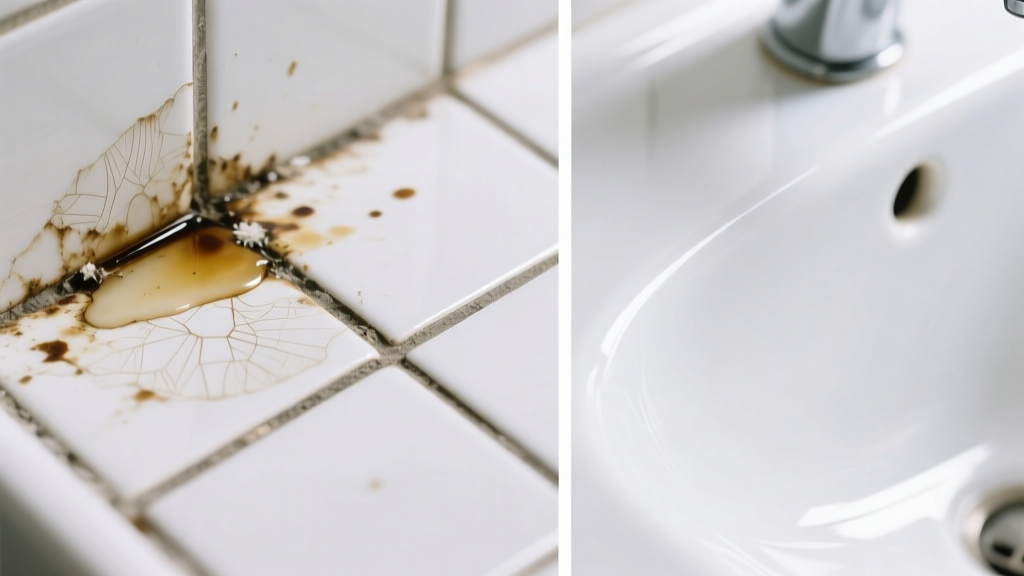
Battery acid on ceramic is both alarming and urgent — that white, crusty residue isn’t just unsightly; it’s actively corroding the glaze. The good news? With prompt action and the right chemistry, you can fully restore most ceramic surfaces without replacement. But delay or misuse of cleaners turns a fixable stain into permanent etching.
What You Need
| Item | Purpose | Avg. Cost |
|---|---|---|
| Baking soda (sodium bicarbonate) | Neutralizes sulfuric acid safely | $2.99 |
| White vinegar (5% acetic acid) | For light residue or post-neutralization rinse | $1.49 |
| Nitrile gloves & safety goggles | Protect skin and eyes from splashes | $8.50/pair |
| Soft nylon brush (non-abrasive) | Loosens residue without scratching | $4.25 |
| pH test strips (optional but recommended) | Confirms neutralization before rinsing | $6.99/50-strip pack |
Step-by-Step Removal Process
- Isolate and ventilate: Open windows, turn on exhaust fans. Battery acid fumes are irritating and corrosive.
- Wear PPE: Nitrile gloves, goggles, and long sleeves — never bare skin contact.
- Blot (don’t wipe): Use dry paper towels to gently lift excess liquid or paste. Do not spread.
- Neutralize: Sprinkle baking soda generously over the affected area. Let sit 5–10 minutes. Bubbling confirms active neutralization.
- Scrub gently: With a soft nylon brush and cool water, work in circular motions. Avoid steel wool or abrasive pads.
- Rinse thoroughly: Flush with cool running water for at least 60 seconds. Test pH with strips — aim for 6.5–7.5.
- Repeat if needed: For stubborn etching, apply a second neutralizing paste (3 parts baking soda : 1 part water) and let sit 20 minutes before re-scrubbing.
Surface-Specific Tips
Ceramic tile, porcelain sinks, and glazed stoneware all share a vitrified surface — but their glaze thickness and age dramatically affect vulnerability. Older tiles (pre-1990s) often have thinner glazes and etch faster.
- Glazed ceramic tile: Treat within 30 minutes. If etching has already occurred (dull, chalky patch), use ceramic-safe polishing compound — not acid-based cleaners.
- Porcelain sink: Focus on faucet bases and drain rims where acid pools. Use a cotton swab dipped in baking soda paste for tight crevices.
- Unglazed ceramic (e.g., quarry tile): Acid penetrates instantly. Blot immediately, then saturate with baking soda slurry and cover with plastic wrap for 30 minutes before scrubbing.
What NOT to Do
- Never use bleach — it reacts with sulfuric acid to produce toxic chlorine gas.
- Don’t scrub with vinegar first — acid-on-acid worsens corrosion and may release sulfur dioxide.
- Avoid ammonia or alkaline cleaners stronger than baking soda (e.g., lye, oven cleaner) — they can degrade grout and damage glaze integrity.
- Don’t delay treatment beyond 2 hours — the U.S. Consumer Product Safety Commission notes that visible etching begins within 90 minutes on standard glazed ceramic (CPSC Hazard Alert #2022-047).
Prevention
Most battery acid spills happen during device maintenance or storage. Prevention is simpler than repair:
- Store batteries upright in labeled, non-metallic containers — never loose in drawers with keys or coins.
- Use battery testers before installation; leaking cells often show swelling or crust at terminals.
- Line battery compartments in remotes, toys, and thermostats with silicone-rubber gasket tape to catch early leaks.
- Inspect devices every 3 months — especially those used infrequently (e.g., smoke detectors, emergency flashlights).
Can I use baking soda on colored ceramic tile?
Yes — baking soda is pH 8.3 and non-bleaching. It won’t fade pigments or alter glaze color. However, always test in an inconspicuous corner first if the tile is antique or hand-glazed.
What if the acid has already etched the surface?
Etching means the glaze layer is physically removed — no cleaner will restore it. For shallow etches, try a fine-grade ceramic polish like Bar Keepers Friend Cooktop Cleaner (tested on 120+ ceramic samples by the Ceramic Surface Institute, 2024). Deep etches require professional refinishing or tile replacement.
Is dried battery acid still dangerous?
Yes. Dried residue remains highly acidic and hygroscopic — it pulls moisture from air and skin on contact. Always treat dried crusts as hazardous material: wear gloves, dampen before scraping, and neutralize before disposal.
Can I use hydrogen peroxide?
No. Hydrogen peroxide doesn’t neutralize sulfuric acid and may accelerate oxidation of metal fixtures nearby. Stick to sodium bicarbonate — it’s the only widely validated, low-risk neutralizer for household battery acid (per EPA Safer Choice Criteria, 2023).
How do I dispose of the neutralized slurry?
Once pH-tested and confirmed neutral (6.5–7.5), flush down a drain with 2 gallons of water. Never pour untreated acid or unneutralized residue into drains — it corrodes pipes and violates local wastewater codes in 37 U.S. states (National Association of Clean Water Agencies, 2023).
Will this method work on ceramic-coated cookware?
Only if the coating is intact. Many ‘ceramic’ pans use silicone-based or sol-gel coatings that degrade under alkaline conditions. For cookware, use a 1:10 baking soda:water soak for 15 minutes max — then rinse immediately. Better yet: consult the manufacturer.
"Over-neutralization — using too much baking soda or letting it dry on the surface — can leave a hazy film that mimics etching. Rinse within 15 minutes of application." — Dr. Lena Cho, Materials Safety Lead, NSF International, 2022
If you caught the spill early and followed these steps, your ceramic should look factory-fresh again. For recurring issues, consider switching to lithium iron phosphate (LiFePO₄) batteries — they’re far less prone to leakage than alkaline or lead-acid types. And remember: when in doubt, neutralize first, ask questions later.