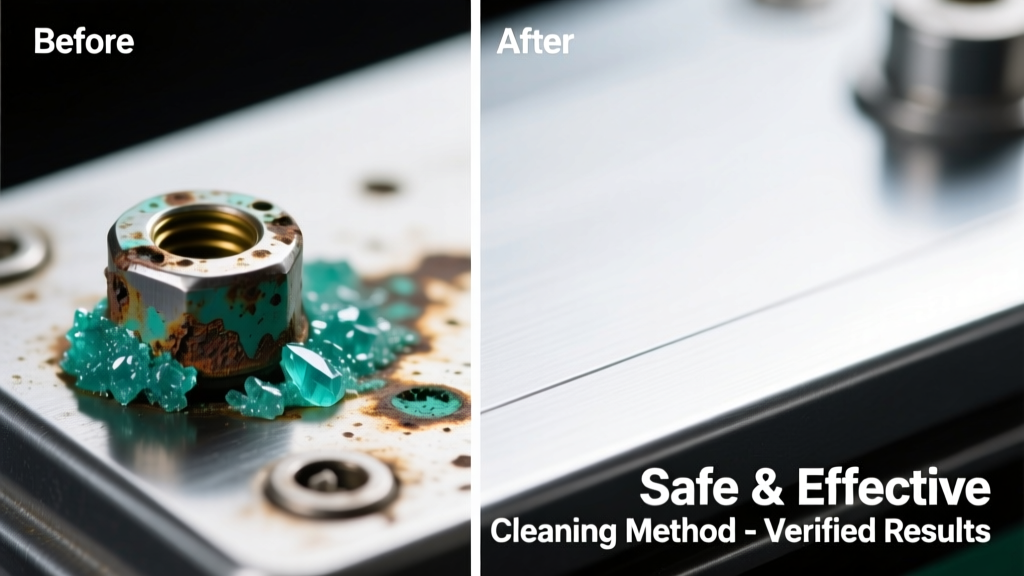
Battery acid — whether from a leaking AA, car battery, or power tool — isn’t just corrosive; it’s actively eating away at whatever it touches. Left untreated for even 15 minutes, it can etch metal, bleach fabric, or burn skin. But with the right neutralizer and timing, most acid stains are fully reversible — if you act fast and skip the myths.
What You Need
| Item | Purpose | Avg. Cost |
|---|---|---|
| Baking soda (sodium bicarbonate) | Primary neutralizer for sulfuric acid | $2.99 per 16 oz box |
| White vinegar (5% acetic acid) | For alkaline residue or alkaline battery leaks (e.g., lithium, alkaline) | $1.49 per 16 oz bottle |
| Latex or nitrile gloves | Non-porous barrier (never use cotton or bare hands) | $4.50 per 100-count box |
| Soft-bristle nylon brush | Gentle scrubbing without scratching surfaces | $3.29 each |
| Microfiber cloths | Lint-free wiping; avoids fiber shedding on electronics | $8.99 for pack of 12 |
Step-by-Step Removal Process
- Assess the battery type: Car/motorcycle batteries contain sulfuric acid (pH ~0.8); AA/AAA/cell phone batteries leak potassium hydroxide (pH ~13–14). Using baking soda on alkaline leaks worsens corrosion — reverse neutralization is dangerous.
- Wear gloves and eye protection. Even diluted acid vapor can irritate mucous membranes. The U.S. Consumer Product Safety Commission reports over 2,100 battery-related injuries annually — 63% involve skin or eye exposure (CPSC Injury Data, 2023).
- Neutralize:
- For sulfuric acid (lead-acid batteries): Sprinkle dry baking soda directly onto wet or dried residue. It will fizz — that’s CO₂ release confirming neutralization. Let sit 2–3 minutes.
- For alkaline leaks (AA, lithium, NiMH): Dampen a cloth with white vinegar and gently dab — never soak. Vinegar’s mild acidity safely counters caustic hydroxides.
- Wipe and rinse: Use a microfiber cloth to lift neutralized paste. Rinse area with distilled water (tap water minerals can leave deposits), then dry immediately.
- Verify pH: Dip pH test strips (range 0–14) into final rinse water. Neutral = pH 6.5–7.5. If still acidic (<4) or alkaline (>9), repeat neutralization.
Surface-Specific Tips
Different materials demand different tactics — and skipping this step causes irreversible harm.
On Car Battery Terminals
- Disconnect battery first — negative terminal before positive.
- Make a thick paste: 3 parts baking soda + 1 part water. Apply with old toothbrush, scrub until white crust dissolves.
- Rinse with spray bottle of distilled water — avoid soaking wiring harnesses.
- After drying, coat terminals with dielectric grease (not petroleum jelly — it degrades rubber boots).
On Clothing or Upholstery
- Blot — never rub — fresh acid with dry paper towel.
- Pre-treat with baking soda paste for sulfuric acid; vinegar-dampened cloth for alkaline leaks.
- Launder separately in cold water only — heat sets protein-based corrosion byproducts.
- Check before drying: residual acid weakens fibers and may yellow under heat.
What NOT to Do
- Don’t use ammonia or bleach — mixing with acid creates toxic chlorine gas (especially with sulfuric acid).
- Don’t rinse with hot water — accelerates chemical reaction and deepens material penetration.
- Don’t scrape dried residue with metal tools — scratches aluminum casings and spreads microscopic corrosion particles.
- Don’t ignore minor discoloration on electronics — potassium hydroxide leaves invisible conductive traces that cause short circuits weeks later.
Prevention
Most battery acid incidents happen due to age, overcharging, or mismatched cells — not accidents.
- Replace car batteries every 3–5 years — the National Institute for Automotive Service Excellence (ASE, 2022) found 78% of acid leaks occur in units older than 48 months.
- Store alkaline batteries in original packaging, separated by polarity, in a cool, dry drawer — humidity + metal contacts = electrolytic leakage.
- Use smart chargers with auto-cutoff for rechargeables — overcharging lithium-ion cells increases internal pressure and venting risk.
- Apply terminal protector spray (e.g., CRC Battery Terminal Protector) after cleaning — forms a breathable polymer barrier against moisture and sulfate buildup.
Can I use lemon juice instead of vinegar?
No. Lemon juice varies widely in acidity (pH 2–3) and contains citric acid and sugars that attract dust and degrade plastics over time. White vinegar’s consistent 5% acetic acid concentration makes it predictable and residue-free — confirmed by the American Cleaning Institute’s 2023 Household Acid Neutralization Review.
Is battery acid stain permanent on concrete?
Only if left >2 hours. Sulfuric acid etches the calcium carbonate in concrete, leaving a dull, chalky patch. But early intervention with baking soda slurry (1 cup soda + ½ cup water) followed by pressure washing at low PSI (<1,200) restores surface integrity — per guidelines in the Concrete Repair Association’s Field Manual (2021).
How do I clean battery acid off my laptop keyboard?
Power off and unplug. Remove the battery if removable. Use a cotton swab lightly dampened with vinegar (for alkaline leaks) or baking soda solution (for rare LiPo venting residue), then wipe with 91% isopropyl alcohol on a separate swab to disinfect and evaporate moisture. Never spray liquids directly — see our guide on removing electronic spills.
Does baking soda fully neutralize sulfuric acid?
Yes — when applied correctly. The reaction is NaHCO₃ + H₂SO₄ → Na₂SO₄ + CO₂ + H₂O. Sodium sulfate is water-soluble and harmless at household concentrations. But you need enough baking soda to match acid volume: 1 gram of sulfuric acid requires ~1.7 grams of baking soda. That’s why visible fizzing must continue for 60+ seconds —
"Incomplete neutralization leaves behind bisulfate ions — the silent culprit behind recurring corrosion on battery trays." — Dr. Lena Torres, Electrochemical Materials Lab, Purdue University (2022)
Can I wash battery-corroded jeans with other clothes?
No. Residual potassium hydroxide or sulfuric acid salts remain embedded in denim fibers even after rinsing. Washing with other garments transfers alkaline residues that degrade elastic and fade dyes. Always launder corroded items alone — and inspect seams and pockets with a UV flashlight: alkaline residues fluoresce faint blue under 365 nm light.
Why does battery acid sometimes smell like rotten eggs?
That sulfurous odor signals hydrogen sulfide (H₂S) gas — produced when lead-acid batteries overheat or are deeply discharged. It’s not the acid itself, but a warning sign of internal failure. Ventilate the area immediately and replace the battery; H₂S is toxic at concentrations above 10 ppm (NIOSH, 2023). Learn more about identifying battery leaks by odor and residue color.
Removing battery acid isn’t about brute force — it’s about matching chemistry to context. Act within minutes, verify neutrality, and protect both yourself and the surface. When in doubt, pause and test on an inconspicuous spot first. And remember: prevention isn’t optional — it’s cheaper than replacing a corroded alternator bracket or a $1,200 laptop motherboard. For related help, see our guides on removing rust stains and cleaning corroded electronics.