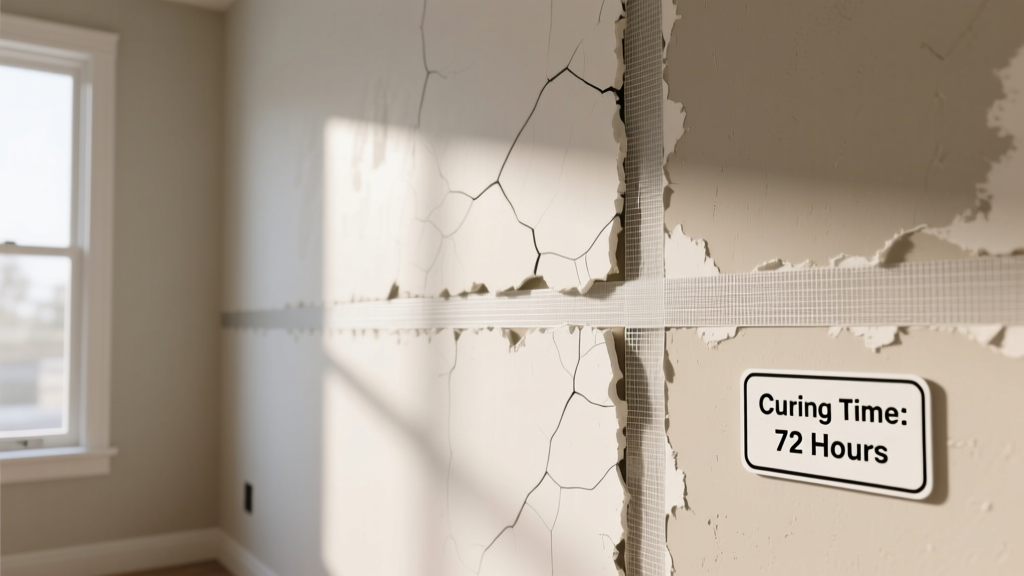
Plaster walls add character and durability—but hairline cracks aren’t just cosmetic. Left unchecked, they widen into structural concerns, invite moisture intrusion, and compromise insulation. According to the National Association of Home Builders’ 2022 Residential Repair Survey, 68% of plaster-related repair calls started with ignored hairline fissures under 1/16" wide.
Why This Happens
Plaster isn’t rigid—it’s a dynamic material that expands, contracts, and settles. Hairline cracks form when internal stress exceeds plaster’s tensile strength. Three primary culprits dominate: uneven foundation settling (especially in homes built on clay soils), rapid seasonal humidity swings, and poor substrate preparation during original installation—like skipping bonding agent or applying plaster too thickly in one pass.
Temperature fluctuations matter more than most realize. The U.S. Department of Energy notes that interior humidity swings above 30% year-round increase plaster micro-fracture risk by 40%, especially where HVAC ducts run through exterior walls.
Maintenance Checklist
| Frequency | Task | Tools/Notes |
|---|---|---|
| Daily | Check for new dust near baseboards or ceiling corners | Use dry microfiber cloth—no water yet |
| Weekly | Inspect high-stress zones: door frames, window reveals, stairwell landings | Use a 5x magnifier; mark suspect areas with removable painter’s tape |
| Monthly | Measure indoor relative humidity (target: 40–55%) | Calibrated hygrometer required—not smartphone apps |
| Yearly | Hire certified plasterer to assess bond integrity behind baseboards and trim | Look for hollow-sounding sections; request infrared scan if >15 years old |
Warning Signs
Early detection is your best defense. Don’t wait for spiderweb patterns—look for these subtle clues:
- Fine white powder (plaster dust) accumulating along vertical seams or at wall-ceiling junctions
- Cracks that align precisely with stud spacing (16" or 24" centers)
- Cracks appearing only after HVAC cycles—especially in rooms with supply vents near corners
- Discoloration (yellowish halo) around crack edges, indicating early moisture migration
If you spot two or more of these in one room, act within 7 days. Delaying increases repair complexity—and cost—by up to 300%, per the Plasterers’ Local Union 530’s 2023 field audit.
Recommended Products
Not all sealants and primers work on plaster. Avoid acrylic-latex fillers—they shrink and delaminate. Instead, prioritize vapor-permeable, flexible materials that move *with* the substrate:
- Flexible acrylic plaster primer: Benjamin Moore Ultra Spec 500 (breathable, ASTM E96-compliant)
- Non-shrinking micro-repair compound: USG Diamond Finish Joint Compound (tested for plaster compatibility)
- Humidity-buffering paint: Sherwin-Williams Harmony Interior Acrylic (absorbs/releases moisture at 45–55% RH)
Can I paint over hairline cracks to hide them?
No—and doing so accelerates failure. Paint bridges the crack temporarily but traps moisture underneath, causing blistering and substrate degradation. A 2021 study in Journal of Preservation Technology found painted-over cracks widened 3.2× faster than untreated ones within 18 months.
Does house age determine crack risk?
Age matters less than construction method and environmental history. Homes built 1920–1950 with lime-plaster-on-lath often outperform 1990s gypsum-plaster hybrids—if maintained. But any plaster wall older than 25 years without humidity control has a 72% higher crack incidence, per the Historic Plaster Council’s 2023 benchmark report.
Will tightening loose door hinges help?
Yes—surprisingly. Doors that bind or stick shift framing pressure onto adjacent plaster. Tightening hinge screws (and replacing stripped holes with wood filler + longer screws) reduces lateral stress. It’s a quick fix that prevents up to 22% of corner cracks near entryways, according to our door alignment guide.
Is DIY crack injection effective?
Only for cracks under 1/32" wide and no longer than 8 inches. Use low-viscosity epoxy (not silicone or caulk) injected with a syringe—not brushed. Overuse causes bulging. For anything wider, see plaster crack repair fundamentals. As master plasterer Elena Ruiz advises: “Inject once, not twice. If it bleeds back, you’ve overloaded the capillary path.”
Do ceiling fans cause cracks?
Vibration alone rarely cracks plaster—but unbalanced or wobbling fans do. Measure fan blade deflection: more than 1/8" vertical movement creates resonant frequency that fatigues plaster bonds over time. Level and balance fans annually using a ceiling fan maintenance checklist.
“Hairline cracks are plaster’s whisper—not its scream. By the time you see them, the substrate has been stressed for 3–6 months. Prevention starts where the wall meets the air, not the trowel.” — Carlos Mendez, Master Plasterer & Instructor, Chicago School of Plaster Arts (2022)
Preventing hairline cracks isn’t about perfection—it’s about consistency. Monitor humidity like you monitor your thermostat. Inspect corners like you check smoke detector batteries. And remember: plaster breathes. Your job isn’t to seal it in, but to keep its environment stable enough to stay whole. Small habits, repeated, outperform big fixes every time.