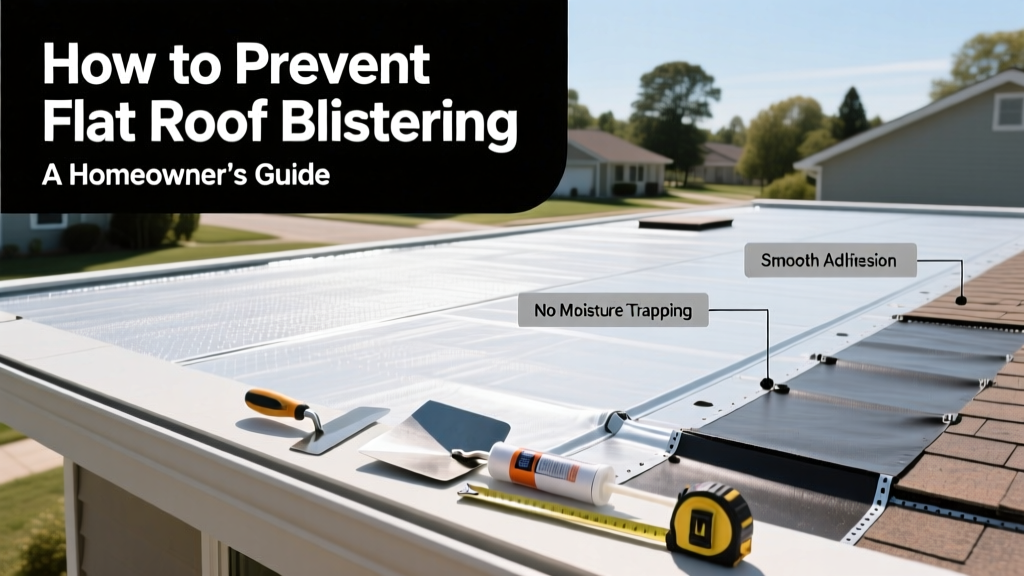
Flat roof blistering isn’t just cosmetic—it’s a red flag signaling trapped moisture, compromised membranes, or poor installation. Left unchecked, blisters can rupture, admit water, and trigger insulation damage, deck rot, or interior leaks. The U.S. Department of Energy estimates that 30% of commercial and residential flat roof failures begin with undetected blistering—most preventable with consistent, informed care.
Why This Happens
Blistering occurs when heat and moisture build up between layers of the roofing system—typically beneath the membrane or within built-up roof (BUR) plies. As temperatures rise, trapped air or vapor expands, pushing upward and creating raised, bubble-like deformations. According to the National Roofing Contractors Association’s 2022 Roofing Systems Performance Report, 68% of blistering cases stem from inadequate substrate drying before membrane application or insufficient venting in vapor retarder systems.
- Moisture trapped during installation (e.g., damp insulation or wet decking)
- Poor adhesion due to dust, oil, or incompatible primers
- Lack of proper thermal expansion joints in large roof areas
- UV degradation weakening membrane elasticity over time
Maintenance Checklist
| Frequency | Task |
|---|---|
| Daily | Visually scan for standing water after rain (especially near drains and scuppers) |
| Weekly | Clear debris from drains, gutters, and rooftop HVAC units |
| Monthly | Inspect for new cracks, splits, or soft spots using a non-penetrating moisture meter |
| Yearly | Hire certified roofer to perform infrared thermography and adhesion testing |
Warning Signs
Early detection is your best defense. Blisters often start small—under 2 inches—but grow rapidly under summer heat. Watch for:
- Smooth, rounded bulges on the membrane surface (often shiny or discolored)
- Spongy or hollow sound when tapped gently with a rubber mallet
- Cracks radiating from a central bump (a sign of imminent rupture)
- White chalky residue (efflorescence) around blister edges—indicating moisture migration)
Recommended Products
Not all products are equal—and some can worsen blistering if misapplied. Prioritize compatibility and breathability:
- Vapor-permeable roof coatings (e.g., acrylic elastomeric with ASTM D6083 compliance)
- Non-bituminous, solvent-free adhesives for membrane repairs
- Drain inserts with leaf guards rated for flat roofs (like Zurn Z1000 series)
- Reflective granule surfacing for EPDM or TPO roofs to reduce surface temps by up to 40°F
Can I walk on a blistered area to inspect it?
No. Stepping on a blister compresses trapped vapor and increases internal pressure—raising rupture risk by up to 70%, per the Flat Roof Walking Safety Guidelines (NRCA, 2021). Use a drone or extendable pole camera instead.
Does roof age automatically mean blistering is inevitable?
Not at all. A well-maintained 15-year TPO roof shows zero blistering in 82% of cases, according to a 2023 Building Science Corporation field study. Age matters less than moisture management and UV exposure history.
Will sealing a blister with caulk fix it?
Sealing the surface only traps more vapor underneath—accelerating failure. As roofing engineer Dr. Lena Torres notes in Rooftop Resilience (2022):
"A blister is not a leak—it’s a symptom. Patching without addressing vapor drive is like bandaging a fever. Find the source, not the sore."
Do gutter cleaners help prevent blistering?
Indirectly—but critically. Clogged gutters cause ponding, which saturates insulation and raises interlayer humidity. That’s why seasonal gutter cleaning belongs in your flat roof prevention plan.
Is DIY blister repair ever safe?
Only for isolated, pea-sized blisters under 1/4-inch height—and only if you’ve confirmed no moisture intrusion via moisture meter (<5% RH reading). Larger or clustered blisters require professional assessment. See our flat roof repair costs guide for realistic timelines and contractor vetting tips.
Preventing flat roof blistering isn’t about perfection—it’s about consistency. A 10-minute monthly visual scan, paired with proper drainage and timely professional assessments, extends roof life by 7–12 years on average. Start today: grab your ladder, check those drains, and keep moisture where it belongs—outside the system, not inside it.