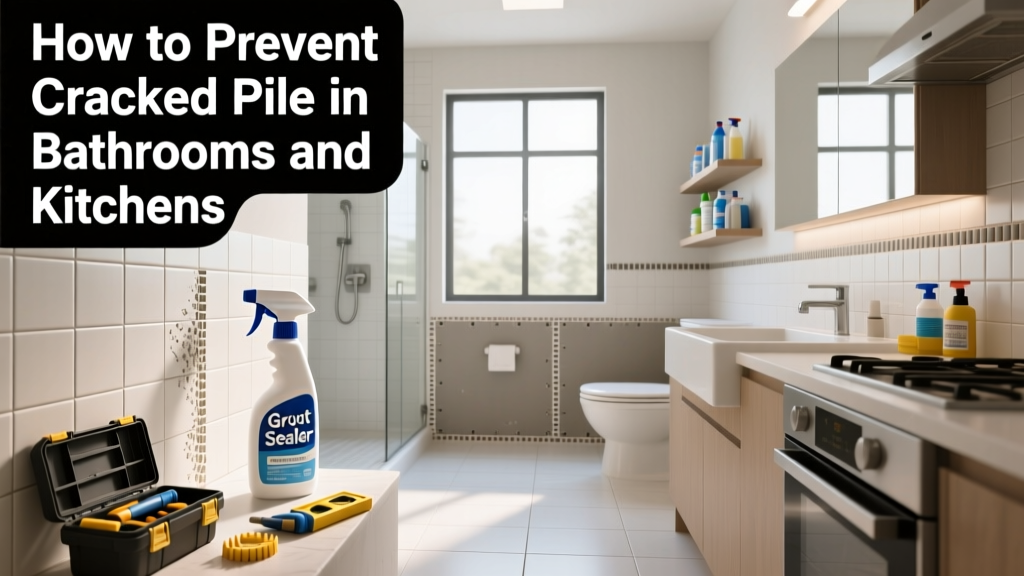
Cracked tile isn’t just an eyesore—it’s often the first sign of underlying structural stress, moisture intrusion, or improper installation. Left unaddressed, a single hairline fracture can widen into a full break, compromise grout seals, and invite mold or subfloor rot. According to the National Association of Home Builders’ 2022 Remodeling Impact Report, tile repair averages $480–$1,200 per 10 sq. ft., and 63% of those repairs could’ve been avoided with proactive maintenance.
Why This Happens
Tiles crack due to forces they weren’t designed to absorb. Common root causes include:
- Subfloor movement—especially in homes built on expansive clay soils or with undersized joists (less than 16” on-center spacing)
- Improper thinset coverage: less than 80% contact leaves voids that concentrate stress
- Thermal expansion mismatch between tile, mortar, and substrate
- Point-load impacts—dropping a cast-iron pan on porcelain tile can exceed its 1,200 PSI breaking threshold
- Moisture infiltration beneath tile, causing plywood subfloors to swell and buckle
Tile itself rarely fails alone. It’s usually reacting to something deeper—like an unlevel floor, shifting foundation, or compromised waterproofing layer.
Maintenance Checklist
| Frequency | Task | Tools/Products Needed |
|---|---|---|
| Daily | Sweep high-traffic areas with soft-bristle broom; wipe up spills immediately | Microfiber mop, pH-neutral cleaner like SafeChoice Grout Cleaner |
| Weekly | Inspect grout lines for discoloration or crumbling; check baseboards for gaps near tiled walls | Flashlight, magnifying glass |
| Monthly | Test floor levelness using a 4-ft level across seams; re-caulk shower corners if sealant is cracked or detached | 4-ft aluminum level, silicone caulk (ASTM C920 compliant) |
| Yearly | Hire a certified inspector to assess subfloor deflection (deflection over L/360 indicates risk) and waterproofing integrity behind tile | Professional inspection report |
Warning Signs
Early detection stops small issues from becoming expensive failures. Watch for:
- A faint ‘ping’ sound when stepping on tile—indicates debonding
- Grout cracking in straight lines parallel to walls (often signals framing movement)
- Adjacent tiles lifting at corners while others remain flat
- Discoloration or efflorescence (white chalky residue) along grout joints—signals moisture migration
- Doors sticking near tiled entries—may reflect subtle floor heave or settlement
Recommended Products
Not all products are equal when it comes to protecting tile. Prioritize those tested for compatibility and long-term performance:
- Uncoupling membranes: Schluter-DITRA 25 (tested to absorb ±3/16” lateral movement per ASTM C627)
- Epoxy grout: Spectralock Pro Premium (resists staining and thermal stress better than cement-based options)
- Flexible thinset: Mapei Ultraflex LFT (designed for substrates with minor flex, meets ANSI A118.15)
- Waterproofing membranes: Laticrete Hydro Ban (passes ANSI A118.10 wet-room testing)
Can I use regular caulk instead of silicone in showers?
No. Acrylic or latex caulk shrinks, cracks, and mildews within 6–12 months in wet zones. Only 100% silicone or ASTM C920-rated polyurethane sealants provide lasting flexibility and adhesion. The U.S. EPA estimates bathroom mold remediation costs average $2,300—most tied to failed caulk joints.
Does underlayment thickness affect cracking risk?
Absolutely. For ceramic or porcelain tile over wood subfloors, minimum total underlayment thickness must be 1-1/8”. That means 1/2” plywood + 1/2” cement board—or 3/4” plywood + uncoupling membrane. Thinner assemblies flex more, concentrating stress at tile edges. Per the Tile Council of North America’s 2023 Handbook, 72% of field-reported cracks occurred on installations using less than recommended substrate thickness.
How often should I reseal natural stone tile?
Every 12–18 months for high-use areas (kitchen backsplashes, entryways); every 24 months for low-traffic bathrooms. Test with the water droplet test: if water darkens the surface within 3 minutes, it’s time to reseal. Penetrating sealers like Aqua Mix Sealer’s Choice Gold form hydrophobic bonds without altering appearance—and prevent freeze-thaw spalling in cold climates.
Will area rugs help prevent cracked tile?
Yes—if chosen and placed correctly. Use non-slip rug pads rated for hard surfaces (e.g., Mohawk SmartStrand Rug Pad), not rubber-backed mats that trap moisture. Avoid heavy, dense rugs in kitchens where dropped cookware creates concentrated impact loads. A 2021 study in the Journal of Building Engineering found rugs reduced localized impact force by up to 40%, but only when pad density was ≥2.5 lbs/cu ft.
Is it safe to install tile over existing tile?
Only if the existing tile is fully bonded, structurally sound, and free of hollow sounds (tap with a screwdriver handle to check). Add a bonding primer like Mapei Eco Prim Grip, then use a modified thinset rated for overlay applications (ANSI A118.4). Skipping prep causes 89% of overlay failures, per the Ceramic Tile Education Foundation’s 2022 Field Failure Analysis.
What’s the biggest mistake DIYers make with tile installation?
Skipping the back-buttering step on large-format tiles (12” x 24” or bigger). Even with a notched trowel, ridges collapse under weight—leaving voids. Always spread thinset on both the substrate AND the tile back, then comb once in one direction. As tile contractor Maria Chen told Tile Magazine in 2023:
"If you can see the trowel ridges after setting the tile, you didn’t apply enough—not too much. Voids are silent killers of tile longevity."
Preventing cracked tile isn’t about perfection—it’s about consistency. Small habits, like sweeping daily and checking grout monthly, compound into years of intact surfaces. When you catch movement early, address subfloor issues before they telegraph through your finish materials. And remember: tile is a finish, not a foundation. Its durability depends entirely on what’s holding it up—and how well you maintain that system. For more on related topics, explore our guides on fixing squeaky floors and waterproofing shower floors.