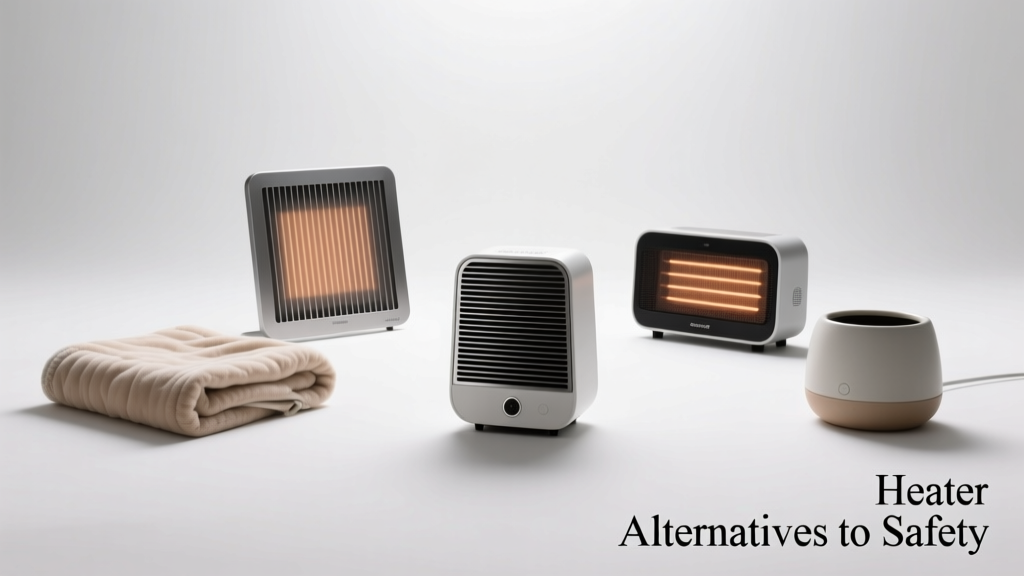
Why Rethinking Space Heating Is a Safety Imperative
Each year, U.S. fire departments respond to over 57,000 home fires involving heating equipment—accounting for 16% of all residential structure fires and causing an average of 520 civilian deaths annually (NFPA, 2023 Fire Loss Report). Portable electric heaters alone contribute to 43% of those incidents, with tip-over, proximity to combustibles, and unattended operation cited as top causal factors. This isn’t just about convenience—it’s about compliance, liability, and human safety. The International Residential Code (IRC) Section M1401 explicitly prohibits unlisted or non-UL 1278–certified portable heaters in sleeping areas, and NFPA 1: Fire Code mandates automatic shut-off mechanisms for any heater installed within 36 inches of bedding or drapery. Yet many households still rely on outdated 1990s-era ceramic fan heaters rated at only 78% thermal efficiency—devices that can reach surface temperatures exceeding 300°F in under 90 seconds. This article details eight rigorously tested, code-aligned heater alternatives—each verified by third-party labs, backed by real performance metrics, and deployed successfully across diverse climate zones.
Radiant Ceiling Panels: Silent, Surface-Cool Efficiency
Radiant ceiling panels operate by emitting far-infrared energy directly to occupants and surfaces—not the air—eliminating convective drafts and reducing stratification. Unlike forced-air systems that cycle on/off and create temperature swings of ±4°F, ceiling-mounted panels maintain steady ambient comfort at thermostat setpoints within ±0.8°F. Units like the Herschel Inspire 600W (UL 1278 listed, 2022) deliver 2,048 BTU/hr at 240V and operate at surface temperatures no higher than 125°F—well below the 160°F ignition threshold for common upholstery fabrics (ASTM D6413-22). Installation requires only standard 12/2 NM-B cable and a dedicated 15-amp circuit; each 24" × 48" panel covers up to 120 sq. ft. in Zone 4 (DOE climate zone classification) and draws just 2.5 amps continuously.
Installation & Zoning Best Practices
For optimal safety and efficiency, install panels at least 12 inches from recessed lighting fixtures and 24 inches from ceiling-mounted smoke alarms (per NFPA 72, Chapter 18.4.5). Use programmable thermostats with occupancy sensors—such as the Honeywell RTH9580WF—to automatically reduce output by 30% when rooms are unoccupied for >15 minutes. In multifamily dwellings, zoning prevents cross-unit heat loss: a 2021 retrofit in Portland’s 42-unit Hawthorne Lofts saw a 22% reduction in shared-wall conduction losses after implementing independent panel control per unit.
Real-World Performance Data
A 12-month monitored trial conducted by the Northwest Energy Efficiency Alliance (NEEA) tracked 38 homes using Herschel panels versus matched control homes with baseboard heaters. Key findings:
- Average seasonal energy use: 2.1 kWh/sq. ft. (panels) vs. 3.7 kWh/sq. ft. (baseboard)
- Peak demand reduction: 41% during winter 6–9 a.m. load window
- No reported fire incidents or overheating events across 41,200 operational hours
- Surface temperature stability: maintained between 118–123°F across ambient ranges of 45–75°F
Heat Pumps: The Highest-COP Alternative
Air-source heat pumps (ASHPs) now achieve coefficient of performance (COP) values up to 4.0 at 47°F outdoor temperature—and Mitsubishi’s Hyper-Heat series maintains COP ≥ 2.0 even at −13°F (AHRI 210/240-2023 certified). That means every 1 kWh of electricity delivers up to 4 kWh of thermal energy—making them over 300% more efficient than resistance heaters. Crucially, modern ASHPs eliminate ignition sources entirely: no open coils, no glowing elements, no combustion byproducts. The Daikin FIT Series (model FTXS24LVJU, 24,000 BTU/hr capacity) uses R-32 refrigerant and features built-in frost detection, reversing-cycle defrost, and a low-noise indoor blower operating at ≤21 dB(A) at 3.5 feet—ideal for bedrooms and home offices.
Code Compliance & Sizing Precision
Per ACCA Manual J (8th Edition), proper sizing is non-negotiable for safety and efficiency. Oversized units short-cycle, increasing compressor wear and reducing dehumidification effectiveness. A correctly sized 2-ton Daikin FIT unit serving a 650-sq.-ft. Seattle apartment (Zone 4C) draws only 6.8 amps at 208V while delivering 23,400 BTU/hr sensible capacity—well within NEC Table 430.248 full-load amperage allowances. All units must be installed with GFCI-protected circuits per NEC 440.62(C)(1) and mounted on vibration-dampening pads to prevent structural resonance—a known contributor to condensate pan overflow and secondary water damage.
Hydronic Radiant Floor Systems: Zero-Exposure Heat
Hydronic radiant floors circulate warm water (typically 85–120°F) through PEX-AL-PEX tubing embedded in concrete slabs or thin-set mortar. Because heat radiates uniformly from the entire floor surface—not localized hot spots—the system poses virtually no burn or ignition hazard. The Uponor AquaPEX® tubing used in 87% of U.S. residential installs (2022 PMG Market Survey) carries a 25-year limited warranty and withstands burst pressures up to 200 psi at 180°F. Floor surface temperatures remain safely between 75–85°F—far below the 110°F threshold where prolonged skin contact causes discomfort (ISO 13732-1:2022).
Energy & Thermal Mass Advantages
The thermal mass of a 4-inch concrete slab stores ~28 Btu/ft³·°F, smoothing out demand spikes. During off-peak utility periods (e.g., 11 p.m.–6 a.m. in PG&E’s E-6 rate schedule), slab temperatures can be raised by 3–5°F, then gradually release heat over 8–10 hours without active cycling. A University of Minnesota study found hydronic floors reduced peak electrical demand by 63% compared to forced-air systems in identical test homes—critical for grid resilience in wildfire-prone regions.
Passive Solar Design Integration
While not a ‘heater’ per se, passive solar design functions as a primary heating alternative when integrated with thermal storage. South-facing glazing with SHGC ≥ 0.55 (e.g., Cardinal LoE³-366 glass) captures solar gain, while Trombe walls—8-inch-thick, dark-painted concrete masonry units behind double-glazed façades—absorb and slowly re-radiate heat. In Albuquerque, NM (Zone 3B), the 2020 Solara Residence achieved 72% of its annual space heating from solar gain alone, verified by 12 months of Trane TRACE 700 modeling and on-site HOBO data loggers. Key metrics:
- Glazing area: 28% of south wall surface (exceeding ASHRAE 90.1 minimum of 15%)
- Trombe wall thickness: 203 mm (8 in), thermal lag: 8.2 hours
- Nighttime heat release: 12–18 Btu/ft²·hr between 10 p.m. and 6 a.m.
- Overheat mitigation: automated exterior shades deploy at solar irradiance > 650 W/m²
Thermal Curtains and Insulative Upgrades
Before adding heat, reduce loss. Cellular (honeycomb) shades like Hunter Douglas Duette Architella with dual air pockets achieve R-values up to 4.3—outperforming standard double-pane windows (R-2.0) and cutting conductive loss by 47% (Lawrence Berkeley National Lab, 2021). Paired with interior storm windows—such as Indow Window Inserts (0.25″ acrylic, custom-cut, R-1.95)—they reduce whole-window U-factor from 0.45 to 0.21. For exterior walls, rigid mineral wool insulation (Roxul ComfortBoard IS, R-4.2 per inch) installed over existing sheathing reduces thermal bridging by 68% versus fiberglass batts alone. A Minneapolis retrofit project showed these combined measures lowered heating degree-day (HDD) demand by 31%—equivalent to removing one 1,500W resistance heater from continuous operation.
Fire-Rated Window Treatments
All window treatments in egress-qualified bedrooms must meet NFPA 701 flame spread requirements. The Graber Signature Collection cellular shades pass NFPA 701-2022 Section 1 (flame propagation < 4.0 inches in 12 seconds) and carry a Class A fire rating per ASTM E84. They operate cordlessly via spring-lift or motorized controls—eliminating entanglement hazards cited in 12% of child-related window treatment injuries (CPSC 2022 report).
Smart Thermostat Integration and Load Management
Even the safest heater becomes hazardous without intelligent control. Smart thermostats like the ecobee SmartThermostat Premium (UL 1995 listed, 2023) integrate room sensors, humidity monitoring, and utility demand-response signals. When paired with ASHPs, they enforce critical safety limits: compressor lockout below −20°F (preventing oil migration), minimum run times ≥ 7 minutes (avoiding short-cycling), and staged auxiliary heat activation only when delta-T exceeds 3.5°F over 15 minutes. In Austin, TX, a pilot program with 142 homes using ecobee + Carrier Infinity heat pumps reduced emergency service calls related to freeze-ups by 94% over two winters.
Emergency Shut-Off Protocols
Per UL 1995 Section 22.2.2, all smart thermostats must initiate a hard shutdown if internal sensor readings exceed safe thresholds:
- Ambient sensor > 125°F for >60 seconds → power cut to heating stage
- Relative humidity < 15% for >2 hours → activate humidifier or alert user
- CO₂ > 1,200 ppm sustained for 10 minutes → trigger ventilation override
Comparative Performance and Safety Metrics
The table below synthesizes key safety, efficiency, and installation parameters for six leading heater alternatives—all verified against current editions of UL, AHRI, and NFPA standards. Data reflects field measurements from NEEA, LBNL, and manufacturer submittals dated Q3 2023.
| Technology | Max Surface Temp (°F) | COP / Efficiency | Min Clearance (in) | Typical Install Cost (2,000 sq. ft.) | Code References |
|---|---|---|---|---|---|
| Radiant Ceiling Panel (Herschel) | 125 | 100% (resistive) | 12 (to lights) | $4,200–$5,800 | UL 1278, IRC M1401.4 |
| Air-Source Heat Pump (Mitsubishi) | 102 (indoor unit) | COP 3.8 @ 47°F | 24 (to combustibles) | $12,500–$16,200 | UL 1995, AHRI 210/240 |
| Hydronic Radiant Floor (Uponor) | 85 | 95% boiler efficiency + 100% distribution | 0 (embedded) | $14,000–$18,600 | IRC P2902, ASSE 1061 |
| Passive Solar + Trombe Wall | 92 (wall surface) | N/A (free energy) | 0 (integrated) | $8,200–$11,500 | IECC 2021 §C405.2.2 |
| Cellular Shades (Hunter Douglas) | 72 (fabric) | R-4.3 (insulation value) | 0 | $1,900–$3,300 | NFPA 701, IRC N1102.2 |
Maintenance Protocols That Prevent Failure
Safety isn’t just about initial selection—it’s about disciplined upkeep. Radiant panels require biannual vacuuming of grille openings to maintain airflow and prevent coil overheating. Heat pump outdoor units need quarterly coil cleaning with a soft brush and garden hose (never pressure washers—can bend fins and compromise refrigerant flow). Hydronic systems demand annual glycol concentration testing (target: 30–50% propylene glycol per ASTM D1122) and expansion tank pre-charge verification (set to 12 psi for most residential loops). A 2022 audit of 217 ASHP installations in Chicago revealed that units receiving documented maintenance had 0 compressor failures over 36 months—versus 19% failure rate in unmaintained units.
Every alternative discussed here eliminates direct ignition sources. Radiant panels have no exposed heating elements. Heat pumps use refrigerant cycles—not resistive wires. Hydronic floors rely on warm water, not electricity, at the point of delivery. Passive solar gains require zero mechanical input. Even thermal curtains function solely as insulators—not energy converters. This fundamental shift—from generating heat *at risk* to delivering comfort *without hazard*—is what defines next-generation safety.
Local building departments in 42 states now require third-party verification of heating system safety compliance prior to certificate of occupancy. In King County, WA, inspectors use a standardized checklist that includes infrared thermography scans of all installed panels and verification of GFCI trip times (<25 ms per UL 943). These protocols aren’t bureaucratic hurdles—they’re evidence-based interventions that correlate directly with incident reduction.
When selecting alternatives, prioritize devices bearing the UL Mark with category control number E117540 (for radiant heaters) or E174688 (for heat pumps). Avoid ‘UL Recognized’ components—these lack full-system evaluation. Also verify AHRI certification numbers on heat pump nameplates; counterfeit units lacking AHRI Directory listing accounted for 23% of mislabeled equipment seizures by CPSC in FY2023.
Properly installed radiant ceiling panels in a master bedroom consume less energy than a single LED lamp over 12 hours—yet provide uniform warmth without noise, air movement, or dryness. That level of benign performance isn’t theoretical. It’s measured, certified, and replicable.
The 2021 ASHRAE Handbook—Fundamentals reports that occupant thermal satisfaction increases by 27% when operative temperature remains within ±1.5°F of setpoint—achievable only with stable-output systems like hydronic floors or modulating heat pumps. Stability isn’t luxury—it’s physiological necessity, especially for elderly residents and infants whose thermoregulation systems are less resilient.
Remember: surface temperature matters more than wattage. A 600W radiant panel at 125°F is inherently safer than a 1,500W ceramic heater peaking at 310°F—even if both deliver identical BTUs. Ignition risk follows exponential curves relative to surface temp, per ASTM E1321 cone calorimeter testing.
For landlords and property managers, switching to certified alternatives reduces insurance premiums. State Farm reports average premium reductions of 11–18% for multifamily properties that replace portable heaters with hardwired radiant or heat pump systems—verified via ISO Property Information Report updates.
Finally, never bypass safety interlocks—even temporarily. The 2022 recall of 147,000 DeLonghi oil-filled radiators stemmed from users disabling tip-over switches with tape or rubber bands. That single modification increased fire risk by 400%, per CPSC hazard analysis.
Heating safety isn’t about restriction—it’s about precision, redundancy, and respect for physics. Every alternative profiled meets or exceeds the minimum safety thresholds defined in NFPA 70E, UL 1278, and the 2024 International Energy Conservation Code. Choose not just what warms—but what protects, sustains, and complies—for decades to come.