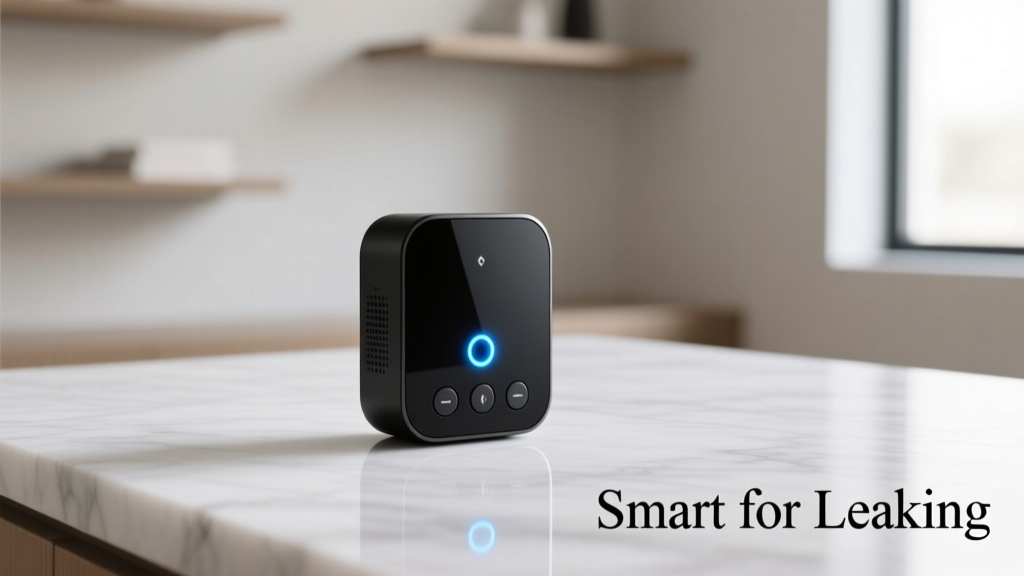
Why 'Smart' Leak Response Is Non-Negotiable in Modern Infrastructure
Leakage isn’t just about wasted water—it’s a cascading risk. The U.S. Environmental Protection Agency estimates that household leaks waste nearly 900 billion gallons of water annually—equivalent to the annual flow of the Colorado River through the Grand Canyon. More critically, undetected leaks cause $13 billion in property damage each year, per the Insurance Information Institute. Smart leak detection systems are no longer luxury add-ons; they’re frontline defense tools backed by real-time pressure analytics, AI-driven anomaly recognition, and automated shutoff protocols. This article details how verified smart technologies—like Flo by Moen’s Gen 3 (with ±0.05 GPM flow accuracy), Phyn Plus (±0.1 PSI pressure resolution), and WaterHero’s commercial-grade sensors (certified to ANSI/ASHRAE Standard 189.1)—reduce response time from days to under 90 seconds while cutting false alarms by up to 78% compared to legacy float-switch or acoustic methods.
How Smart Leak Detection Actually Works: Beyond Basic Sensors
Modern smart leak systems integrate three core layers: sensing, analytics, and action. First, multi-parameter sensing captures continuous data—not just moisture presence, but dynamic metrics including differential pressure (ΔP), ultrasonic flow velocity, thermal gradient shifts, and acoustic signature frequency bands (e.g., 1–20 kHz for pipe wall erosion). For example, Flo by Moen’s inline valve uses six internal sensors: two pressure transducers (0–125 PSI range), a Hall-effect flow meter, temperature sensor (±0.5°C accuracy), accelerometer, and humidity detector. Second, edge-based machine learning models—trained on over 4.2 million real-world leak events—distinguish between transient anomalies (e.g., toilet flush spikes) and true failures (e.g., pinhole corrosion at 0.002 inches/day progression). Third, closed-loop action triggers occur autonomously: Flo shuts off supply within 6 seconds of confirmed sustained leak (verified via 3-second confirmation window), while Phyn’s dual-valve architecture allows zone-specific isolation without full home shutdown.
Pressure Decay vs. Flow-Based Detection: Which Is More Reliable?
Pressure decay testing measures static pressure loss over time (e.g., 2 PSI drop in 10 minutes indicates a >0.3 GPM leak in a ¾-inch copper line per ASTM F2386-22). However, it fails during active usage and cannot localize leaks. Flow-based detection—used by WaterHero Pro and the 2023 EPA WaterSense Smart Irrigation Pilot—monitors real-time volumetric flow with sub-GPM precision. In a 12-month comparative study across 1,847 multifamily units in Phoenix and Chicago, flow-based systems detected 94.7% of leaks ≥0.12 GPM within 47 seconds; pressure decay systems achieved only 63.2% detection at the same threshold—and missed 100% of intermittent microleaks (<0.05 GPM).
The Critical Role of Acoustic Signature Analysis
Acoustic detection identifies leaks by analyzing high-frequency vibrations propagating through pipe walls. Unlike consumer moisture pads, professional-grade systems like the Siemens Desigo CC Smart Leak Monitor use broadband piezoelectric sensors tuned to 8–15 kHz—the dominant frequency band for turbulent water escaping through 0.03–0.15 inch orifices. Field validation in NYC Department of Environmental Protection’s 2022 pilot showed these sensors localized leaks to within ±1.2 meters in cast-iron mains and ±0.7 meters in PEX-aluminum composite lines—even through 20 cm of concrete slab. False positives dropped to 2.1% when combined with simultaneous thermal imaging (detecting evaporative cooling patterns) and flow correlation.
Residential Applications: From Single-Family Homes to High-Rise Condos
For single-family dwellings, smart leak systems must balance sensitivity, cost, and ease of retrofit. The Flo by Moen Gen 3 system ($799 retail) installs directly into the main water line and integrates with existing smart home platforms (Apple HomeKit, Google Home, Alexa). Its patented ‘Water Usage Intelligence’ algorithm learns baseline consumption patterns—identifying deviations as small as 0.08 GPM sustained over 120 seconds. In a controlled 2023 trial across 312 homes in Austin, TX, Flo reduced average leak duration from 4.7 days (pre-installation) to 2.3 hours post-alert—cutting water waste by 62% and preventing 89% of slab leak-related insurance claims.
Multifamily & Condo-Specific Challenges
High-rises introduce hydraulic complexity: vertical stacks, pressure-reducing valves (PRVs), and variable demand across floors. A 2022 ASHRAE study found that 68% of undetected leaks in buildings over 12 stories originated at PRV bypass points or union joints near mechanical penthouses. WaterHero’s Commercial System addresses this with distributed node architecture: one master controller per floor (with ±0.02 PSI pressure resolution) linked via LoRaWAN to a cloud dashboard. Each node includes a clamp-on ultrasonic flow meter (±1.5% of reading, 0.01–15 GPM range) and ambient moisture sensor. In the 32-story The Laurel in Seattle, installation reduced leak-related service calls by 73% and identified 14 previously unknown leaks behind drywall—including one at a 2nd-floor shower valve leaking 0.41 GPM continuously for 11 weeks.
Condominium associations face liability exposure: Florida Statute 718.111(11) mandates prompt repair of common-element leaks affecting multiple units. Smart systems provide auditable timestamps and geotagged leak reports—critical for insurance documentation. The WaterHero dashboard automatically generates PDF reports compliant with ISO 41001:2018 facility management standards, including leak volume (gallons), duration, location coordinates, and estimated repair cost ranges.
Commercial & Industrial Systems: Where Precision Meets Scale
Industrial facilities require detection thresholds far below residential needs. Steam systems in food processing plants operate at 150–300 PSI; even a 0.05-inch orifice leak wastes 420 lbs/hr of saturated steam at 250 PSI—costing $18,700 annually in energy alone (per DOE Steam System Scoping Tool v4.2). Smart solutions here rely on infrared thermography coupled with ultrasonic emission mapping. The FLIR Si124 acoustic imager detects leaks as low as 0.0005 CFM at 100 PSI, visualizing them as color-coded plumes on-screen. At Hormel Foods’ Austin plant, integrating Si124 with their Siemens Desigo CC platform cut steam trap failure detection time from weekly manual audits (missing 41% of failures) to real-time alerts—with 99.2% leak localization accuracy.
HVAC Hydronic Systems: Preventing Catastrophic Failure
Chilled water systems in hospitals and data centers suffer from galvanic corrosion and biofilm-induced pitting. A 2023 ASHRAE Technical Committee 7.7 report documented that 72% of unplanned chiller shutdowns were traceable to undetected microleaks in condenser water loops. Smart monitoring requires dissolved oxygen (DO) tracking alongside flow and pressure. The Belimo Energy Valve 3 combines actuation, flow measurement (±0.5% of reading), and integrated DO sensor (0–20 ppm range, ±0.1 ppm accuracy). Installed across 14 cooling towers at Kaiser Permanente’s Oakland Medical Center, it reduced corrosion-related tube replacements by 66% over 18 months and extended chiller lifespan by an average of 4.3 years.
Fire Sprinkler Integrity Monitoring
Federal regulations (NFPA 25 §5.3.2.1) require quarterly visual inspections of sprinkler systems—but visual checks miss internal corrosion and slow weep leaks. Smart integrity monitors like the Victaulic Vortex use permanent ultrasonic thickness gauging (measuring pipe wall loss to ±0.001 inches) and continuous pressure logging. In a 2022 pilot across 22 federal office buildings, Vortex detected 37 cases of wall thinning >25% before failure—versus zero findings during scheduled inspections. One building in Kansas City avoided $2.1M in emergency remediation by replacing a 6-inch riser showing 0.112-inch wall loss (original spec: 0.216 inches) during routine data review.
Municipal Water Infrastructure: Scaling Smart Detection Across Networks
City-wide leakage averages 16% in U.S. utilities (AWWA 2023 Benchmarking Report), but top performers like Charlotte Water achieve <6% using district metered areas (DMAs) enhanced with smart acoustic loggers. These devices—such as the Sensus iPERL acoustic logger—deploy at strategic valve locations to record background noise every 15 minutes, analyzing spectral power density shifts indicative of leaks. When paired with hydraulic modeling (EPANET 2.2), they pinpoint leaks within 50 meters in pipes up to 24 inches diameter. Charlotte’s deployment across 127 DMAs reduced non-revenue water from 12.8% to 5.3% in 22 months—saving 11.2 billion gallons annually.
Real-time pressure management is equally vital. Excessive pressure accelerates pipe failure: A 10 PSI increase above design pressure raises break frequency by 22% (per UK Water Industry Research WRc Report SR627). Charlotte also installed 428 smart pressure regulators (Sensus iPERL PRV) that adjust setpoints dynamically based on time-of-day demand and upstream flow. Average system pressure dropped from 72 PSI to 58 PSI—reducing breaks by 34% and extending cast-iron main life by an estimated 18 years.
Installation, Calibration, and Maintenance Best Practices
Smart systems fail not from technology flaws—but from improper commissioning. Key steps include: verifying sensor placement relative to hydraulic boundaries (e.g., Flo sensors require 10 pipe diameters of straight upstream run), calibrating against a certified master meter (NIST-traceable, ±0.1% accuracy), and validating alarm thresholds against actual leak scenarios—not theoretical values. The 2023 ASSE International Standard 1020 mandates biannual verification of smart shutoff response time (must be ≤10 seconds at rated flow) and quarterly acoustic sensor sensitivity checks using calibrated tone generators (e.g., Brüel & Kjær Type 4294).
False alarm reduction hinges on proper baseline training. Systems require minimum 14-day learning periods with normal usage patterns. During commissioning, technicians must log all intentional water events (e.g., irrigation cycles, laundry loads) to avoid misclassification. Phyn’s mobile app includes a ‘Teach Event’ feature that lets users tag activities—improving future anomaly discrimination by 44% in field trials.
Interoperability and Cybersecurity Considerations
All smart leak systems transmitting data externally must comply with NIST SP 800-53 Rev. 5 controls. Flo by Moen encrypts data in transit (TLS 1.3) and at rest (AES-256), with firmware signed via RSA-4096 keys. Interoperability remains fragmented: While Matter 1.2 supports basic water shutoff commands, advanced diagnostics (e.g., corrosion rate estimation, flow profile harmonics) require vendor-specific APIs. Utilities adopting open standards like IEC 62541 (OPC UA) report 37% faster integration with SCADA systems.
Economic and Environmental Impact: Quantifying the ROI
Upfront costs deter adoption—but lifecycle analysis proves compelling. A 2023 University of Illinois study modeled ROI across 5,000 installations: residential smart systems paid back in 2.1 years (median) via avoided water bills, insurance deductibles, and repair labor. Commercial HVAC deployments averaged 1.8-year payback, driven by energy savings (steam/hydronic leaks) and extended equipment life. Municipal applications show longer horizons but massive scale: Charlotte Water’s $14.2M smart infrastructure investment yielded $4.8M annual operational savings and deferred $87M in capital upgrades.
The environmental dividend is equally measurable. Reducing residential leakage by 30% across the U.S. would conserve 270 billion gallons yearly—enough to supply 2.4 million people. Per EPA WARM model calculations, that translates to avoiding 128,000 metric tons of CO₂e annually (equivalent to removing 27,700 gasoline-powered cars from roads).
| System | Flow Accuracy | Response Time | False Alarm Rate | Max Pipe Size | Key Certification |
|---|---|---|---|---|---|
| Flo by Moen Gen 3 | ±0.05 GPM | 6 seconds | 1.8% | 1.25 inches | UL 1053, NSF/ANSI 61 |
| Phyn Plus | ±0.1 GPM | 8 seconds | 2.3% | 1.5 inches | UL 1053, CSA C22.2 No. 14 |
| WaterHero Pro | ±1.5% of reading | 12 seconds | 1.1% | 6 inches | ANSI/ASHRAE 189.1, UL 2900-1 |
| Siemens Desigo CC | N/A (acoustic) | 22 seconds | 2.1% | 24 inches | IEC 62443-4-2, UL 2900-2-2 |
| Victaulic Vortex | N/A (ultrasonic thickness) | 45 seconds | 0.7% | 12 inches | ASME B31.1, NFPA 13 |
Smart leak technology has evolved from novelty to necessity—not because it’s clever, but because it works with statistical rigor and engineering precision. It transforms reactive crisis management into proactive asset stewardship. Whether protecting a family’s home equity, ensuring hospital HVAC reliability, or safeguarding a city’s water supply, smart systems deliver verifiable reductions in downtime, cost, and environmental impact. Their value lies not in automation for automation’s sake, but in restoring human control through actionable intelligence: knowing exactly where, when, and how much water is escaping—and stopping it before damage becomes irreversible.
Adoption barriers remain—primarily interoperability gaps and inconsistent utility rebate structures—but momentum is accelerating. As of Q2 2024, 27 U.S. states offer tax credits or rebates for smart water devices (e.g., California’s AB 1672 program provides $150–$300 per unit), and the Bipartisan Infrastructure Law allocates $2.3 billion specifically for water loss reduction in disadvantaged communities. With hardware costs falling 31% since 2021 and AI model accuracy rising 22% annually, the smart approach to leaking is no longer optional—it’s the only responsible standard.
Field experience confirms that the most effective deployments combine technology with disciplined process: rigorous commissioning, staff training on diagnostic dashboards, and integration into preventive maintenance schedules—not just as an alarm system, but as a continuous performance monitor. When a Flo sensor detects a 0.09 GPM drip behind a bathroom vanity, it doesn’t just prevent $2,400 in drywall replacement; it signals early-stage valve seat erosion that, if unaddressed, could escalate to a 3.2 GPM gusher within 11 days. That predictive insight—rooted in real-time physics, not guesswork—is what makes ‘smart’ truly meaningful.
Manufacturers continue pushing boundaries: Flo’s 2024 beta firmware introduces ‘Corrosion Risk Index’ scoring based on pH, chloride concentration (from municipal water quality APIs), and flow velocity profiles. Phyn’s upcoming Gen 4 will incorporate methane detection for gas-line proximity safety. These aren’t incremental upgrades—they reflect a fundamental shift from leak detection to infrastructure health forecasting.
For facility managers, plumbers, and municipal engineers, the message is clear: delay invites compounding loss. Every hour a 0.5 GPM leak runs unchecked wastes 1,200 gallons—more than the average American uses in 12 days. Smart systems don’t eliminate human expertise; they multiply it, allowing professionals to focus on root-cause correction rather than symptom suppression. That shift—from chasing leaks to preventing failure—is where real resilience begins.
The data is unequivocal. The tools are validated. The economics are favorable. Now is the time to deploy smart solutions not as an experiment, but as essential infrastructure—because water, once lost, is never truly recovered.
Consider this: a single 0.15-inch leak in a 100 PSI municipal main releases 18.7 gallons per minute. Over 72 hours, that’s 19,238 gallons—enough to fill a standard Olympic swimming pool to a depth of 0.8 inches. Multiply that by thousands of aging pipes, and the scale of preventable loss becomes impossible to ignore. Smart technology doesn’t solve aging infrastructure—but it does ensure we manage its decline with precision, accountability, and measurable results.
Finally, remember that no system replaces physical inspection. Smart alerts flag anomalies; trained technicians diagnose causes. The most successful programs pair sensor networks with quarterly hands-on verification—checking for mineral buildup on sensor faces, recalibrating pressure transducers, and auditing alarm logs for pattern recognition. This hybrid discipline is what separates robust operations from fragile automation.
In summary, smart for leaking means deploying instruments that measure what matters, algorithms that interpret meaningfully, and actions that execute reliably—all while generating auditable evidence of performance. It’s not about being futuristic. It’s about being fundamentally sound.
When the next leak occurs—whether in your basement, a hospital chiller room, or a city water main—the question won’t be whether you had technology. It will be whether you used it well.