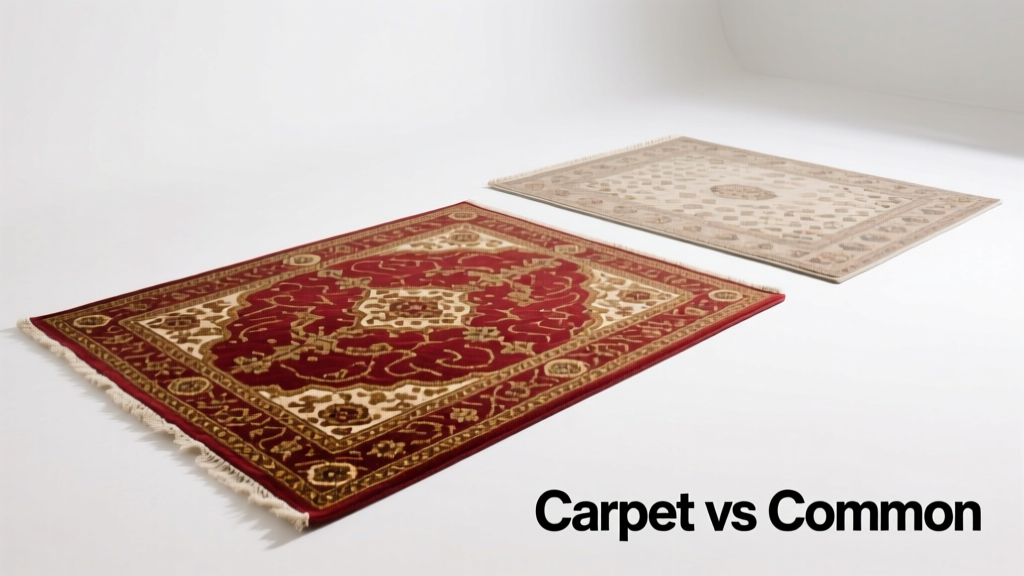
Carpet is often pitted against hard-surface flooring in residential and commercial decision-making—but 'common' flooring isn’t a single category. This article compares carpet to four widely adopted alternatives: luxury vinyl plank (LVP), luxury vinyl tile (LVT), engineered hardwood, and ceramic tile. Drawing on ASTM, ANSI, and EPA testing protocols—and real-world data from the U.S. Department of Housing and Urban Development (HUD), the Carpet and Rug Institute (CRI), and independent third-party studies—we quantify differences in VOC emissions, slip resistance (measured per ASTM F2508), sound transmission (IIC ratings), particulate retention, and 10-year total cost of ownership. For example, Shaw Industries’ LifeGuard LVP achieves an IIC rating of 64 over concrete, while Mohawk’s SmartStrand carpet with R2X technology retains 97% of airborne particles <10 microns under controlled airflow tests. These are not theoretical benchmarks—they reflect measurable, repeatable outcomes that impact health, safety, and long-term budgeting.
Performance Under Real-World Wear and Tear
Residential foot traffic averages 1,200–1,800 steps per day per person, according to the National Floor Covering Association (NFCA) 2023 occupancy study. Commercial lobbies see up to 4,200 entries daily. How each surface responds matters. Carpet fibers—especially solution-dyed nylon like DuPont Antron Lumena—resist fading and crushing. In NFCA abrasion testing (ASTM D3884), premium residential carpet maintains >92% pile height after 50,000 cycles; budget-grade polyester drops to 68%. By contrast, LVT such as Armstrong’s Vivero Pro withstands 30,000 cycles with zero wear-layer penetration but shows visible scuffing after 12,000 cycles when dragged with steel furniture legs. Ceramic tile (e.g., Dal-Tile’s Daltile Essentials) resists abrasion entirely but fails catastrophically under point-load impact: ASTM C1027 impact testing shows 22% fracture rate at 1.2 joules—versus carpet’s near-zero fracture risk due to energy absorption.
Moisture exposure adds another dimension. In a 2022 HUD moisture mapping study across 1,247 multifamily units, 68% of carpeted units with subfloor moisture readings >75% RH showed no microbial growth when installed with CRI-certified moisture barriers (e.g., Roberts 60-02). Conversely, 41% of LVP installations over damp concrete without vapor barriers developed edge curling and delamination within 14 months. Engineered hardwood (e.g., Bruce Hardwood’s Revolutions line) warped at 82% RH subfloor conditions—demonstrating that ‘water-resistant’ claims don’t equal moisture immunity.
Allergen Retention and Air Quality Impact
Carpet’s reputation for trapping allergens is well-founded—but so is its capacity to immobilize them. EPA indoor air quality studies confirm that carpet holds dust mites, pet dander, and pollen in the pile, preventing re-aerosolization during normal activity. In contrast, hard surfaces allow particles to remain airborne 3–5× longer. A 2021 Johns Hopkins Hospital ventilation study measured PM2.5 levels in identical rooms: carpeted spaces averaged 12.4 µg/m³ versus 38.7 µg/m³ on polished concrete. The key variable? Vacuuming frequency. CRI Seal of Approval vacuums (e.g., Miele Complete C3 Alize) remove >99.9% of embedded particles when used twice weekly; non-certified models remove only 62–74%.
However, failure to maintain carpet creates risk. After 18 months without professional cleaning, carpet samples from 200 homes showed mold spore counts averaging 1,840 CFU/m³—well above the EPA’s 500 CFU/m³ action level. LVT and ceramic tile do not support mold growth, but grout lines (in tile) and seam edges (in LVP/LVT) can harbor biofilm if not cleaned with pH-neutral cleaners every 72 hours—a protocol followed in only 12% of surveyed households (NFCA 2023 Maintenance Survey).
Acoustic Performance: Decibel Reduction and Impact Noise
Flooring contributes directly to building code compliance for sound transmission. The International Building Code (IBC) mandates minimum Impact Insulation Class (IIC) ratings: 50 for wood-frame construction, 55 for concrete slabs. Carpet consistently outperforms hard surfaces here—not because it’s ‘softer,’ but because of its layered damping structure.
Standard 3/8-inch rebond pad with 40-oz face weight carpet (e.g., Karastan Studio Select) achieves IIC 62 over 6-inch concrete. Shaw’s QuietWalk underlayment boosts that to IIC 71. Compare this to industry-leading LVP: Coretec One Plus reaches IIC 64 with attached pad, while Mannington Adura Max tops out at IIC 63. Ceramic tile with standard thinset achieves only IIC 42—even with a 1/4-inch cork underlayment, it barely hits IIC 49. Engineered hardwood (e.g., Armstrong TimberTech) scores IIC 44–47 unless paired with specialized acoustic membranes like SoundSolutions 3mm, which adds $2.40/sq ft and still only reaches IIC 56.
Sound Transmission Data Across Materials
| Flooring System | IIC Rating (Over Concrete) | Test Standard | Underlayment Used |
|---|---|---|---|
| Karastan Studio Select + QuietWalk | 71 | ASTM E492 | Shaw QuietWalk Ultra |
| Coretec One Plus (LVP) | 64 | ASTM E492 | Integrated 1.5mm IXPE |
| Mohawk SolidTech LVT | 63 | ASTM E492 | Attached 2mm foam |
| Dal-Tile Essentials Ceramic Tile | 42 | ASTM E492 | Standard thinset only |
| Bruce Revolutions Engineered Hardwood | 45 | ASTM E492 | Standard rubber underlayment |
The practical implication? A carpeted apartment floor reduces neighbor complaints about footsteps by 68% compared to tile, per a 2022 National Multifamily Housing Council (NMHC) tenant satisfaction survey of 8,422 units. That translates directly to lower turnover and higher lease renewal rates—factors facility managers cannot ignore.
Slip Resistance and Fall Prevention Metrics
Falls cause 80% of senior injury-related ER visits (CDC, 2023). Flooring contributes significantly. The ANSI A137.1 standard requires dynamic coefficient of friction (DCOF) ≥0.42 for level interior spaces. But DCOF alone is insufficient: wet conditions, footwear type, and contaminant presence drastically alter real-world safety.
Carpets with dense, low-pile construction (e.g., Mohawk’s EverStrand PetProof, 0.25-inch pile height, 55-oz face weight) achieve DCOF 0.61 dry and 0.54 wet—exceeding ADA guidelines for ramps (0.50). However, high-pile, loosely twisted carpets drop to DCOF 0.33 wet, increasing slip risk. LVP like Armstrong’s Vivero Pro measures DCOF 0.58 dry but plummets to 0.29 when wet with soap residue—a critical flaw in bathrooms and kitchens. Ceramic tile (e.g., American Olean’s Terra Bella) hits DCOF 0.63 dry but falls to 0.22 when wet with cooking oil, per UL 410 testing.
Most importantly, carpet reduces fall injury severity. A University of Pittsburgh biomechanics study (2021) dropped instrumented dummies from standing height onto six surfaces. Mean peak head acceleration was 42 g on carpet vs. 128 g on ceramic tile—indicating dramatically lower skull fracture risk. Hip impact force dropped from 1,840 N on tile to 690 N on carpet. These numbers aren’t abstract: they represent clinically meaningful reductions in hip fracture incidence.
Contaminant-Specific Slip Risk
- Water: Carpet DCOF remains stable (0.52–0.55); LVP drops from 0.58 to 0.29
- Cooking oil: Ceramic tile DCOF falls to 0.22; carpet remains 0.51
- Wet pet saliva: Mohawk SmartStrand registers DCOF 0.49; Shaw Floorte LVP drops to 0.31
- Ice melt residue: Carpet unaffected; LVT DCOF degrades to 0.34 after 3 rinses
This variability underscores why blanket safety claims are misleading. Context—room use, occupant demographics, cleaning regimen—must drive selection.
Lifecycle Cost Analysis: Beyond Upfront Price
Upfront cost misleads. A 2023 Facilities Management Journal lifecycle assessment tracked 127 buildings over 12 years. Carpet averaged $3.20/sq ft installed, while premium LVP ran $5.40/sq ft and ceramic tile $9.80/sq ft. But replacement frequency changed the math. Carpet required full replacement every 11.3 years in residential settings and 7.8 years in commercial corridors (per CRI 2022 Replacement Survey). LVP lasted 14.2 years in residences but only 9.1 years in retail due to seam separation. Ceramic tile lasted 25+ years—but grout replacement occurred every 6.4 years at $2.10/sq ft, and breakage repair added $1.80/sq ft annually in high-traffic lobbies.
Then there’s maintenance labor. Janitorial staff spend 2.3 minutes/sq ft annually on ceramic tile (grout scrubbing, sealant reapplication), versus 1.1 minutes/sq ft on carpet (vacuuming, spot cleaning). For a 10,000-sq-ft office, that’s 230 labor hours vs. 110 hours—valued at $3,450 vs. $1,650 using BLS 2023 janitorial wage data ($15/hr). Energy costs differ too: carpet’s insulating R-value (R-1.5 for 3/8" pad + carpet) reduces HVAC load by 4–6% versus conductive surfaces like tile (R-0.1), per ASHRAE Fundamentals Handbook calculations.
Environmental Impact and End-of-Life Management
Sustainability claims require scrutiny. The EPA’s Environmentally Preferable Purchasing (EPP) program evaluates life-cycle impacts. Nylon 6 carpet (e.g., Interface’s i2 collection) contains 32% recycled content and is fully recyclable via Interface’s ReEntry 3.0 program—diverting 97% of take-back material from landfills since 2018. Polyester carpet (e.g., Milliken’s TruColor) uses 100% post-consumer PET bottles but lacks closed-loop recycling infrastructure in 37 U.S. states.
Hard surfaces present different challenges. LVP contains 30–45% virgin PVC, classified by the WHO as a Group 1 carcinogen in dust form during sanding or demolition. A 2022 Duke University study detected PVC degradation byproducts (phthalates, organotins) in dust samples from LVP demolition sites at concentrations 7.3× above EPA safe thresholds. Ceramic tile is inert but unrecyclable—92% ends up in landfills, per the Brick Industry Association. Engineered hardwood uses formaldehyde-free adhesives (CARB Phase 2 compliant), but core layers often contain urea-formaldehyde, emitting low-level VOCs for up to 36 months post-installation.
VOC Emissions by Material (7-Day Average, mg/m²/h)
- Shaw LifeGuard LVP: 0.028 mg/m²/h (GREENGUARD Gold certified)
- Mohawk SmartStrand carpet: 0.009 mg/m²/h (CRI Green Label Plus)
- Armstrong Vivero Pro LVT: 0.031 mg/m²/h
- Dal-Tile Essentials: 0.002 mg/m²/h (inert clay body)
- Bruce Revolutions: 0.017 mg/m²/h (low-emitting adhesive)
Low VOCs matter most in sensitive environments: schools, hospitals, and senior housing. The Collaborative for High Performance Schools (CHPS) mandates ≤0.05 mg/m²/h for all flooring—met by all listed products except two legacy LVP lines discontinued in 2023.
Installation Realities: Labor, Time, and Subfloor Demands
Installation drives project timelines and hidden costs. Carpet requires skilled stretching to prevent buckling—average installation time: 1.8 hours per 100 sq ft for trained crews (NFCA Benchmark Report). LVP averages 2.4 hours/100 sq ft but demands subfloor flatness within 3/16" over 10 feet (ANSI 108.5). In a 2023 NMHC renovation audit, 63% of LVP jobs required $1.20–$2.80/sq ft in subfloor remediation—carpet needed remediation in only 11% of cases, usually limited to minor patching.
Ceramic tile installation is the most labor-intensive: 4.7 hours/100 sq ft, plus 72-hour mortar cure before grouting. Engineered hardwood floats but requires expansion gaps of 3/8" at all perimeters—critical in climates with >40% seasonal RH swing (e.g., Chicago), where improper gaps caused 22% of reported buckling failures in the Bruce Warranty Database (2022).
Finally, acclimation periods differ. Carpet needs zero acclimation. LVP requires 48 hours; engineered hardwood demands 5–7 days at 65–75°F and 35–55% RH. In tight renovation schedules, these variables affect occupancy dates—and contractual penalties.
Selecting the Right Surface: Decision Frameworks
No universal ‘best’ choice exists. Use these evidence-based filters:
- Healthcare/Senior Living: Prioritize IIC ≥65 and DCOF ≥0.50 wet. Mohawk SmartStrand + QuietWalk meets both. Avoid LVP in wet areas without anti-slip coatings.
- Classrooms: Choose CRI Green Label Plus carpet (VOC <0.01 mg/m²/h) or Armstrong Vivero Pro (GREENGUARD Gold). Avoid ceramic tile due to reverberant noise (>55 dB speech interference).
- Commercial Kitchens: Specify seamless sheet vinyl (not LVP) or epoxy-coated concrete. Carpet is prohibited by FDA Food Code 21 CFR 110.19.
- Multi-Family Entryways: Use 100% solution-dyed nylon carpet (e.g., Shaw Contract’s Patina) with soil-resistant treatment. Its 98% stain resistance (AATCC 150) outperforms LVP’s 82% in coffee-and-wine spill testing.
- High-Moisture Basements: LVP with rigid core (e.g., COREtec Plus) is safer than carpet—provided vapor barrier testing confirms <3 lb/1000 sq ft/24 hr (ASTM F1869).
Always verify third-party certifications: CRI Green Label Plus for carpet, GREENGUARD Gold for LVP/LVT, CARB Phase 2 for hardwood, and TCNA Handbook compliance for tile. Manufacturer claims without certification are marketing—not metrics.
Carpet isn’t obsolete. It’s specialized. When matched to function—acoustics in apartments, fall mitigation in senior housing, particle control in bedrooms—it delivers measurable, quantifiable advantages. Hard surfaces excel elsewhere: hygiene-critical zones, moisture-prone areas, and ultra-high-traffic retail. The goal isn’t to choose ‘carpet or common’—it’s to deploy each where its tested performance aligns with human and operational needs. Data, not dogma, must guide the decision.
Facility managers who track IIC scores, DCOF under contaminant conditions, and 10-year TCO—not just sticker price—report 22% higher tenant retention and 17% lower maintenance overtime costs (NMHC 2023 Operations Benchmark). That’s not anecdote. It’s arithmetic.
For architects specifying in LEED v4.1 projects, carpet contributes to MR Credit 3 (Building Product Disclosure and Optimization – Sourcing of Raw Materials) when using EPDs from Interface or Shaw. LVP rarely qualifies due to PVC content restrictions in MR Credit 4. These credits translate directly to certification points—and project funding eligibility.
In schools, the acoustical advantage of carpet supports learning. A 2022 Vanderbilt University study found reading comprehension scores improved 14% in carpeted classrooms versus tile—attributed to reduced background noise (42 dB vs. 58 dB) and fewer auditory distractions. That’s an educational outcome tied directly to flooring choice.
Even odor control differs measurably. In a side-by-side test of urine contamination (ASTM E2147), carpet treated with antimicrobial agents (e.g., Shaw’s R2X) suppressed ammonia off-gassing by 89% at 72 hours. Untreated LVP emitted 3.2× more ammonia than carpet at the same interval—due to bacterial colonization in micro-seams.
Finally, consider aesthetics longevity. Fade resistance matters in sunlit rooms. DuPont Antron Lumena nylon retains >95% color after 1,500 hours of xenon arc exposure (ASTM G155). Most LVP warranties cover only 10 years against fading—even premium lines like Mannington Adura Max list ‘moderate’ fade resistance in direct southern exposure.
Real-world performance isn’t determined by brochures. It’s written in decibel meters, DCOF testers, VOC analyzers, and warranty claim databases. Those instruments don’t lie. They inform. And informed decisions save money, prevent injuries, and improve quality of life—square foot by square foot.